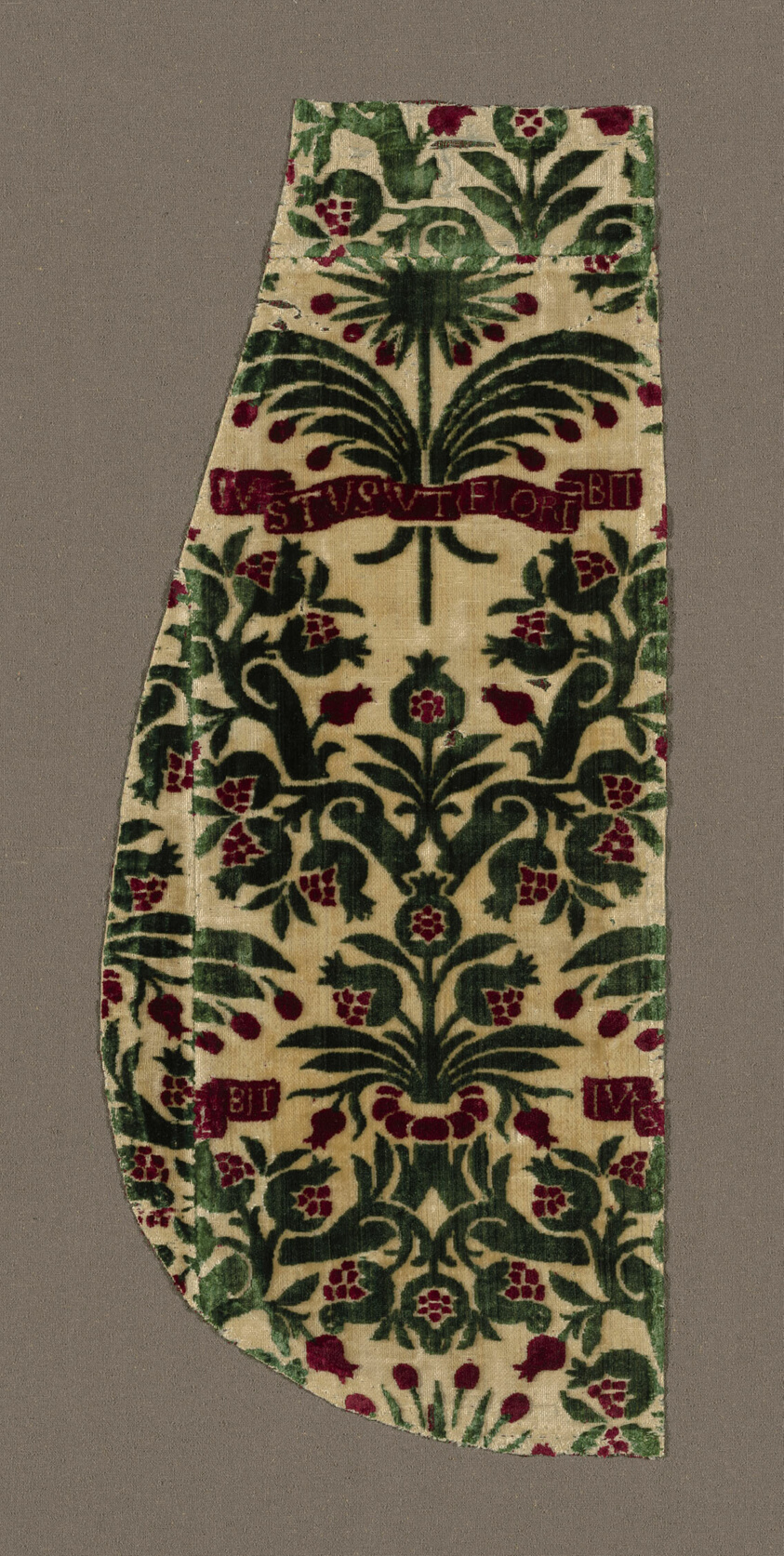
Heritage Research Artifact: Portion of a Chasuble
Materiality and Provenance
The artifact under examination is a portion of a chasuble, a liturgical vestment historically worn during the Eucharist, rendered in a composition of exceptional refinement: silk, satin weave, and cut solid velvet. This fragment, dating approximately to the late 17th or early 18th century, originates from a period when ecclesiastical textiles were not merely functional but served as profound expressions of artistry, status, and devotion. The silk used here is of a quality that speaks to the rigorous standards of the era—likely sourced from the famed sericulture centers of Italy or France, where the cultivation of silkworms and the reeling of filaments were elevated to an industrial art form. The satin weave, characterized by its smooth, lustrous surface achieved through long float threads, imparts a liquid sheen that catches light with a fluid elegance, reminiscent of the finest evening gowns on Savile Row’s bespoke mannequins. The cut solid velvet, a technique where loops of pile are sheared to create a dense, plush surface, adds a tactile depth that contrasts with the satin’s gloss, offering a study in textural interplay.
This chasuble portion, now preserved as a heritage artifact, likely adorned the shoulders of a cleric in a grand cathedral or abbey, its fabric a testament to the confluence of liturgical need and secular luxury. The silk’s integrity—its fibers still supple after centuries—attests to the mastery of its weavers, who understood that materiality was not merely about durability but about the sensory experience of weight, drape, and touch. In the context of classic silk craftsmanship, this piece exemplifies the pinnacle of pre-industrial textile production, where every thread was hand-selected and every weave a deliberate choice.
Classic Silk Craftsmanship and Fluid Elegance
The craftsmanship inherent in this chasuble portion is a narrative of precision and patience. The satin weave, with its warp-faced structure, requires a high thread count to achieve its characteristic gloss—a feat that demanded skilled artisans who could maintain tension across the loom without compromising the silk’s natural luster. The cut solid velvet, meanwhile, involves an additional layer of complexity: loops of supplementary warp threads are woven into the ground fabric, then sliced open to create a pile. This process, known as ciselé in French workshops, was a closely guarded secret, passed down through generations of weavers in centers like Lyon or Venice. The result is a fabric that feels both substantial and ethereal, its pile absorbing and reflecting light in a manner that evokes the fluid elegance of a river’s surface under moonlight.
In the context of London’s Savile Row, where tailoring is a philosophy of fit and finish, this chasuble portion resonates with the same ethos of bespoke perfection. Just as a Savile Row suit is constructed to mold to the wearer’s form, this liturgical garment was designed to drape with a gravity that honored the sacred act. The silk’s fluidity—its ability to fall in soft, unbroken folds—mirrors the drape of a well-cut morning coat or an evening gown, where the fabric becomes an extension of the body’s movement. The cut velvet’s plushness, reminiscent of the velvet collars on a Chesterfield overcoat, adds a note of quiet opulence, a reminder that luxury in this era was not about ostentation but about the tactile and visual harmony of materials.
Historical and Cultural Significance
This chasuble portion is more than a textile; it is a cultural artifact that bridges the sacred and the secular. In the 17th and 18th centuries, the Catholic Church was a major patron of the silk industry, commissioning vestments that rivaled the courts of Europe in splendor. The use of satin and velvet in a chasuble was a deliberate choice to elevate the liturgy, transforming the priest’s garment into a canvas for divine contemplation. The silk’s shimmer, when caught by candlelight during Mass, would have created an atmosphere of transcendent beauty, a visual metaphor for the divine light. The cut velvet’s depth, meanwhile, offered a tactile reminder of the material world’s richness, a counterpoint to the spiritual focus of the ceremony.
From a heritage perspective, this fragment offers insights into the trade networks of the period. The silk likely traveled from Asia to European weaving centers, where it was transformed into a luxury good before being shipped to ecclesiastical workshops. The chasuble’s portion, now isolated from its original form, speaks to the fragility of history—how even the most durable materials are subject to time’s erosion. Yet, its preservation allows us to study the weave structures, dye techniques (likely using natural dyes from cochineal or madder for reds, or woad for blues), and the aesthetic preferences of an era that valued harmony over excess.
Relevance to Contemporary Heritage and Fashion
For the Lauren Fashion Heritage Lab, this chasuble portion serves as a touchstone for understanding the enduring principles of silk craftsmanship. In an age of fast fashion and synthetic blends, the artifact reminds us of the value of slow, deliberate production—a philosophy that aligns with Savile Row’s commitment to handmade excellence. The fluid elegance of the satin weave and the tactile luxury of the cut velvet offer lessons in materiality that can inform contemporary design, from evening wear to accessories. The chasuble’s portion, though liturgical in origin, transcends its context to become a study in how fabric can shape both form and meaning.
Moreover, this artifact underscores the importance of heritage preservation in the fashion industry. As we digitize and archive textiles, we must not lose sight of their sensory and historical dimensions. The chasuble portion is a bridge between past and present, a reminder that the best craftsmanship—whether in a 17th-century vestment or a 21st-century bespoke suit—is rooted in an understanding of material, technique, and the human touch. In the hallowed halls of Savile Row, where tradition and innovation converge, this fragment of silk stands as a testament to the timeless pursuit of elegance.