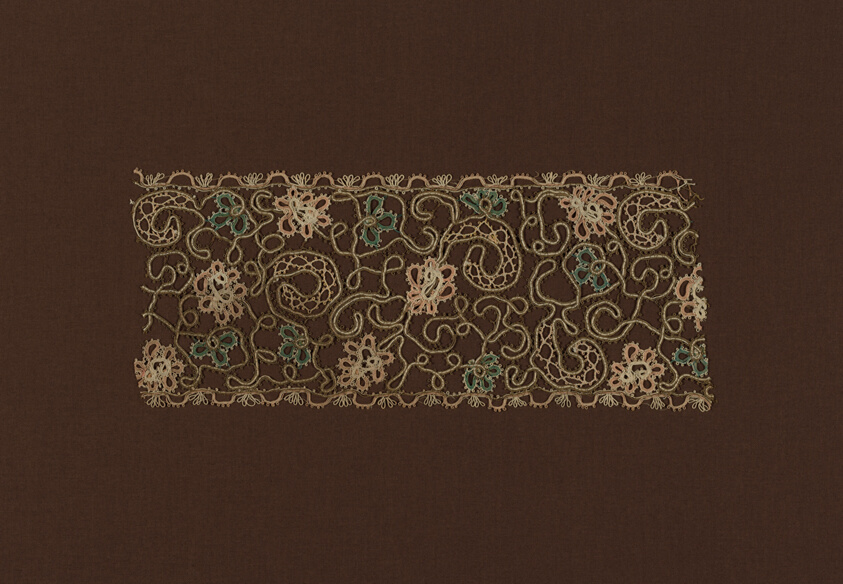
On the Material Confluence of Braid: An Examination of Cordage and Lace in the Service of Elegance
The pursuit of sartorial excellence, much like the construction of a definitive suit, resides not merely in the broad strokes of silhouette but in the absolute integrity of its constituent parts. It is a philosophy of considered accretion, where each element, however seemingly ancillary, bears the full weight of the house’s reputation. In this rarefied sphere, the braid is not ornamentation; it is architecture. It is the discreet punctuation that defines a sentence of cloth, the structural filigree that confers finish, and a singular point where materiality, technique, and history converge with silent authority. Our subject here is a specific genus of this finishing: the braid formed from silk and silk-wrapped cord, accompanied by the precise geometry of bobbin straight lace—a confluence representing the apogee of classic silk craftsmanship and fluid elegance.
The Foundation: Cordage and the Principle of Wrapped Integrity
To understand the braid, one must first apprehend the cord. The core materials—hemp and linen—are selected not for their eventual visibility, but for their inherent structural character. Hemp provides a robust, resilient heart, a backbone of notable tensile strength that ensures the braid will maintain its line and resist deformation. Linen offers a slightly more refined fortitude, a crispness that complements rather than contradicts the silk it will bear. These are the foundational wools and canvases of the trimmings world, chosen for their performance, not their poetry.
The poetry, and indeed the paramount elegance, is conferred by the wrap. The finest silk, typically a tightly spun filament with a high lustre, is wound with meticulous precision around the core. This is not a mere sheathing; it is a transformation. The process demands a tension both consistent and delicate, ensuring the silk lies flawlessly without biting into or distorting the core beneath. The result is a cord of dual nature: within, the unyielding strength of the vegetable fibre; without, the luminous, fluid grace of silk. This wrapped cord becomes the essential thread in the narrative of the braid, a material embodiment of the Savile Row principle that true luxury is that which is beautifully built to last, its refinement underpinned by rigour.
The Architecture of the Braid: Interlacing with Intent
With the cords prepared, the art of the braid commences. This is a process of deliberate, rhythmic interlacing, where multiple silk-wrapped cords are manipulated to form a continuous, integrated band. The complexity can range from a simple, dignified three-cord plait to intricate multi-cord patterns reminiscent of military frogging or academic regalia. The critical factor is consistency. Each intersection, each turn, must be executed with identical tension and angle, producing a braid of uniform density and a surface that is perfectly regular to the touch.
The fluid elegance inherent in the finished article is a direct consequence of this precision. A poorly executed braid will kink, buckle, or lie with a stubborn rigidity, fighting the drape of the garment it adorns. A masterfully crafted braid, however, possesses a controlled suppleness. It will follow the curve of a lapel, the sweep of a cuff, or the line of a seam with a graceful compliance, enhancing the garment’s movement rather than restricting it. Its elegance is kinetic, a quality derived from the harmonious relationship between the flexible core and the lustrous, yielding silk exterior, locked in place by the intelligence of the weave.
The Counterpoint: Bobbin Straight Lace
In the most discerning applications, the braid may be partnered with or integrated into bobbin straight lace. This is a pointed and sophisticated juxtaposition. Bobbin lace, with its origins in meticulous European hand-work, represents a different but complementary pinnacle of textile art. Created by weaving and twisting threads wound on bobbins around a pattern of pins, "straight" lace refers to its form as a trim, rather than an all-over net.
Its inclusion alongside a silk braid creates a dialogue of textures and transparency. The braid is solid, dense, and declarative; the lace is open, geometric, and luminous. When employed together—perhaps a silk braid outlining the edge of a lapel, with a narrow band of straight lace serving as a delicate interior border—they establish a hierarchy of detail. This is not mere embellishment; it is a nuanced language of trim, speaking to a heritage of craftsmanship where multiple disciplines are mastered and deployed in concert. The lace provides a breath of airiness against the substantial braid, a testament to the fact that luxury can be found in contrast as well as in uniformity.
Context and Application: The Mark of the Connoisseur
The application of such braid and lace is never profligate. It is deployed with the strategic reserve of a bespoke tailor adding a distinctive pick-stitch or a surgeon’s cuff. Its context is the realm of the classic and the quietly authoritative: the edging of a velvet smoking jacket, the trim of a silk dressing gown, the accent on a couture evening wrap, or the definitive finishing touch on the finest livery.
It serves as the final, unshakeable argument for quality. In an age of mass-produced gimp and synthetic trim, the hand-finished silk braid and genuine bobbin lace are the marks of the connoisseur. They are details that may escape the casual glance but are immediately apparent to the discerning eye and the sensitive touch. They speak of a commitment to material truth and artisanal integrity, values that are the very bedrock of enduring style.
In conclusion, the braid of silk-wrapped-hemp or linen, in concert with bobbin straight lace, is far more than a decorative afterthought. It is a microcosm of heritage craftsmanship. It embodies the principle of wrapped integrity, the architectural discipline of the weave, and the eloquent dialogue of texture. It is, in its definitive form, the fluid and elegant culmination of material and technique—a silent but profound signature of the house that has the knowledge to specify it and the skill to execute its application. It is, in every sense, a finishing touch that is anything but final; it is the beginning of a lasting impression.