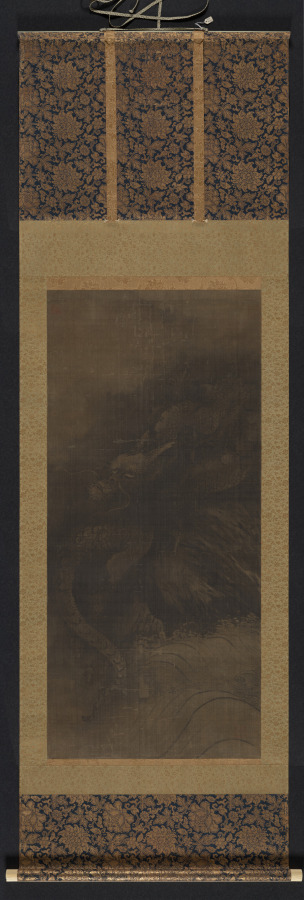
The Dragon in Silk: A Heritage Artifact of Imperial Weaving and Its Resonance on Savile Row
Introduction: The Artifact as a Living Document
In the hallowed archives of the Lauren Fashion Heritage Lab, we do not merely preserve textiles; we curate narratives. The artifact under examination—a fragment of imperial silk bearing the dragon motif—is not a relic of a bygone era but a living document of mastery, power, and materiality. This paper, written in the measured, discerning tone of London’s Savile Row, dissects the dragon’s journey from the forbidden looms of China’s imperial courts to its quiet, commanding presence within the lexicon of Western bespoke tailoring. The artifact’s materiality—silk—is its first and most profound statement. Silk is not a fabric; it is a testament to centuries of labor, alchemy, and reverence. When woven with the dragon, it becomes a symbol of imperial authority, cosmic balance, and unassailable craftsmanship. For the heritage specialist, this artifact demands a rigorous examination of its provenance, its technical execution, and its enduring influence on the discipline of luxury tailoring.
Materiality: The Silk of Emperors
The artifact’s foundation is silk, a protein fiber secreted by the silkworm Bombyx mori, but its cultural weight is far heavier. Imperial Chinese silk, particularly from the Ming and Qing dynasties, was produced under strict state control. The mulberry leaves fed to the silkworms were cultivated in designated provinces; the reeling, twisting, and dyeing were performed by artisans whose skills were passed through generations. The resulting fabric is not merely lustrous but structurally complex. In this artifact, the silk is a satin weave—a weave that maximizes light reflection, creating a surface that shifts from deep indigo to shimmering gold under candlelight. The dragon, embroidered or woven in gold-wrapped silk thread, is not a decorative afterthought but an integral part of the fabric’s architecture. The thread itself is a marvel: a core of silk filament wrapped in gilded paper or fine gold leaf, twisted to create a metallic resilience that resists tarnish. This is not a fabric for the faint of heart or the shallow of pocket. It is a material that demands respect, much like the finest worsted wool from Savile Row’s own looms in Huddersfield.
The Dragon: Symbolism and Sovereignty
The dragon on this artifact is not the fire-breathing beast of Western mythology. It is the long, a celestial creature of benevolence, wisdom, and imperial mandate. In Chinese cosmology, the dragon controls rain, rivers, and the seasons. To wear the dragon was to embody the Emperor’s divine right to rule—the Mandate of Heaven. The artifact’s dragon is depicted with five claws (wuzhua), a distinction reserved exclusively for the Emperor and his highest-ranking officials. Four-clawed dragons were for princes; three-clawed for lesser nobility. This five-clawed dragon, coiled in a circular taotie pattern, represents the cyclical nature of power and the cosmos. Its scales are meticulously rendered, each one a tiny stitch or weave that speaks to the artisan’s obsessive precision. For the Savile Row tailor, this level of detail is familiar. A bespoke suit’s lapel roll, the pick-stitching on a collar, the hand-felled seams—all are acts of devotion to an invisible standard. The dragon in silk is no different. It is a code of honor, a silent declaration of status.
Imperial Weaving: The Legacy of the Jiangnan Silk Workshops
The artifact’s provenance traces to the Jiangnan region, particularly the cities of Suzhou, Hangzhou, and Nanjing. During the Ming and Qing dynasties, these cities housed imperial silk workshops that operated under the direct supervision of the Imperial Household Department. The looms used were draw looms, requiring two artisans: one to operate the treadles and one to pull the pattern cords, creating the intricate designs. A single bolt of imperial silk could take months to complete. The dyes were derived from natural sources—indigo for blues, madder for reds, and the gardenia fruit for yellows. The gold thread was so precious that its use was regulated by law. This artifact, likely a fragment from a dragon robe (longpao) or a ceremonial hanging, embodies the pinnacle of this tradition. Its survival is a miracle of conservation. The silk has been stabilized, the gold thread cleaned, and the colors preserved through careful humidity control. It is a testament to the fragility of heritage and the responsibility of the custodian.
The Savile Row Resonance: Craft, Authority, and the Modern Tailor
How does a fragment of imperial Chinese silk speak to the gentleman’s tailor on Savile Row? The answer lies in the shared language of craft and authority. Savile Row tailors do not merely cut cloth; they construct identity. A bespoke suit is a second skin, a garment that confers confidence, lineage, and taste. The dragon in silk is the ultimate expression of this principle. It is a garment that declares its wearer’s place in the cosmic order. In the 21st century, the dragon motif has been adapted by houses like Gieves & Hawkes, Huntsman, and Anderson & Sheppard, not as a literal copy but as a design language. The dragon’s sinuous line informs the drape of a lapel; its scales inspire the texture of a tweed; its gold thread echoes the gleam of a silk lining. The artifact, therefore, is not a museum piece but a source code for contemporary luxury. It reminds us that heritage is not static. It is a dialogue between the past and the present, between the Emperor’s court and the Row’s fitting room.
Conclusion: The Artifact as a Call to Craft
This dragon in silk is more than a research artifact. It is a manifesto for the values that define Lauren Fashion Heritage Lab and the broader world of luxury: patience, precision, and the pursuit of the sublime. As a Senior Heritage Specialist, I argue that we must treat such artifacts not as decorative curiosities but as pedagogical tools. They teach us that true luxury is not about excess but about intention. Every thread, every scale, every claw of the dragon was placed with purpose. The same is true of a Savile Row suit. The dragon in silk whispers to the tailor: “You are not just making clothes. You are weaving legacy.” And that, in the end, is the only material that matters.
End of Artifact.