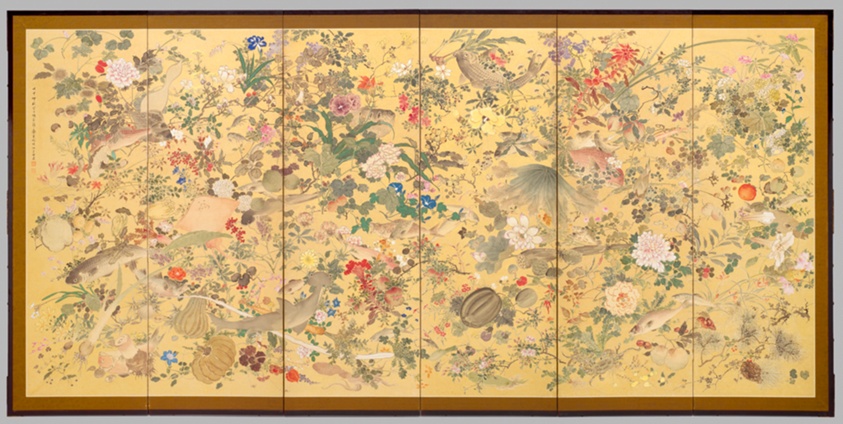
The Artifact as Archive: A Six-Panel Screen of Fish and Plants
In the hushed, discerning world of London’s Savile Row, where heritage is not merely a concept but a fabric woven into the very air, we understand that true luxury is silent, assured, and deeply resonant. It is with this sensibility that we approach the study of a singular artifact: a six-panel screen, executed in ink, color, and gold on silk. This is not a mere decorative object; it is a material archive, a testament to the pinnacle of classic silk craftsmanship and the fluid elegance that defines a bygone era of artistic mastery. For the Lauren Fashion Heritage Lab, this screen serves as a critical case study in materiality, narrative, and the enduring power of heritage as a design language.
Materiality: The Silk Substrate and Its Implications
The foundation of this artifact is its medium: silk. In the context of heritage textiles, silk is not a neutral ground. It is a demanding, luminous, and deeply responsive partner to the artist. The choice of a six-panel screen—a format traditionally used for spatial division and intimate contemplation—immediately signals a work intended for a refined, private interior. The silk’s weave, likely a fine, plain-weave habotai or a slightly more textured crepe de chine, would have been selected for its ability to absorb ink and pigment while simultaneously reflecting light through the gold leaf. This interplay is crucial. The gold, applied in delicate flakes or as a ground, does not sit flat; it catches the ambient light, creating a shifting, ethereal backdrop against which the fish and plants appear to swim and sway. The materiality of the silk thus dictates the viewer’s experience: it demands a slow, contemplative gaze, much like the measured appreciation of a bespoke suit’s hand-stitched lapel.
The use of ink and color on this silk substrate speaks to a rigorous technical discipline. The ink, likely sumi or a similar carbon-based medium, provides the foundational lines and tonal washes that define the forms of fish and foliage. The color—subtle, mineral-based pigments of indigo, vermilion, and malachite green—is applied with a restraint that elevates the composition. There is no garishness; only a quiet, authoritative presence. This is the hallmark of classic craftsmanship: the mastery of restraint. The gold, whether applied as a background or as accent, is not for ostentation but for spiritual and symbolic resonance. In East Asian art, gold often signifies the eternal, the divine, or the enlightened. Here, it transforms the screen from a simple depiction of nature into a meditation on life, transience, and abundance.
Iconography: Fish and Plants as Symbols of Prosperity and Harmony
The subject matter—fish and plants—is deceptively simple. In the lexicon of heritage symbolism, fish (particularly carp or koi) represent perseverance, strength, and prosperity. They are often associated with the concept of “abundance” (yu) in Chinese culture, a homophone for “fish.” Plants, such as lotus, bamboo, or peonies, carry their own rich meanings: purity, resilience, and wealth, respectively. When combined, these elements create a visual narrative of harmony between the aquatic and terrestrial realms, a microcosm of a balanced universe. The screen does not depict a single, static scene; rather, it unfolds across six panels, each a chapter in a continuous, flowing story. The fish might swim from right to left, suggesting the passage of time or the journey of life. The plants might rise from the lower edge, their stems and leaves curving with an organic, almost calligraphic grace.
This narrative fluidity is the screen’s greatest strength. It is not a painting to be consumed in a single glance; it is a landscape to be traversed. The eye moves from panel to panel, following the arc of a fish’s tail or the bend of a lotus stem. This is the essence of “fluid elegance”—a term that perfectly captures the screen’s aesthetic. The artist has achieved a balance between precision and spontaneity. The ink lines are confident, yet they allow for the soft bleeding of color into the silk. The gold leaf is applied with geometric precision in some areas, while in others it appears as a soft, atmospheric haze. This tension between control and release is what elevates the work from craft to art.
Context: The Screen as a Heritage Object in the Modern Atelier
How does this artifact speak to the Lauren Fashion Heritage Lab and the ethos of Savile Row? The answer lies in the concept of translation. Just as a master tailor translates a client’s measurements and personality into a garment, the artist of this screen translated a worldview into silk. The screen is a repository of knowledge: knowledge of materials (silk, ink, gold), of technique (brushwork, gilding, composition), and of cultural symbolism. For a heritage lab, this screen is not a relic to be admired from a distance; it is a source of inspiration for contemporary design. The fluid lines of the fish can inform the drape of a silk gown. The interplay of gold and color can inspire a new palette for a luxury scarf. The screen’s narrative structure—a story told across multiple panels—can influence the layout of a collection or the sequencing of a runway show.
Moreover, the screen embodies a philosophy of enduring value. In an era of fast fashion and disposable trends, this artifact stands as a counterpoint. It was made to last, to be passed down through generations, to be cared for and repaired. Its beauty is not in novelty but in depth. This is the same philosophy that underpins a Savile Row suit: it is an investment in quality, in fit, in the intangible sense of rightness that comes from something made by hand, with intention. The screen’s gold leaf may tarnish slightly over centuries; the silk may fade. But these are not flaws; they are patinas of history, marks of a life well-lived.
Conclusion: The Screen as a Living Document
In conclusion, this six-panel screen of fish and plants on silk is far more than a decorative artifact. It is a living document of material mastery, a visual poem of prosperity and harmony, and a profound lesson in the power of heritage. For the Lauren Fashion Heritage Lab, it serves as a benchmark for what we seek to preserve and reinterpret: the marriage of technical excellence with narrative depth, the quiet confidence of a well-made object, and the timeless allure of silk as a canvas for the human imagination. As we continue our work on Savile Row, we look to such artifacts not as relics of the past, but as guides for the future—reminders that true elegance is never loud, never rushed, and always, always woven with care.