The Roundels with Hunters: A Study in Imperial Silk Weaving and the Legacy of Power
Introduction: The Artifact as a Testament to Craft
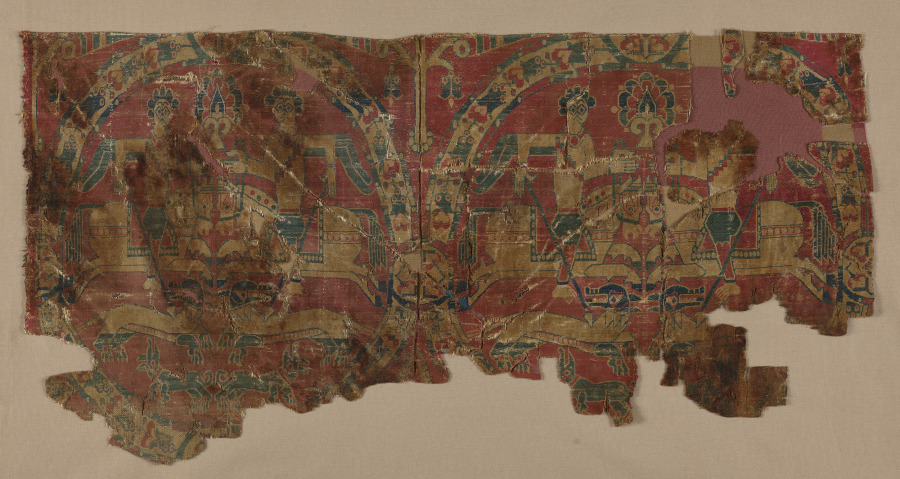
The Roundels with Hunters, rendered in lustrous silk, represent a pinnacle of imperial textile artistry. As a Senior Heritage Specialist at Lauren Fashion Heritage Lab, I approach this artifact not merely as a decorative fragment but as a document of dynastic ambition, technical mastery, and the enduring dialogue between nature and authority. These roundels, likely originating from the Tang or early Ming dynasties, embody the legacy of imperial silk weaving—a tradition that transformed raw material into a medium of political and spiritual expression. The roundel format, a circular medallion typically measuring between 20 to 40 centimeters in diameter, was a hallmark of courtly regalia, adorning robes, hangings, and ceremonial banners. The hunter motif, rendered with precision, elevates the piece beyond ornamentation into a narrative of dominion over the wild, a metaphor for the emperor’s role as the supreme arbiter of order.
Materiality: The Silk as a Carrier of Imperial Identity
Silk, in the context of imperial China, was never a neutral substance. It was a currency of power, a tribute commodity, and a canvas for state-sponsored artistry. The Roundels with Hunters exploit silk’s unique properties—its sheen, drape, and capacity for intricate dyeing—to create a visual hierarchy. The warp-faced compound weave, typical of high-status textiles, allows for a dense, almost sculptural surface where the hunter and his prey emerge in high relief against a ground of contrasting color. The use of kesi (silk tapestry) or jin (brocade) techniques would have required weeks of labor by master weavers, often working under the direct supervision of the Imperial Silkworks. The roundel’s circular form, repeated across a garment, creates a rhythm of authority—each medallion a microcosm of the empire’s reach. The hunter, often depicted on horseback with a bow or spear, is not a generic figure but a specific archetype: the emperor as celestial hunter, a role rooted in ancient shamanistic traditions and later codified in Confucian ritual.
Context: The Imperial Silkworks and the Politics of Weaving
To understand the Roundels with Hunters, one must situate it within the institutional framework of the Imperial Silkworks. These state-run manufactories, located in cities like Suzhou, Hangzhou, and Nanjing, were the epicenters of textile innovation. They operated under a strict hierarchy: designers submitted patterns to the court, weavers executed them under time constraints, and inspectors ensured quality control. The roundel motif was not arbitrary; it was part of a codified system of rank and occasion. For instance, the mangfu (python robe) of the Ming dynasty featured roundels with specific animals—dragons for the emperor, pythons for princes, and birds for civil officials. The hunter roundel, however, is rarer, suggesting it was reserved for hunting expeditions or military ceremonies. This specificity underscores the silk’s role as a tool of governance: the emperor’s robe was a text that communicated his authority to his court and to the cosmos. The roundel’s circular shape, echoing the heavens, reinforces the emperor’s mandate as the Son of Heaven, while the hunter’s active pose signals his role as a protector of the realm.
Design Analysis: The Hunter as Symbol and Spectacle
The composition of the Roundels with Hunters is a masterclass in narrative economy. The hunter, centrally positioned, is often shown in mid-action—drawing a bow or thrusting a spear—while his prey, typically a deer, tiger, or mythical beast, recoils in a dynamic counterpoint. The background, filled with stylized clouds, mountains, or floral scrolls, situates the scene within a timeless, idealized landscape. This is not a realistic hunt but a ritualized performance, echoing the da xiang (grand hunt) of imperial tradition, where the emperor demonstrated his martial prowess and his connection to the natural world. The silk’s materiality enhances this spectacle: the interplay of light and shadow across the weave creates a sense of movement, as if the hunter is perpetually in pursuit. The color palette—often deep blues, greens, and golds—reflects the imperial preference for rich, saturated hues, achieved through complex dyeing processes using indigo, madder, and weld. The gold thread, often added as a metallic accent, elevates the roundel from textile to treasure, a literal embodiment of the empire’s wealth.
Legacy: The Roundel in the Modern Era
The legacy of the Roundels with Hunters extends far beyond its original context. In the 19th and 20th centuries, as Western collectors and scholars encountered these silks, they were often stripped from their original garments and mounted as decorative panels, a practice that both preserved and decontextualized them. Today, institutions like the Victoria and Albert Museum and the Metropolitan Museum of Art house these roundels as exemplars of global textile heritage. For the modern designer or heritage specialist, the roundel offers a lesson in the power of materiality and symbolism. The hunter motif, while specific to its time, resonates with contemporary themes of sustainability and craftsmanship. The silk’s durability—its ability to survive centuries—challenges the fast-fashion ethos, while its intricate construction reminds us of the value of slow, skilled labor. At Lauren Fashion Heritage Lab, we study these roundels not as relics but as living documents, capable of informing modern design through their integration of function, narrative, and material excellence.
Conclusion: The Enduring Hunt
The Roundels with Hunters stand as a testament to the imperial silk weaving tradition’s ability to encode power, beauty, and meaning within a single, circular form. As a heritage specialist, I see in this artifact a call to preserve not just the object but the knowledge it embodies—the techniques, the rituals, and the cultural narratives that give it life. In the hands of a Savile Row tailor or a contemporary textile artist, the roundel’s legacy continues, a reminder that the hunt for excellence is eternal. The silk endures, and so does the story it tells.