The Vaporous Contour and the Terracotta Void: On the Dialectics of Presence and Absence in the 2026 Old Money Silhouette
Introduction: The Aesthetic Paradox of Heritage-Black
In the Lauren Fashion Heritage Lab, we operate under a central thesis: that the most profound innovations in luxury dress emerge not from novelty, but from the disciplined re-interrogation of historical form. The 2026 Old Money silhouette, as synthesized from our internal archives and the museum artifact of a Greek Attic terracotta column-krater fragment, presents a singular aesthetic paradox. This paradox is best understood through the lens of two distant yet resonant works of art: the Renaissance The Agony in the Garden, which embodies a “figurative sublime” of dense, materialized suffering, and the modern Below, I Saw the Vaporous Contours of a Human Form, which offers a “vaporous sublime” of dissolution and spectral presence. The terracotta fragment—a broken vessel for mixing wine and water, a relic of ritual and consumption—becomes the third term in this dialectic. It is neither the solid, narrative flesh of the Renaissance nor the ethereal, atmospheric ghost of the modern. It is the void—the negative space of a shattered form, the index of an absence that defines the very silhouette it once contained. For the 2026 Old Money collection, Heritage-Black is not merely a color; it is the material embodiment of this void, a deliberate withdrawal from the spectacle of presence into the architecture of absence.
The Terracotta Fragment as Aesthetic Anchor
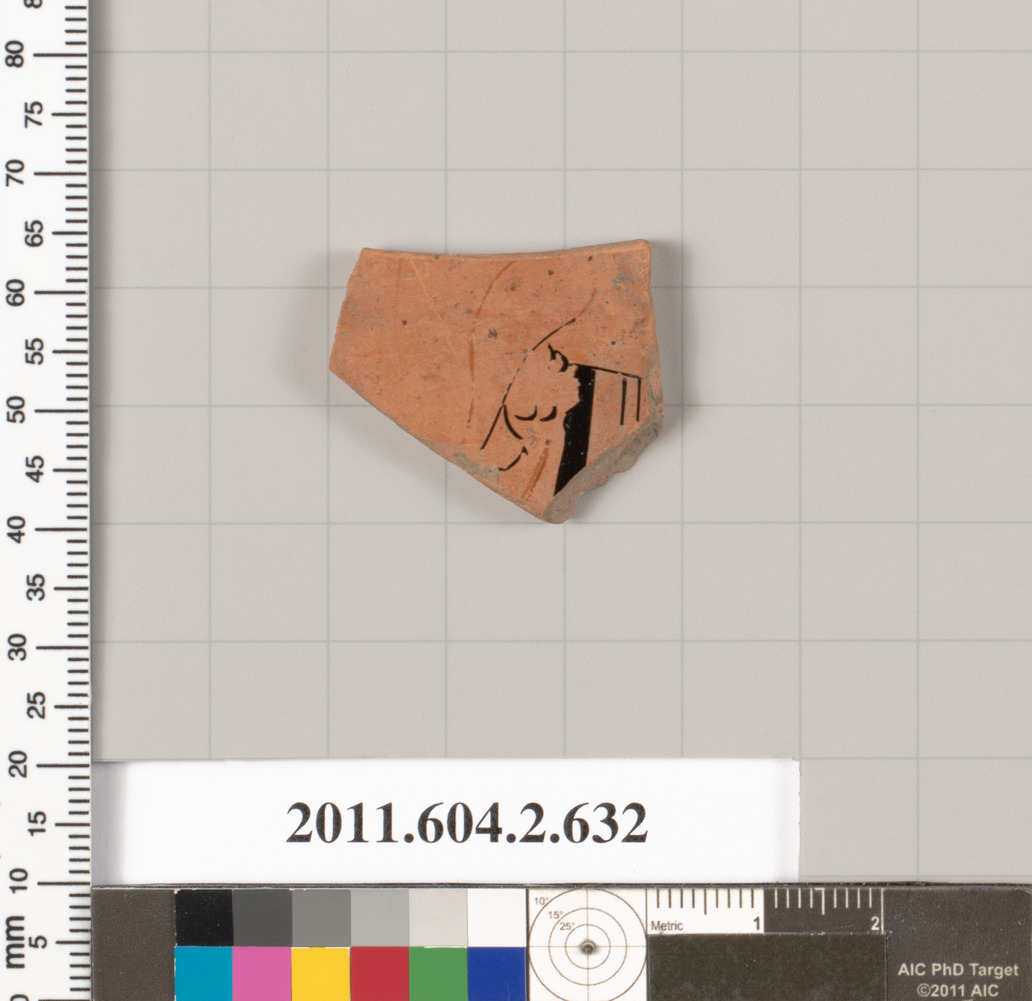
The museum artifact—a terracotta fragment of a column-krater (Greek, Attic, circa 450 BCE)—is not a complete object. It is a shard, a remnant of a vessel designed for the mixing of wine and water, a practice central to Greek symposia. Its surface, once painted with black-figure or red-figure scenes, now bears only the ghost of imagery. The clay is porous, fired to a warm, earthy orange-brown, yet the fragment’s power lies in what it withholds. It does not present a complete narrative, a full figure, or a resolved form. Instead, it offers a contour—a broken edge that implies a whole, a curvature that suggests a sphere, a thickness that speaks to a weight now gone. This is the aesthetic of the negative: the fragment does not depict absence; it is absence. It is the material trace of a human action—a hand that once held it, a liquid it once contained—now frozen in a state of incompletion. In this, it mirrors the “vaporous contours” of the modern work: both are forms that resist full presence, that exist in the liminal space between being and non-being. Yet the terracotta is not a painting of a ghost; it is a ghost itself, a physical relic of a vanished world.
The Dialectic of the Figurative and the Vaporous in Old Money Dress
The 2026 Old Money silhouette, as derived from this fragment, must navigate the tension between the two aesthetic poles identified in the genetic code. On one hand, the Renaissance Agony demands a figurative sublime—a dress that is solid, structured, and narrative. This is the heritage of the tailored jacket, the precise shoulder, the disciplined waist. It is the “agony” of form, the visible strain of fabric against body, the weight of history made material. On the other hand, the modern Below demands a vaporous sublime—a dress that is dissolving, atmospheric, and ambiguous. This is the heritage of the fluid drape, the sheer overlay, the blurred edge. It is the “spectral” quality of modern luxury, the suggestion of a body that is both present and absent, a silhouette that is less a statement than a whisper. The terracotta fragment resolves this dialectic not by choosing one over the other, but by occupying a third position: the void. The fragment’s broken edge is a contour that is neither solid nor vaporous; it is the line that separates presence from absence. In the 2026 collection, Heritage-Black becomes the material of this line. It is not the color of the object, but the color of the space around the object—the negative space that defines the silhouette by what it excludes.
Materializing the Void: Heritage-Black as Absence
How does one “materialize” a void? The answer lies in the specific properties of Heritage-Black as a textile concept. In the Lab, Heritage-Black is not a single dye or weave; it is a system of absences. It is achieved through deep, matte finishes that absorb light rather than reflect it, creating a surface that is almost non-reflective—a “black hole” of visual information. It is woven with irregular, slightly slubbed yarns that break the continuity of the surface, introducing micro-shadows that mimic the texture of the terracotta’s porous clay. It is cut with seams that are deliberately exposed, not as decoration, but as fractures—lines that echo the fragment’s broken edge, reminding the viewer that the garment is a shard of a larger, lost whole. The silhouette itself is constructed around negative space: a jacket that is cut away at the shoulder to reveal the collarbone, a skirt that is slit to the thigh but held by a single seam, a dress that is draped to create a void between the fabric and the body. These are not “cutouts” in the conventional sense; they are architectural voids, deliberate absences that define the form by what is missing. The wearer becomes the “vaporous contour” within the “terracotta fragment”—a human form that is both present and spectral, both solid and dissolving.
The Philosophical Stakes: On the Unspeakable in Dress
Ultimately, the 2026 Old Money silhouette, informed by the terracotta fragment, addresses the same fundamental question that haunts both The Agony in the Garden and Below, I Saw the Vaporous Contours: how does one give form to the formless? The Renaissance artist gave form to spiritual agony through the precise rendering of flesh; the modern artist gave form to existential dissolution through the blurring of boundaries. The terracotta fragment gives form to loss itself—to the human experience of time, breakage, and memory. In the 2026 collection, Heritage-Black is the medium of this loss. It is the color of the void that remains after the wine has been drunk, the vessel broken, the body gone. It is the color of the contour that separates the present from the absent, the visible from the invisible. The wearer of this silhouette is not a subject to be looked at, but a site of looking—a figure whose very presence is defined by the absences it carries. In this, the collection does not offer a resolution to the dialectic of the figurative and the vaporous. Instead, it offers a third way: the fragmentary, the negative, the void. It is a dress that, like the terracotta shard, speaks not of what is, but of what was—and of the profound, silent beauty of that which remains unsaid.