The Sampler as Testament: Materiality and Mastery in Silk Embroidery
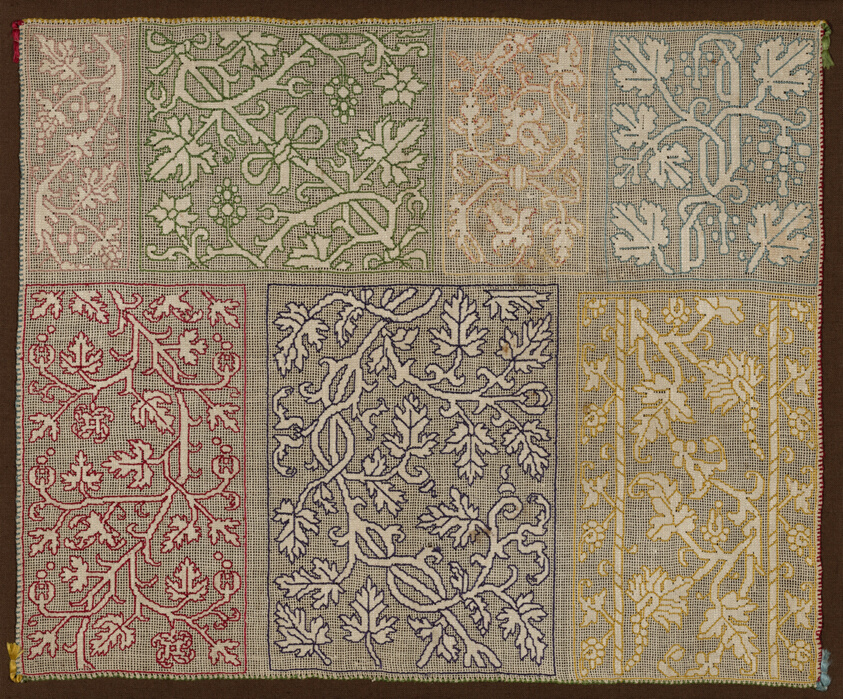
In the hushed ateliers of London’s Savile Row, where precision meets artistry, the heritage of textile craftsmanship is not merely preserved but perpetually reimagined. Among the most eloquent artifacts of this tradition is the sampler—a seemingly modest object that, upon closer examination, reveals the foundational principles of silk mastery. This research artifact, a sampler crafted from linen in a plain gauze weave and embroidered with silk floss and linen, embodies the fluid elegance and technical rigor that define classic silk craftsmanship. Its materiality—the interplay of ground fabric, thread, and applied ornament—offers a profound lesson in the balance between discipline and grace, a lesson as relevant to contemporary luxury as it was to the hands that first worked these stitches.
Materiality: The Dialogue Between Linen and Silk
The foundation of this sampler is a linen ground, woven in a plain gauze weave. Linen, derived from the flax plant, is a fiber of remarkable tensile strength and understated refinement. Its natural luster, while subtle, provides a crisp, neutral canvas that does not compete with the vibrancy of the silk. The gauze weave—characterized by its open, airy structure—introduces a deliberate transparency. This is not a fabric designed for opacity or weight; rather, it invites light to pass through, creating a play of shadows that animates the embroidery. In the context of Savile Row tailoring, such a choice echoes the use of lightweight linings or interlinings that allow a garment to breathe, ensuring both comfort and structural integrity. The linen ground, therefore, is not passive; it is an active participant in the visual and tactile experience.
Upon this ground, the embroiderer has worked with silk floss and linen thread. Silk floss, with its unmatched sheen and fluidity, is the protagonist of this narrative. Unlike the more rigid, twisted silk threads used in tailoring, floss is composed of untwisted filaments that catch light from every angle, producing a luminous, almost liquid effect. The stitches employed—double running, stem, weaving, and buttonhole—are deliberately chosen to exploit this luminosity. Double running stitch, also known as Holbein stitch, creates a continuous, unbroken line on both sides of the fabric, ideal for geometric patterns that demand precision. Stem stitch, with its overlapping loops, mimics the sinuous curves of a vine or a monogram, lending a calligraphic quality to the design. Weaving stitch, where the thread is passed over and under the ground threads, builds texture and density, while buttonhole stitch, with its interlocked loops, provides both decorative edge and functional reinforcement. Each stitch is a decision, a negotiation between the hand and the material.
The applied silk tassels at each corner are a final, masterful touch. These tassels, crafted from the same silk floss, are not merely decorative; they anchor the composition, drawing the eye outward and framing the embroidered field. In the language of Savile Row, such details are akin to the hand-stitched buttonholes or the silk linings of a bespoke jacket—small, invisible to the casual observer, yet essential to the garment’s soul. The tassels introduce a kinetic element, swaying with the slightest movement, and their soft, tactile presence invites touch. They are a reminder that this sampler is not a static image but a living object, meant to be handled, studied, and appreciated in three dimensions.
Context: The Ethos of Classic Silk Craftsmanship
To understand this sampler is to understand the ethos of classic silk craftsmanship—a tradition that prizes fluid elegance over ostentation, and technical mastery over mere decoration. Silk, as a material, has long been associated with luxury, but its true value lies in its responsiveness. It dyes deeply, holds its shape, and drapes with a natural grace that synthetic fibers can only approximate. In the hands of a skilled embroiderer, silk becomes a medium for expressing movement, light, and emotion. The sampler, as a pedagogical tool, was historically used to teach young women the stitches and patterns that would later adorn household linens and garments. Yet, this artifact transcends its instructional origins. It is a demonstration of virtuosity—a portfolio of technique that speaks to the maker’s understanding of tension, rhythm, and composition.
The choice of a plain gauze weave for the ground is particularly telling. Gauze, with its open structure, requires the embroiderer to work with exceptional precision. Each stitch must be placed with exacting care, as the ground offers little margin for error. This is not the forgiving density of a twill or a satin; it is a transparent grid that exposes every misstep. In this sense, the sampler mirrors the discipline of Savile Row tailoring, where a single misplaced thread can compromise the drape of a jacket. The embroiderer’s mastery is evident in the evenness of the tension, the consistency of the stitch length, and the seamless integration of the silk with the linen. There is no hesitation in the work; every line flows with the confidence of practiced hands.
Moreover, the sampler embodies the concept of fluid elegance—a hallmark of classic silk craftsmanship. The stitches do not merely outline forms; they suggest motion. The stem stitch curves like a brushstroke, the weaving stitch builds texture like a woven ribbon, and the double running stitch creates a rhythmic, geometric pattern that echoes the precision of a tailor’s chalk line. The silk tassels, with their gentle sway, complete the composition, adding a sense of lightness and release. This is not the heavy, ornate embroidery of Baroque opulence; it is a refined, understated expression of skill, where every element serves the whole.
Conclusion: A Legacy of Hand and Eye
This sampler is more than a historical artifact; it is a living document of the principles that underpin luxury craftsmanship. Its materiality—the linen ground, the silk floss, the applied tassels—teaches us that true elegance lies in the dialogue between materials, not in their mere presence. The stitches, each a testament to the hand and eye of the maker, remind us that mastery is earned through repetition, patience, and an unwavering commitment to quality. In the context of London Savile Row, where tradition and innovation converge, this sampler stands as a quiet but powerful testament to the enduring value of silk craftsmanship. It is a lesson in fluid elegance, a celebration of the tactile and the visual, and a call to preserve the skills that transform thread into art.