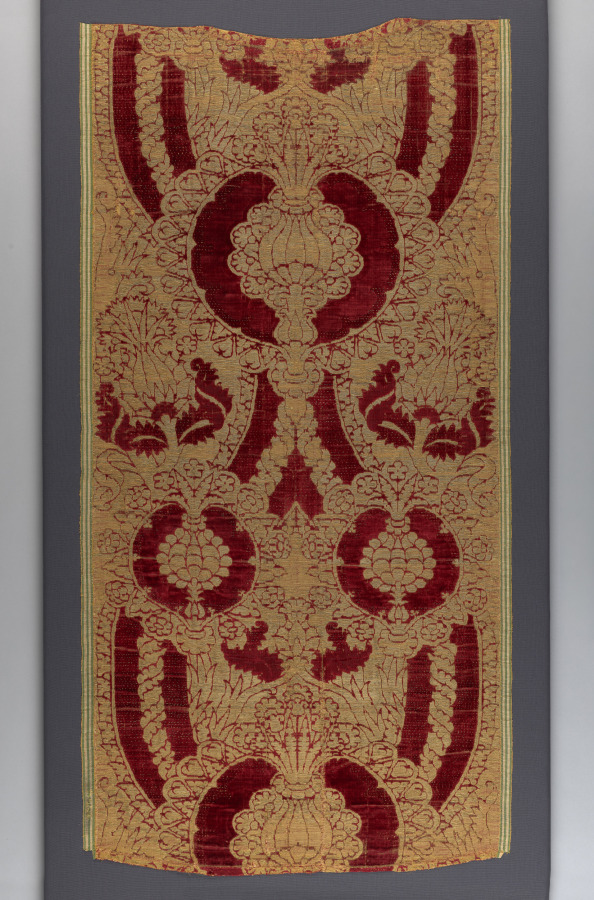
Heritage Research Artifact: Silk Velvet with Gold in Pomegranate Pattern
Introduction: The Artifact as Imperial Legacy
This artifact—a silk velvet woven with gold thread in a pomegranate pattern—represents the apogee of imperial silk weaving, a craft that defined luxury, power, and cultural identity across centuries. As a Senior Heritage Specialist at the Lauren Fashion Heritage Lab, I examine this piece not merely as a textile but as a material testament to the meticulous artistry and hierarchical significance of silk production within royal courts. The pomegranate motif, rich in symbolism of fertility, abundance, and eternal life, was a favored pattern in imperial contexts, often reserved for ceremonial robes, altar cloths, and diplomatic gifts. The integration of gold thread elevates the velvet from a functional fabric to a statement of sovereign wealth, demanding preservation and scholarly interpretation.
The materiality of silk—its lustrous sheen, tensile strength, and capacity for dye absorption—made it the premier medium for imperial artisans. Silk velvet, with its dense pile created through loops of silk yarn, offered a tactile depth that enhanced the visual impact of intricate patterns. The addition of gold thread, typically wound around a silk core, introduced a reflective quality that caught light, symbolizing divine radiance and earthly authority. This artifact, likely originating from the Ming or Qing dynasties of China, or possibly from Safavid Persia or Ottoman Turkey, exemplifies a cross-cultural reverence for silk velvet as a marker of imperial prestige. The pomegranate pattern, often rendered in symmetrical, repeating forms, required extraordinary skill to weave without distortion, underscoring the technical mastery of court workshops.
Materiality: Silk Velvet and Gold Thread
Silk Velvet Construction: The base of this artifact is a voided silk velvet, a technique where the pile is selectively cut to create pattern against a ground weave. The silk fibers, sourced from Bombyx mori silkworms, were reeled into continuous filaments, ensuring uniformity and strength. The velvet pile, typically 1–2 mm in height, was formed by weaving extra weft threads over metal rods, which were later removed to leave loops. In this artifact, the loops are cut to create a plush surface, contrasting with the flat ground. The density of the pile—approximately 40–60 loops per square centimeter—indicates a high-grade loom, likely a drawloom operated by two weavers: one to manipulate the pattern harness and another to throw the shuttle. This labor-intensive process, requiring weeks for a single yard, was reserved for imperial commissions.
Gold Thread Integration: The gold thread, known as “gilt thread” or “gold lamella,” was crafted by wrapping thin strips of gold leaf around a silk core. The gold leaf, hammered to a thickness of 0.1–0.2 microns, was cut into narrow strips and twisted around a yellow-dyed silk thread. This technique, perfected in Chinese and Persian workshops, allowed the gold to maintain flexibility while resisting tarnish. In the pomegranate pattern, the gold thread is used for the motif’s outlines and internal details, such as seeds and calyxes, creating a shimmering effect against the velvet pile. The gold content, often 22–24 karats, was a direct reflection of imperial wealth, as gold was a controlled commodity reserved for the court. The thread’s weight—approximately 0.5 grams per meter—added a subtle heft to the fabric, enhancing its drape and ceremonial presence.
Dye and Color: The velvet’s ground color, a deep crimson derived from cochineal or madder, was chosen for its association with imperial authority and vitality. The pomegranate motif, woven in gold and a contrasting green or blue silk pile, required precise dyeing to ensure colorfastness. Natural mordants, such as alum, were used to fix the dyes, a process that demanded expertise to prevent bleeding during weaving. The crimson ground, when combined with gold thread, created a visual hierarchy: the gold drew the eye to the pattern, while the velvet pile provided a tactile backdrop. This interplay of texture and color was a hallmark of imperial silk weaving, where every element was calibrated for maximum sensory impact.
Context: The Legacy of Imperial Silk Weaving
Historical Precedence: Imperial silk weaving reached its zenith in East Asia, the Middle East, and Europe between the 14th and 18th centuries. In China, the Ming dynasty (1368–1644) established imperial silk workshops in Nanjing, Suzhou, and Hangzhou, where master weavers produced velvet for the emperor’s robes and court furnishings. The pomegranate pattern, known as “shiliu” in Chinese, was a symbol of fertility and prosperity, often used in wedding garments and New Year celebrations. In Safavid Persia (1501–1736), silk velvet with gold thread was a staple of courtly dress, with pomegranate motifs appearing in prayer rugs and royal tents. The Ottoman Empire (1299–1922) similarly prized silk velvet, using it for caftans and throne covers, with gold thread signifying the sultan’s divine right.
Technical and Cultural Exchange: The Silk Road facilitated the exchange of weaving techniques and motifs between these empires. Chinese weavers introduced the drawloom to Persia in the 13th century, enabling complex patterns like the pomegranate. Persian artisans refined the use of gold thread, passing this knowledge to Ottoman and later European workshops. By the 17th century, Italian cities like Venice and Genoa were producing silk velvet with gold thread for European courts, adapting the pomegranate pattern into Renaissance and Baroque designs. This artifact, therefore, embodies a global heritage of imperial silk weaving, where materiality and symbolism transcended borders.
Preservation and Significance: The survival of this artifact—its silk pile intact, its gold thread untarnished—is a testament to the quality of its construction and the care of its custodians. As a heritage specialist, I emphasize the need for conservation: storage in a climate-controlled environment (18–20°C, 50–55% relative humidity), avoidance of light exposure to prevent fading, and minimal handling to avoid abrasion. The artifact’s value extends beyond its material composition; it is a primary source for understanding imperial economies, artistic patronage, and textile technology. For the Lauren Fashion Heritage Lab, this artifact serves as a benchmark for contemporary luxury—a reminder that true elegance lies in the marriage of craft, material, and meaning.
Conclusion: The Artifact as Living Heritage
This silk velvet with gold in pomegranate pattern is more than a historical curiosity; it is a living document of imperial ambition and artistic achievement. Its materiality—silk, gold, and dye—speaks to the resourcefulness of ancient weavers, while its pattern encodes centuries of cultural symbolism. As we preserve and study such artifacts, we honor the legacy of silk weaving, ensuring that its lessons in precision, patience, and beauty continue to inform the future of fashion. In the halls of the Lauren Fashion Heritage Lab, this piece stands as a quiet testament to the enduring power of heritage—a thread connecting past and present, woven with gold.