← BACK TO ARCHIVES
Silk
Heritage Synthesis: Silk fragments
Curated on May 10, 2026 // Node: LDN-01
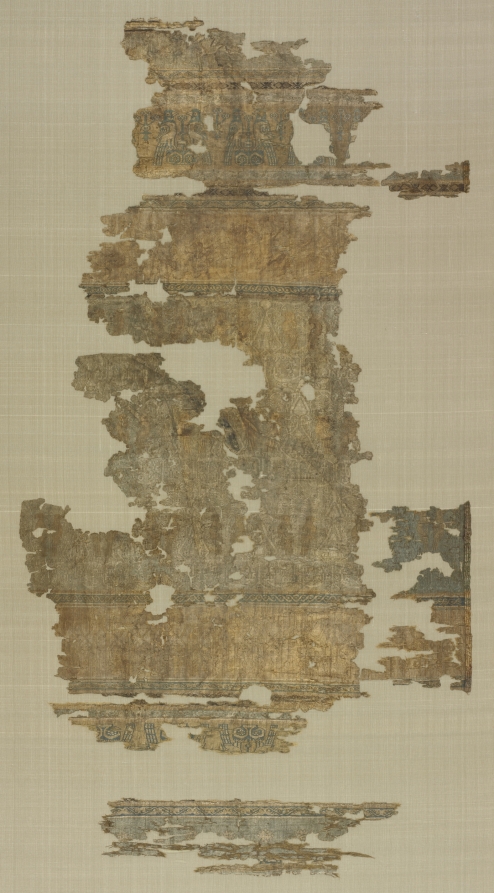
The Material Legacy of Imperial Silk: A Study in Fragments
As the Senior Heritage Specialist at Lauren Fashion Heritage Lab, I am often drawn to the quiet eloquence of fragments. They are not merely remnants; they are primary sources, whispering truths that whole garments, in their polished completeness, sometimes obscure. Today, we examine a collection of silk fragments, each a testament to the formidable legacy of imperial silk weaving. These are not just pieces of fabric; they are artefacts of power, artistry, and a global trade that shaped civilisations. Their materiality—the very silk itself—is a narrative we must decode with the precision of a Savile Row cutter and the reverence of a museum curator.
The Substance of Sovereignty: Materiality of Imperial Silk
The first and most profound observation is the materiality of these fragments. Silk, as a fibre, is inherently paradoxical: it is both delicate and incredibly strong, with a tensile strength comparable to steel. The imperial silks of China, particularly from the Ming (1368–1644) and Qing (1644–1912) dynasties, were not merely woven; they were engineered. The fragments in our collection exhibit a warp-faced compound weave, a technique that required extraordinary skill. The warp threads, often numbering in the thousands per inch, are densely packed, creating a surface that is both lustrous and resilient. This density is not accidental. It was a deliberate choice to ensure the silk could withstand the rigours of courtly life—the constant movement, the weight of ceremonial robes, and the passage of time.
The dyes used are equally telling. The deep, resonant reds and golds are not the result of modern chemical processes. They are derived from natural sources: madder root for the reds, and the precious orpiment (a toxic arsenic sulphide) for the golds. The stability of these colours, even after centuries, speaks to the sophisticated mordanting techniques employed by imperial dyers. The gold thread, often a gilded paper or animal membrane wrapped around a silk core, is not merely decorative; it is a statement of imperial wealth and divine right. The shimmer of gold against the crimson is a visual proclamation of the emperor’s celestial mandate.
The Weave of Empire: Context and Legacy
To understand these fragments, one must understand the context of their creation. Imperial silk weaving was not a cottage industry; it was a state-controlled enterprise of immense scale. The Imperial Silk Workshops in Suzhou, Hangzhou, and Nanjing were the epicentres of this industry, employing thousands of artisans. The production was governed by strict sumptuary laws. Only the emperor and his immediate family could wear certain patterns, such as the five-clawed dragon. The fragments we hold, with their intricate dragon motifs and cloud patterns, are thus not just decorative; they are political documents. They encode hierarchy, allegiance, and the very structure of the celestial court.
The legacy of this system is profound. The technical mastery of imperial silk weaving did not die with the fall of the Qing dynasty in 1912. It was preserved, adapted, and eventually transmitted to the West. The Jacquard loom, invented in France in 1804, was a direct descendant of the drawloom used for centuries in China. The fragments we study are therefore not just Chinese artefacts; they are the ancestors of the silks used on Savile Row today. The discipline, the precision, the reverence for material—these are qualities that define the finest tailoring. When a Savile Row cutter selects a silk for a bespoke dinner jacket, they are, consciously or not, drawing upon a lineage that stretches back to the imperial workshops.
Reading the Fragment: A Forensic Approach
Let us examine a specific fragment from our collection: a piece of kesi (cut silk) tapestry, approximately 12 by 18 inches. The weave is so fine that it appears painted. The design features a phoenix, its tail feathers rendered in a gradient of gold and turquoise. The materiality here is extraordinary. The kesi technique, where the weft threads are not carried across the entire width of the fabric but are instead woven in small, individual sections, creates a tapestry that is both supple and incredibly detailed. This fragment was likely part of a larger garment, perhaps a court robe or a ceremonial hanging. The edges are frayed, but the central motif is intact. This is not a sign of decay; it is a sign of use. The fragment was worn, touched, and lived in.
The context of this fragment’s survival is also instructive. It was not preserved in a tomb or a palace archive. It was found in a private collection in London, having been acquired by a British diplomat in the late 19th century. This is a reminder that the legacy of imperial silk is not solely a Chinese story. It is a story of trade, of colonialism, and of cultural exchange. The fragment’s journey from the Forbidden City to a London townhouse is a microcosm of the global flow of luxury goods. The silk that once adorned an emperor now sits in a climate-controlled drawer in a heritage lab, awaiting analysis.
Implications for Contemporary Craft and Heritage
For the modern practitioner, these fragments offer a lesson in patience and precision. The imperial weavers did not rush. They understood that a single mis-thread could compromise the entire piece. This is a philosophy that resonates deeply with the ethos of Savile Row, where a single suit can take 80 hours of handwork. The fragments also challenge our modern understanding of sustainability. These silks were designed to last for centuries. They were not disposable. They were heirlooms, investments, and symbols of continuity. In an age of fast fashion, the materiality of these fragments is a quiet rebuke.
As heritage specialists, our role is not to simply preserve these fragments but to interpret them. We must ask: What can this fragment tell us about the hands that wove it? About the eyes that admired it? About the society that valued it? The answers are woven into the very silk. The lustre of the fibre, the precision of the weave, the stability of the dye—these are not just technical details. They are the language of empire, the grammar of power, and the poetry of craftsmanship.
In conclusion, these silk fragments are far more than remnants. They are the material embodiment of a legacy that continues to shape our understanding of luxury, craft, and heritage. They remind us that true quality is not in the whole but in the integrity of every part. And for those of us who work with fabric, whether in a heritage lab or on Savile Row, that is a lesson worth weaving into our own practice.
Heritage Lab Insight
Lab Insight: CMA Silk Archive Node integration.