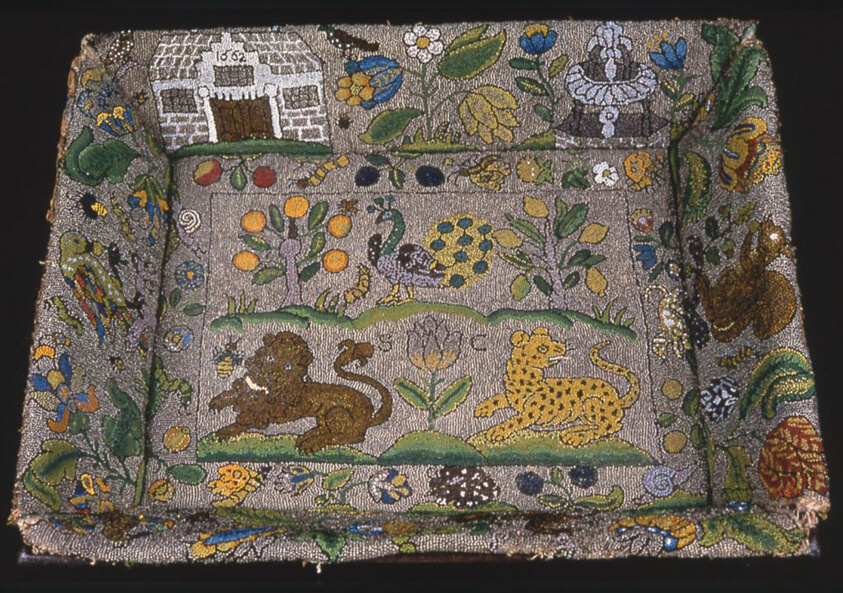
An Examination of the Basket Insert: Material Syntax and Sartorial Dialectic
Within the curated archives of Lauren Fashion Heritage Lab, certain artifacts assert their significance not through ostentation, but through a quiet, resolute articulation of principle. The Basket Insert—a seemingly ancillary component—stands as one such object. Its study reveals a sophisticated material syntax and a deliberate sartorial dialectic, speaking to an era where foundational construction was accorded the same intellectual and artisanal respect as the visible grandeur of the finished garment. To analyse this piece is to engage with the unspoken grammar of classic elegance.
Material Provenance and Structural Hierarchy
The artifact’s material stratification is a manifesto of intentional hierarchy. Its primary plane, a plain weave linen, provides the essential text. Linen, with its innate rigidity and tensile strength, is the structural philosopher of textiles—it argues for form, for endurance, for a backbone. The plain weave is its most scholarly expression: unadorned, honest, and formidably robust. This was not a fabric chosen for its drape or its lustre, but for its unwavering commitment to duty. It forms the foundational canvas upon which a more decorative argument is mounted, yet its integrity remains the non-negotiable premise of the entire construction.
Upon this grounded substrate rests a beaded regiment of glass beads. Their application is not mere frivolity; it is tactical. Each bead serves as a minute point of added mass and texture, a subtle intervention to influence the behaviour of the silk it will ultimately support. The beading pattern, though decorative in aspect, functions as a calibrated weighting system, ensuring the luxurious outer fabric maintains a specific, intended relationship with the body’s contours. It is engineering disguised as embellishment—a most Savile Row conceit.
The Dialectic of Support and Display
The true genius of the artifact lies in its dialectical resolution of opposing forces: support versus display, rigidity versus fluidity, the unseen versus the seen. The cardboard backing is the pivotal, if stark, interlocutor in this dialogue. A material of the workshop, not the salon, its inclusion is a bold statement of pragmatism. It introduces a precise, localized firmness, a architectural panel against which the soft sciences of silk can perform. It is the underdrawing, the stricture that makes eventual liberty meaningful.
This dialogue finds its synthesis in the final, glorious layer: the lined silk, plain weave with supplementary patterning wefts. Here, the context of "classic silk craftsmanship and fluid elegance" is fully realized. The plain weave ground provides a stable, fine surface, a testament to exemplary thread quality and loom precision. The supplementary patterning wefts are the flourish of erudition—the discreet, complex thought woven into the fabric of the argument. They introduce colour, motif, and a subtle, raised texture, yet their execution is so refined that the overall effect remains one of serene, unbroken fluidity. This silk is not merely a lining; it is the protected, private expression of luxury, a secret known only to the wearer and the garment itself. It is the assurance that elegance is holistic, extending even to the realms unseen.
Contextual Intelligence and Sartorial Philosophy
The Basket Insert, therefore, cannot be dismissed as mere historical tailoring ephemera. It is a treatise on a specific sartorial philosophy. It embodies the principle that true elegance is a consequence of profound structural intelligence. The "fluid elegance" of the classic silk garment—its ability to move with grace, to skim rather than cling, to hold a shape without appearing rigid—is not a happy accident. It is a calculated achievement, born from artifacts such as this.
This insert would have been meticulously positioned, its rigid cardboard and weighted beading working in concert to provide a discreet, internal architecture. It would tame excess movement, encourage a particular fall, and create a clean, resolved silhouette from the waist to the hip. The silk lining, facing the wearer’s own garments, ensured that every interaction, however intimate, was one of refined texture and luxury. It removed the mundane from the equation, elevating the entire experience of dressing.
In the canon of classic craftsmanship, as practised in the finest ateliers and on the hallowed ground of Savile Row, the value of an object is never determined solely by its visibility. It is determined by its contribution to the whole. The Basket Insert is a paragon of this belief. It represents a world where linen, cardboard, glass, and silk engage in a silent, collaborative discourse, each material performing its appointed role with austere excellence. The result is not an insert; it is the embodiment of a considered, intelligent, and utterly resolved approach to elegance. It reminds us that before one can command presence, one must first master the foundation.