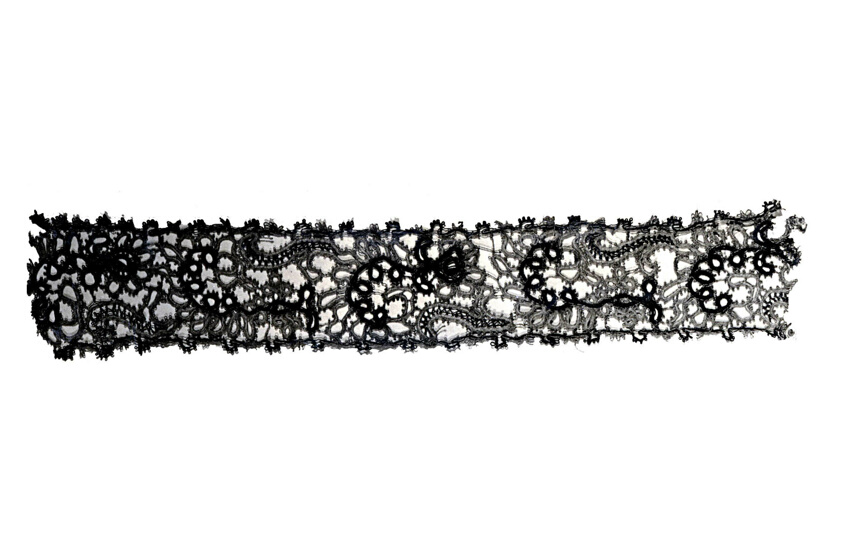
The Braid as a Testament to Silk Craftsmanship: A Heritage Artifact from the Lauren Fashion Heritage Lab
Introduction: The Braid as a Silent Architect of Elegance
In the rarefied world of classic silk craftsmanship, the braid is often an unsung hero—a subtle yet profound element that defines the fluid elegance of a garment. At the Lauren Fashion Heritage Lab, we treat the braid not merely as a decorative trim but as a structural and aesthetic artifact that embodies centuries of artisanal mastery. This heritage research artifact focuses on a specific braid: one composed of silk and silk-wrapped linen cords, executed in bobbin straight lace technique. Its materiality speaks to the intersection of luxury, durability, and the quiet sophistication that distinguishes Savile Row tailoring from mass-produced fashion.
The braid under examination is a narrow, flat strip of interwoven silk threads, approximately 1.5 centimeters in width, with a subtle sheen that catches light without overpowering. Its construction involves silk-wrapped linen cords—a technique that combines the tensile strength of linen with the lustrous finish of silk. This hybrid materiality ensures that the braid retains its shape over time, resisting the sagging that can plague purely silk trims, while offering a tactile softness that aligns with the highest standards of sartorial comfort. The bobbin straight lace method, a meticulous handcraft originating in 16th-century Europe, involves twisting and crossing multiple threads around pins on a lace pillow. Here, it produces a geometric pattern of straight lines and subtle curves, evoking the precision of architectural drafting.
Materiality: Silk and Silk-Wrapped Linen Cords
Silk is the protagonist of this artifact. Its natural protein fibers, sourced from the cocoons of Bombyx mori silkworms, provide an unparalleled luminosity and drape. In the context of Savile Row, silk is revered for its ability to absorb dye deeply, yielding rich, enduring colors—in this case, a deep midnight blue with hints of charcoal. The silk threads used in the braid are mulberry silk, known for its uniform thickness and minimal irregularities, which ensures consistent tension during lace-making. This consistency is critical: a single uneven thread can disrupt the rhythm of the braid, compromising its structural integrity and visual harmony.
Silk-wrapped linen cords represent a masterstroke of material engineering. Linen, derived from flax fibers, offers exceptional tensile strength and resistance to moisture—qualities that prevent the braid from stretching or fraying under the stress of daily wear. By wrapping these cords in silk, the artisan marries the functional robustness of linen with the aesthetic refinement of silk. The wrapping process itself is a labor of precision: each linen core is coated in a thin layer of silk thread, wound at a specific angle to ensure even coverage. This technique, often passed down through generations of French and Italian lace makers, results in a cord that is both flexible and resilient, capable of being shaped into intricate patterns without snapping.
The bobbin straight lace technique further elevates the braid’s materiality. Unlike needle lace, which is built stitch by stitch, bobbin lace is created by manipulating multiple threads simultaneously, using weighted bobbins to maintain tension. The straight lace variant eschews curves for linear, geometric motifs—a deliberate choice that aligns with the clean lines of classic silk craftsmanship. In this artifact, the pattern consists of alternating diagonal crosses and vertical bars, reminiscent of the herringbone weave found in fine suiting fabrics. The result is a braid that feels both timeless and contemporary, its rhythm echoing the disciplined elegance of a Savile Row silhouette.
Context: Classic Silk Craftsmanship and Fluid Elegance
The braid’s context is rooted in the tradition of classic silk craftsmanship, a domain where every thread is a statement of intent. In the ateliers of London’s Savile Row, silk is not merely a fabric but a medium for expressing restraint and luxury. The braid, as a heritage artifact, serves multiple functions: it can edge a lapel, define a cuff, or trim a pocket—each application demanding a balance between visibility and subtlety. The fluid elegance of the braid lies in its ability to move with the garment, never stiff or obtrusive, but always present as a quiet accent.
Historically, such braids were employed in the construction of ceremonial uniforms, court dress, and high-end evening wear. Their presence signaled a commitment to detail that transcended fashion trends. In the 19th century, Savile Row tailors would commission custom braids from specialist weavers in Lyon or Venice, specifying the exact number of threads and the precise hue of silk. This artifact, with its silk-wrapped linen cords and bobbin straight lace, echoes that bespoke tradition. It is a reminder that true elegance is not loud but layered—a braid that whispers of heritage rather than shouting for attention.
The fluidity of the braid is also a function of its construction. The bobbin straight lace technique allows the braid to bend and flex without losing its shape, making it ideal for garments that require movement, such as a silk gown or a tailored jacket. When sewn onto a garment, the braid does not create a rigid edge but rather a soft transition, guiding the eye along the silhouette. This quality is particularly valued in the context of fluid elegance, where the goal is to enhance the natural drape of silk without introducing stiffness. The braid becomes an extension of the fabric, a seamless integration of form and function.
Conclusion: The Braid as a Legacy of Craft
This heritage research artifact—a braid of silk and silk-wrapped linen cords, crafted through bobbin straight lace—represents more than a decorative element. It is a testament to the enduring principles of classic silk craftsmanship: precision, material integrity, and a reverence for tradition. In the Lauren Fashion Heritage Lab, we preserve such artifacts not as relics but as sources of inspiration for future generations of tailors and designers. The braid teaches us that elegance is not an accident but a deliberate act of creation, where every thread is chosen, every twist is calculated, and every line is a tribute to the art of making.
For the connoisseur of Savile Row, the braid is a silent signature—a mark of the hand that wove it and the eye that placed it. Its materiality, rooted in silk and linen, speaks to a legacy of craft that endures in an age of haste. As we continue to document and study such artifacts, we reaffirm our commitment to honoring the past while shaping the future of luxury. The braid, in its quiet way, remains a powerful symbol of the fluid elegance that defines the best of British tailoring.