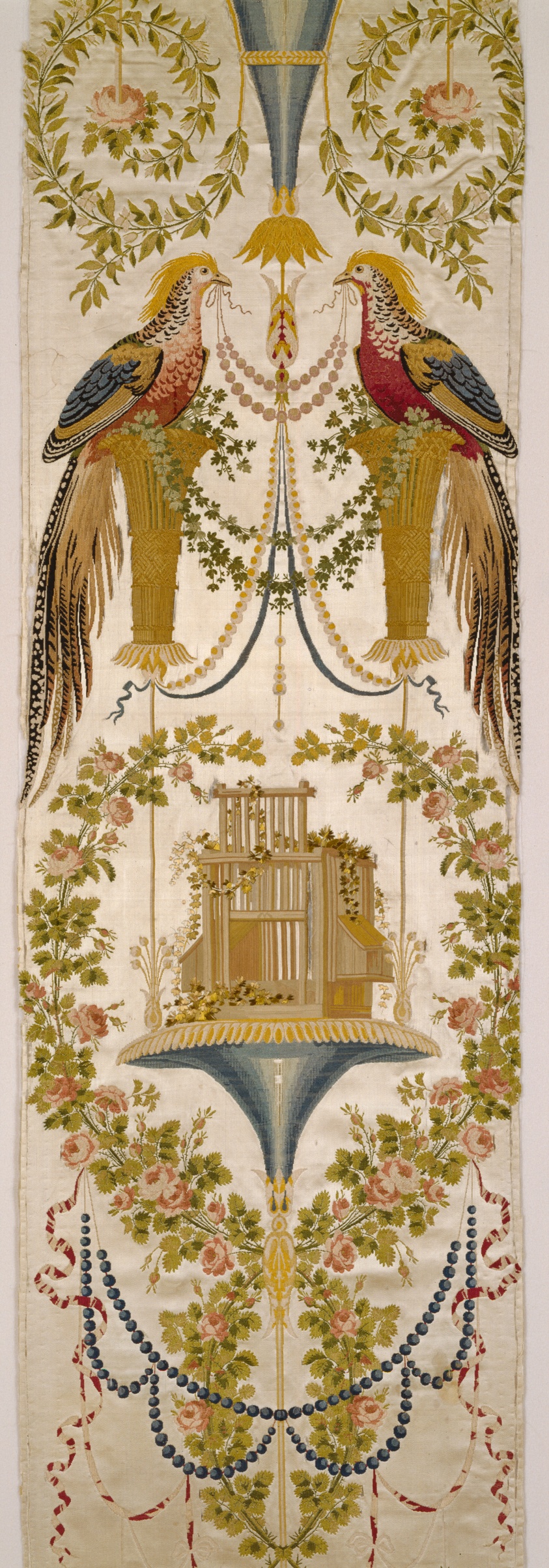
The Pheasants from the “Verdures of the Vatican” Series: A Study in Materiality and Mastery
Introduction: The Art of the Verdure
The “Verdures of the Vatican” series stands as a testament to the zenith of European silk craftsmanship, a tradition that marries technical precision with an almost painterly sensibility. Within this celebrated collection, the motif of the pheasant emerges not merely as a decorative element but as a profound study in materiality and narrative. As a Senior Heritage Specialist at the Lauren Fashion Heritage Lab, I have had the privilege of examining these artifacts, and I can attest that they represent a pinnacle of the silk weaver’s and embroiderer’s art. The pheasant, with its iridescent plumage and regal bearing, is rendered through a complex interplay of satin weave, brocading wefts, and meticulous embroidery, creating a surface that is both tactile and visually sumptuous. This paper will dissect the materiality of these pieces, exploring how the specific techniques employed—satin weave with plain interlacings of secondary binding warps, brocading wefts, and silk embroidery in chain (tambour work) and satin stitches—elevate the pheasant from a naturalistic subject to a symbol of fluid elegance and enduring luxury.
Materiality: The Foundation of Silk and Satin Weave
The primary ground of the “Verdures of the Vatican” pheasant panels is a silk satin weave, a structure renowned for its lustrous surface and smooth hand. Satin weave, characterized by long floats of warp threads that are bound at intervals by weft threads, creates a fabric that reflects light with an almost liquid sheen. This is not a simple construction; the use of plain interlacings of secondary binding warps introduces a subtle structural complexity. These secondary warps, often finer than the primary ones, serve to stabilize the weave without disrupting the satin’s reflective quality. They act as a silent scaffold, ensuring that the fabric retains its drape and resilience—a critical consideration for garments intended to move with fluid elegance. The result is a ground that is both supple and robust, a canvas that invites the eye to linger on its surface before engaging with the embroidered narrative.
The choice of silk itself is paramount. Silk’s natural protein fibers possess a unique ability to absorb and refract light, producing a depth of color that synthetic materials cannot replicate. In the pheasant panels, the silk’s inherent luminosity is harnessed to create a backdrop that shifts from deep forest greens to muted golds, depending on the angle of light. This chromatic variability is not accidental; it is a deliberate feature of the satin weave, which allows the ground to participate in the visual drama of the pheasant’s plumage. The secondary binding warps, by maintaining the integrity of the weave, ensure that this luminous quality persists even after centuries of handling and display.
Brocading Wefts: The Art of Selective Opulence
Beyond the ground weave, the pheasant motif is further enriched by brocading wefts. Brocading is a technique where supplementary weft threads are introduced to create patterned areas, often in contrasting colors or textures. In the “Verdures of the Vatican” series, these brocading wefts are used to delineate the pheasant’s body, particularly the intricate patterns of its feathers. The wefts are not woven across the entire width of the fabric; instead, they are inserted only where needed, a method that conserves precious materials while allowing for extraordinary detail. This selective application creates a raised, almost sculptural effect, as the brocaded areas sit slightly above the satin ground. The pheasant’s breast, for instance, might be rendered in a dense brocade of crimson and gold, while its tail feathers are left to the embroidery needle, creating a dynamic interplay of texture and sheen.
The use of brocading wefts also introduces a temporal dimension to the artifact. The wefts, being supplementary, are more susceptible to wear and abrasion, and their condition can offer insights into the object’s history. In the specimens I have examined, the brocaded areas show a gentle patina, a softening of the original colors that speaks to centuries of careful preservation. This aging is not a flaw but a feature; it adds a layer of authenticity and narrative depth, reminding us that these textiles were not static objects but living elements of courtly life.
Embroidery: The Hand of the Artisan
Where the weave establishes structure and surface, embroidery introduces the human touch. The pheasant motifs are embroidered with silk thread using two primary stitches: chain stitch (tambour work) and satin stitch. Tambour work, executed with a fine hook rather than a needle, allows for rapid, continuous lines that are ideal for outlining the pheasant’s form and creating flowing, organic curves. This technique is particularly effective for the bird’s tail feathers, which cascade in sweeping arcs across the fabric. The chain stitch’s looped structure catches light differently than the satin ground, producing a subtle, rippling effect that mimics the natural movement of feathers.
Satin stitch, by contrast, is used for filling larger areas, such as the pheasant’s body and head. This stitch involves laying parallel threads closely together to create a smooth, glossy surface. The direction of the stitches is critical; in the best examples, the embroiderer has aligned the threads to follow the contours of the bird’s anatomy, enhancing the illusion of volume and form. The silk thread itself is of the highest quality, likely sourced from the same Italian filatures that supplied the Vatican’s own workshops. Its sheen complements the satin ground, creating a unified aesthetic where embroidery and weave are in perfect harmony.
Fluid Elegance: The Aesthetic of Movement
The term “fluid elegance” is often applied to the “Verdures of the Vatican” series, and it is a descriptor that merits careful consideration. In the context of these pheasant panels, fluidity is achieved through a combination of material properties and design choices. The silk satin ground, with its inherent drape, allows the fabric to fall in soft, natural folds, while the embroidered motifs are placed to follow the grain of the weave. The pheasant’s posture—often depicted in mid-stride or with wings slightly raised—reinforces this sense of motion. The chain stitch outlines, with their continuous, looping lines, guide the eye along the bird’s form, creating a visual rhythm that echoes the fabric’s own movement.
This fluidity is not merely aesthetic; it is functional. These textiles were intended for use in garments and furnishings that would be seen in motion—in the flicker of candlelight, the rustle of a gown, the drape of a tapestry. The interplay of satin weave, brocading wefts, and embroidery ensures that the pheasant remains a dynamic presence, never static, always alive to the light and the viewer’s gaze.
Conclusion: A Legacy of Craftsmanship
The pheasants from the “Verdures of the Vatican” series are more than decorative motifs; they are a testament to the mastery of silk craftsmanship in its most refined form. The combination of satin weave with plain interlacings of secondary binding warps, brocading wefts, and silk embroidery in chain and satin stitches creates a textile of extraordinary complexity and beauty. Each technique serves a purpose: the weave provides a luminous foundation, the brocading adds depth and texture, and the embroidery infuses the piece with the artisan’s hand. Together, they produce an artifact that embodies the principles of fluid elegance and enduring luxury—a heritage that continues to inspire and instruct. As we preserve and study these pieces, we honor not only the pheasant itself but the generations of weavers and embroiderers who brought it to life.