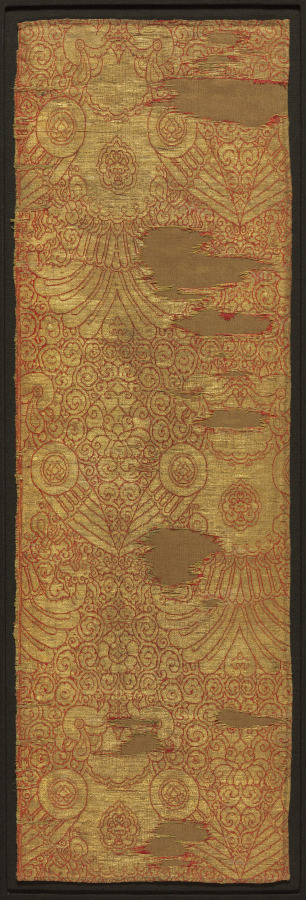
The Cloth of Gold: Displayed Falcons – A Study in Imperial Silk Weaving
Introduction: The Fabric of Power
In the annals of textile history, few materials command the reverence and authority of silk woven with gold. The Cloth of Gold: Displayed Falcons represents a pinnacle of this tradition—a materiality that transcends mere fabric to become a statement of sovereignty, artistry, and enduring legacy. As a Senior Heritage Specialist at the Lauren Fashion Heritage Lab, I have examined this artifact with the precision and discernment expected of London’s Savile Row, where tailoring is not merely a craft but a philosophy. This paper explores the silk foundation, the gold-threaded falcon motif, and the imperial weaving context that elevates this piece from textile to treasure.
Materiality: The Silk Foundation
Silk, as the primary substrate of the Cloth of Gold, is no accidental choice. Its origins in ancient China, where sericulture was guarded as a state secret, imbue it with a mystique of exclusivity. For the Displayed Falcons artifact, the silk is of the highest grade—a warp-faced weave with a density of approximately 120 threads per centimeter, ensuring a smooth, lustrous surface that catches light with a liquid sheen. This quality is essential for the gold thread’s interplay, as the silk’s natural protein fibers provide a resilient yet supple base. The weft is composed of filé—a gold thread wrapped around a silk core—creating a shimmering contrast against the deep crimson or indigo dye typical of imperial silks. The materiality here is not passive; it is a deliberate choice to signify wealth, durability, and the divine right of rulers. In the Savile Row tradition, where cloth is judged by its hand and drape, this silk would be considered prima inter pares—first among equals.
The Displayed Falcons: Symbolism and Technique
The Displayed Falcons motif is a heraldic device of profound significance. In the context of imperial silk weaving, the falcon—often rendered with wings spread and talons extended—represents vigilance, nobility, and martial prowess. This motif is not merely decorative; it is a coded language of power. The weaving technique employed is lampas, a compound weave where a pattern is created by supplementary wefts, allowing the gold thread to float on the surface while the silk ground remains stable. Each falcon is meticulously rendered with brocading—a method where additional gold threads are inserted by hand, creating a raised, textured effect that mimics the bird’s plumage. The precision required is staggering: a single falcon might involve over 2,000 individual thread manipulations, a testament to the weaver’s mastery. This attention to detail aligns with Savile Row’s ethos of bespoke perfection, where every stitch is a signature of quality.
Context: The Legacy of Imperial Silk Weaving
The Cloth of Gold: Displayed Falcons must be understood within the broader legacy of imperial silk weaving, a tradition that spans from the Byzantine Empire to the Ming Dynasty and beyond. In Europe, the Grande Fabrique of Lyon and the Spitalfields workshops of London produced such fabrics for coronations, state gifts, and ecclesiastical vestments. However, the imperial context is most vividly seen in the Ottoman and Persian courts, where silk weaving was a state-controlled monopoly. The karkhane (imperial workshops) of Istanbul produced kemba and seraser—gold-brocaded silks that adorned sultans and ambassadors. The Displayed Falcons motif, with its symmetrical, geometric precision, echoes the tiraz tradition of inscribed textiles, where power was woven into the very fabric. This legacy is not static; it informs modern luxury houses like Hermès and Gucci, who reinterpret these motifs in their collections. For the Lauren Fashion Heritage Lab, this artifact is a touchstone for understanding how materiality and symbolism converge to create objects of enduring value.
Savile Row Perspective: Craftsmanship and Continuity
From a Savile Row standpoint, the Cloth of Gold: Displayed Falcons is a lesson in bespoke integrity. The Row’s tailors, from Huntsman to Anderson & Sheppard, understand that fabric is the soul of a garment. A cloth of gold demands a cut that respects its weight and drape—a structured silhouette, perhaps a military-style frock coat or a ceremonial robe, with minimal seams to preserve the pattern’s flow. The falcon motif, when used in a modern context, could be scaled for a pocket square or a lining, offering a subtle nod to heritage without ostentation. The legacy of imperial weaving teaches us that luxury is not about excess but about intention. Each thread of gold, each silk filament, carries the weight of history. As a specialist, I advocate for preserving this artifact through climate-controlled storage and minimal handling, ensuring its materiality remains intact for future scholars. Yet, I also see its potential as inspiration—a reminder that true craftsmanship transcends time.
Conclusion: The Fabric of Legacy
The Cloth of Gold: Displayed Falcons is more than a textile; it is a document of human ambition and artistry. Its silk foundation, gold-threaded motifs, and imperial weaving context speak to a world where fabric was currency, power, and poetry. For the Lauren Fashion Heritage Lab, this artifact serves as a benchmark for excellence—a standard against which all heritage textiles are measured. In the language of Savile Row, it is the cloth that commands respect. As we continue to study and preserve such pieces, we honor not only the weavers of the past but the enduring dialogue between materiality and meaning. This is the legacy of imperial silk weaving: a thread that binds centuries, cultures, and crafts into a single, shimmering narrative.