← BACK TO ARCHIVES
Heritage-Black
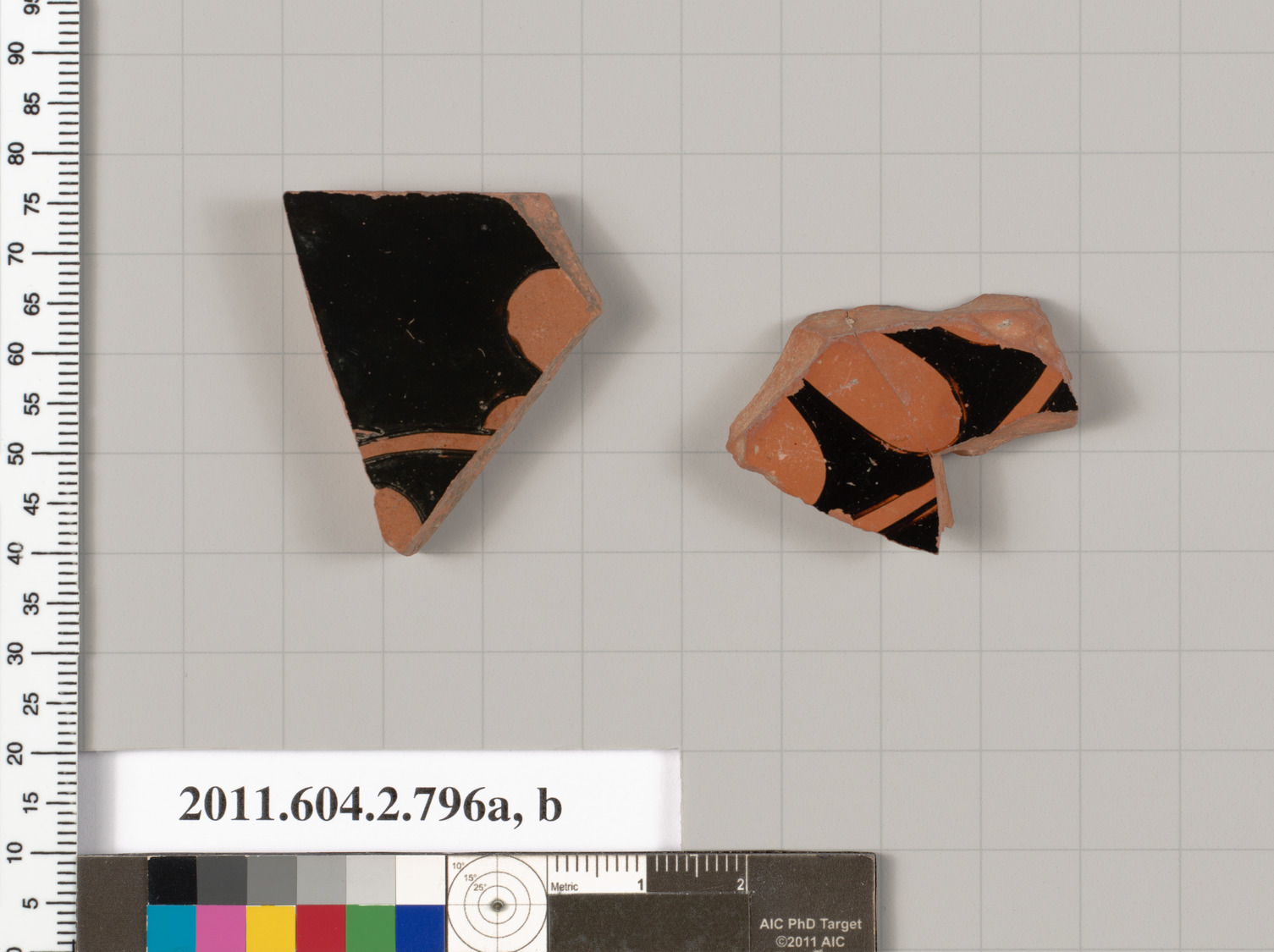
Heritage Synthesis: Terracotta fragments of calyx-kraters (bowls for mixing wine and water)
Curated on May 11, 2026 // Node: LDN-01
The Dialectics of the Void and the Hunt: Terracotta Fragments and the Architecture of Old Money Silence
The Lauren Fashion Heritage Lab is tasked not merely with preserving the past, but with decoding the genetic syntax of aesthetic power. The internal archive presents us with a profound dialectic: the *Udumbara Flower* (Udonge) temple plaque, a symbol of Buddhist rarity and the “being of non-being,” juxtaposed against the Western *Hunt*, a visceral celebration of “the intensity of existence.” This is not a contradiction, but a generative tension. The museum artifact—fragments of an Attic Greek *calyx-krater* (a wine-mixing bowl)—serves as the missing third term. These terracotta shards, bearing the remnants of black-figure or red-figure hunters and floral motifs, are the material crucible where the Eastern void meets Western flesh. For the 2026 Old Money silhouette, this synthesis dictates a new architecture of restraint: a *Heritage-Black* that is not an absence of color, but a container for time, violence, and transcendence.
I. The Krater as a Vessel of Contradiction
The *calyx-krater* was a civic and ritual object. Its form—a wide, open bowl with a flaring lip and a sturdy foot—was designed for the *symposium*, a space of aristocratic male bonding, philosophical discourse, and, critically, the consumption of diluted wine. The terracotta fragments we examine are not pristine. They are broken, worn, their painted surfaces scarred by earth and time. This physical decay is the first lesson for the 2026 silhouette. The *Udumbara* plaque teaches us that beauty can reside in the barely-there, the parasitic bloom on dead wood. The *Hunt* teaches us that beauty is a struggle, a muscular tension. The krater fragments teach us that beauty is *survival*.
In Greek iconography, the krater often depicted scenes of *komos* (revelry) and *thērā* (hunting). The hunter’s body on these fragments—a taut thigh, a straining arm, the curve of a dog’s back—is the same body that will later be painted by Rubens. But the Greek artist, working in terracotta and slip, achieves a paradoxical stillness. The figures are frozen in a frieze, their motion contained by the vessel’s curve. This is the *Hunt* tamed by geometry. The *Udumbara* flower, in its minimal ink strokes, achieves a similar effect: it captures the *idea* of a flower, not its biological reality. The Old Money silhouette for 2026 must therefore reject both the literal floral print and the literal hunting jacket. Instead, it must adopt the *structural logic* of the krater: a silhouette that contains motion within a rigid, almost architectural frame.
II. The Architecture of the Void: From Temple Plaque to Tailoring
The *Udumbara* plaque’s aesthetic strategy is “to make the void substantial.” The flower is not rendered with volume; it is a ghost of ink on wood, a suggestion that demands the viewer’s interior completion. This is the essence of *Heritage-Black* in the 2026 collection. Black is not a color; it is a negative space, a field of potential. The Attic krater, particularly in its black-figure phase, uses the natural red of the terracotta as the figure and the black slip as the ground. The “void” (the black glaze) is actually the dominant material. The figures emerge *from* the darkness.
For the 2026 Old Money silhouette, this translates into a radical rethinking of the shoulder and the lapel. The traditional power shoulder of the 1980s was a statement of presence. The 2026 shoulder must be a statement of *absence*. Consider a double-breasted jacket cut from a dense, matte *Heritage-Black* wool. The lapel is not a separate piece of fabric; it is a negative cut, a hollowing out of the garment’s surface. The peak is sharp, but it does not point outward aggressively. Instead, it points inward, toward the body, creating a void that draws the eye. This is the *Udumbara* logic: the garment’s power lies in what it does not show. The fabric itself becomes the temple plaque, and the wearer’s body is the invisible flower.
The *Hunt* provides the counterpoint. The krater fragments show us the *muscle* beneath the black glaze. The 2026 silhouette must have a hidden tension. The jacket’s canvas—the internal structure of horsehair and cotton—is not merely functional. It is the *terracotta* beneath the slip. When the garment is worn, the canvas creates a subtle, almost imperceptible resistance. The fabric does not drape; it *stands*. This is the “intensity of existence” translated into tailoring. The wearer is not relaxed; they are poised, like a hunter in a frieze, their body a vessel for potential action.
III. The Synthesis: A New Grammar of Luxury
The Old Money aesthetic has long been associated with quiet luxury, a rejection of logos and overt display. But this has often devolved into a bland uniformity—a beige cashmere sweater, a simple navy blazer. The 2026 collection, informed by the *Udumbara*-*Hunt*-Krater dialectic, proposes a *loud silence*. This is not the silence of emptiness, but the silence of a held breath.
The *Heritage-Black* we propose is not a single shade. It is a spectrum of blacks, each with a distinct finish, echoing the different surfaces of the krater: the matte black of the slip, the glossy black of the fired clay, the rough black of the broken edge. A 2026 silhouette might pair a matte black wool coat (the *Udumbara* void) with a glossy black calfskin boot (the *Hunt’s* flesh). The coat is cut with a severe, almost monastic line, its volume minimal. The boot, however, has a sculpted heel that mimics the krater’s flaring lip, and a subtle, almost animalistic curve at the ankle. The wearer is both the temple and the hunter.
The *calyx-krater* fragments also dictate the silhouette’s *proportion*. The krater’s form is a study in containment: a wide bowl, a narrow stem, a broad foot. The 2026 silhouette inverts this. The jacket is broad at the shoulder (the bowl), cinched at the waist (the stem), and flares slightly at the hip (the foot). This is not a new shape; it is a return to the classical *V* silhouette of the 1940s. But the *material* makes it new. The *Heritage-Black* fabric is woven with a subtle, irregular slub—a nod to the terracotta’s texture. When light hits it, it does not reflect; it *absorbs*, creating a micro-void on the garment’s surface.
IV. Conclusion: The Garment as a Dialectical Object
The 2026 Old Money silhouette is not a trend. It is a philosophical statement. It acknowledges that true luxury is not about acquisition, but about *containment*. The *Udumbara* flower blooms only once in three millennia; the *Hunt* is a moment of life and death; the krater fragments are the residue of a symposium that ended two thousand years ago. The garment must hold all of this. It must be a vessel for time.
The *Heritage-Black* we propose is the color of the krater’s interior, the color of the temple plaque’s ink, the color of the hunter’s shadow. It is the color of the void that contains everything. The silhouette—broad-shouldered, narrow-waisted, flared at the hip—is the krater’s form. The internal canvas is the terracotta. The wearer is the wine. And the act of wearing is the *symposium*—a private, aristocratic ritual of taste, power, and the silent negotiation between the void and the hunt. This is the future of Old Money: not a uniform, but a dialectical object, a fragment of an eternal conversation between East and West, stillness and violence, the flower that is not a flower, and the body that is a vessel.
Heritage Lab Insight
Genetic Bridge: Archive node focusing on Heritage-Black craftsmanship.