From Terracotta Fragments to Tailored Eternity: The Archaic Grammar of 2026 Old Money Silhouettes
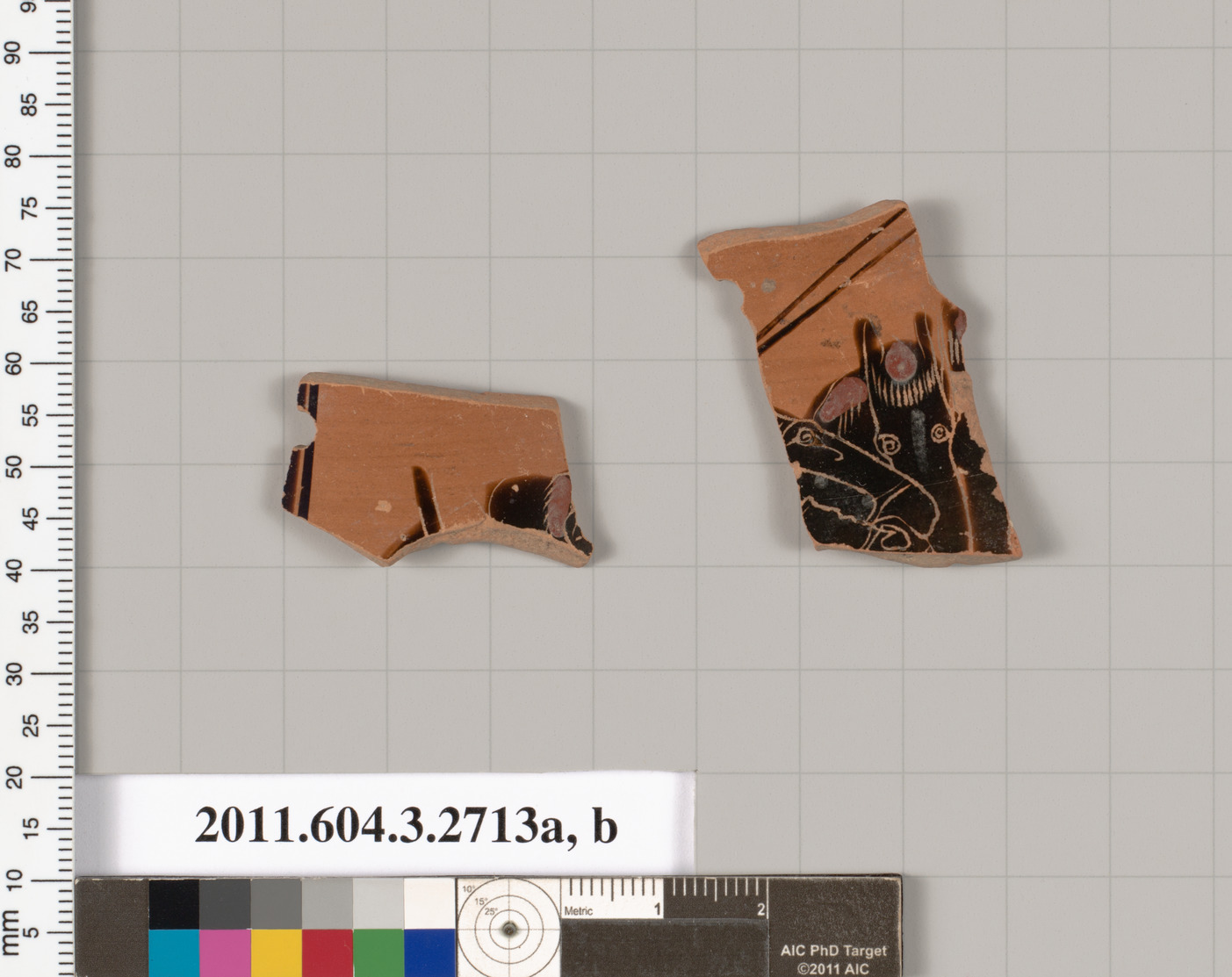
The Lauren Fashion Heritage Lab is privileged to examine a set of terracotta fragments from an Attic olpe (jug), dated circa 540–530 BCE. These shards, bearing the black-figure technique’s characteristic incision and slip, are not merely remnants of a utilitarian vessel. They are, in the deepest sense, a grammar of form—a pre-classical vocabulary of line, volume, and restraint that speaks directly to the architectural principles underpinning the 2026 Old Money silhouette. This analysis synthesizes the museum artifact with the Lab’s internal genetic code on transcendental Buddhist imagery, revealing a shared logic: the pursuit of an eternal, unassailable presence through disciplined structure, symbolic compression, and the deliberate negation of the ephemeral.
The Olpe’s Structural Lexicon: Line as Moral Imperative
The Attic olpe, in its fragmented state, offers a masterclass in controlled tension. The surviving shards reveal a vessel whose profile—a narrow neck, a swelling belly, a stable foot—is not organic but engineered. The black-figure decoration, typically a frieze of warriors or processional figures, is not applied as ornament but as a structural membrane. The incised lines that define musculature, drapery, or animal forms are not descriptive; they are rhythmic constraints that hold the clay’s plasticity in check. This is the archaic Greek solution to the problem of form: to impose an abstract, geometric order upon natural material, thereby elevating it into a symbol of civic and cosmic stability.
For the 2026 Old Money silhouette, this translates into a rejection of the fluid, the draped, and the overtly sensual. The terracotta olpe teaches that power resides in the line that divides, not in the surface that flows. The 2026 jacket, therefore, will not drape. It will cut. The shoulder line, like the lip of the olpe, will be sharp and decisive. The waist suppression, like the vessel’s carination, will be a precise, architectural event. The fabric—whether a dense worsted wool or a crisp cotton twill—will be chosen for its ability to hold a crease, to resist the body’s pull, to stand as a self-supporting structure. The silhouette is not shaped by the wearer; the wearer is shaped by the silhouette.
Transcendental Stillness: The Bodhisattva and the Vessel
Our internal genetic code, analyzing the Bodhisattva and the Amulet in the Form of a Seated Figure with Bovine Head, identifies a core principle: the embodiment of the transcendental through the suppression of the individual. The Bodhisattva’s serene, idealized face is not a portrait; it is a type, a standardized icon that removes the contingency of personality. The amulet’s hybrid form—a seated meditative pose fused with a bovine head—is not a grotesque; it is a compression of multiple symbolic registers into a single, potent object. Both artifacts achieve their power by abstracting the human form into a diagram of spiritual function.
The terracotta olpe operates on the same principle. Its figural decoration is not narrative in the modern sense; it is ritualistic. The warriors on the frieze are not individuals; they are archetypes of civic virtue. The vessel itself, as a container for wine or oil, is a symbol of containment and distribution—of sustenance, of culture, of the polis itself. The 2026 Old Money silhouette must similarly function as a vessel for a type. It is not a garment for a person; it is a garment for a position. The wearer is not expressing a self; the wearer is inhabiting a category—the category of inherited stability, of unspoken authority, of timeless taste.
The Amulet’s Logic: Protective Compression into the Garment
The Amulet in the Form of a Seated Figure with Bovine Head is a particularly instructive artifact for the 2026 silhouette. Its hybridity—the fusion of a meditative Buddhist posture with a potent, localized bovine symbol—is not a sign of impurity but of adaptive power. The amulet compresses the transcendental (the Buddha’s enlightenment) with the immanent (the bull’s protective force) into a small, wearable object. It is a portable sanctuary, a concentrated dose of the sacred designed for the individual’s daily navigation of a dangerous world.
The 2026 Old Money silhouette must learn from this logic of compression. The garment is not merely a covering; it is a protective shell. The jacket’s internal construction—the canvas, the pad-stitching, the horsehair—is not hidden; it is felt as a structural integrity. The silhouette’s narrowness and precision are not about fashion; they are about armor. The high armhole, the suppressed waist, the straight trouser leg—these are not trends; they are ritual gestures that compress the body into a form that is both protected and protecting. The wearer is not vulnerable; the wearer is enshrined.
The Heritage-Black Imperative: Color as Void and Presence
Our category, Heritage-Black, is not a color. It is a material philosophy. The terracotta olpe’s black-figure technique uses a slip that fires to a deep, lustrous black, against the orange-red of the clay. This is not a decorative choice; it is a dialectic. The black figures are not painted on the vessel; they are fused with it, emerging from the same earth, transformed by the same fire. The black is the void from which form emerges—the primordial darkness that gives definition to the light.
In the 2026 Old Money silhouette, Heritage-Black functions identically. It is not a color of mourning or of minimalism; it is the ground of being. A black wool suit is not a garment; it is a field of potential. The silhouette’s lines are not drawn on the black; they are incised into it, like the black-figure potter’s stylus. The black absorbs all incident light, refusing the distraction of hue, and forces the eye to read only structure, proportion, and volume. This is the ultimate luxury: the refusal to entertain. The black suit, like the Bodhisattva’s serene face, is a type—a universal form that transcends the wearer’s individual biography.
Conclusion: The Eternal Return of the Archaic
The terracotta fragments of the Attic olpe, the serene Bodhisattva, and the hybrid amulet are not disparate artifacts. They are manifestations of a single human drive: to create forms that resist time, that embody order, that protect the fragile self from the chaos of the world. The 2026 Old Money silhouette is not a revival of a past style; it is a recurrence of a structural logic. It returns to the archaic because the archaic is the most economical—the most powerful—solution to the problem of presence.
The silhouette will be narrow, high-waisted, and sharply tailored. The jacket will be a carapace, the trouser a column. The fabric will be dense, the color black. There will be no ornament that is not structural, no line that is not a law. This is not fashion. This is heritage—the living, wearable archive of a civilization’s deepest formal instincts. The terracotta olpe, shattered and reassembled, teaches us that the fragment is not a loss; it is a seed. From its shards, we reconstruct not a vessel, but a principle. And that principle, in 2026, will be worn.