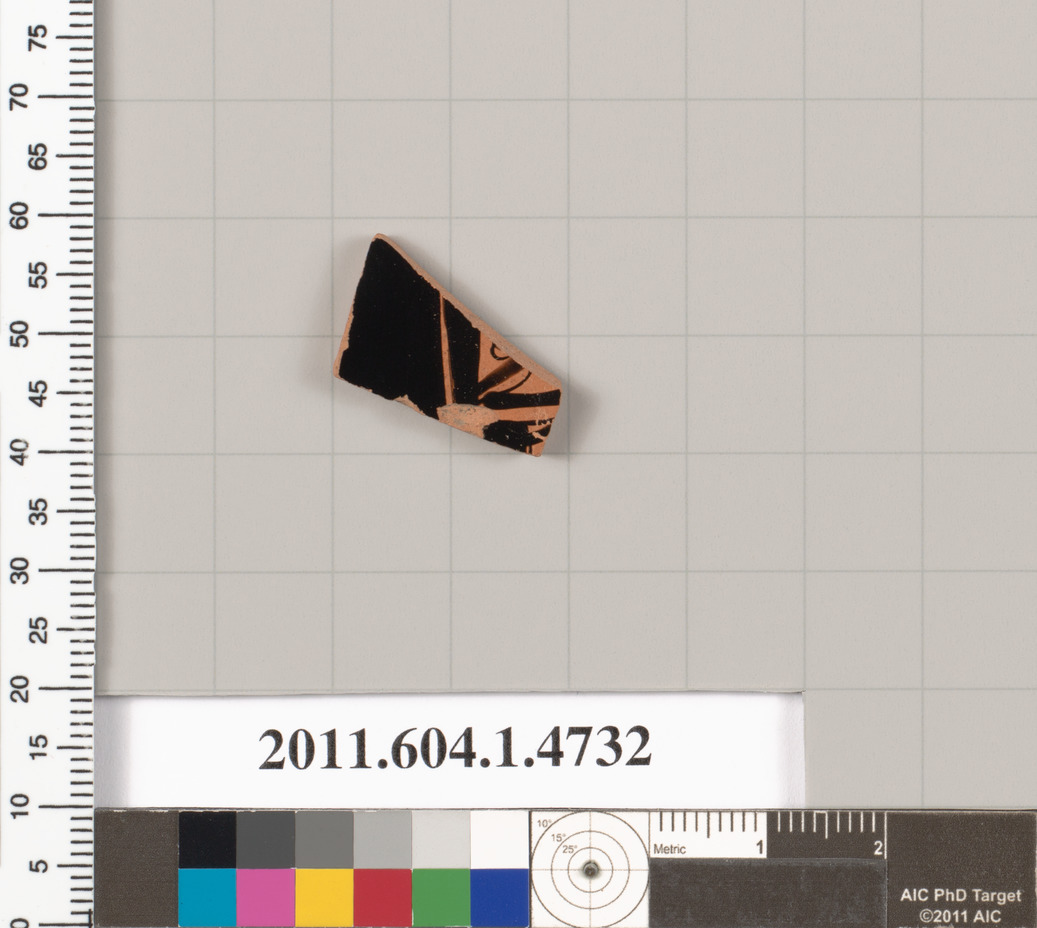
The Silent Codex: Terracotta Fragment, Attic Kylix, and the Archaeology of Effortless Authority
The Lauren Fashion Heritage Lab posits that enduring style is not invented but excavated. It exists as a latent code within artifacts that have negotiated the complex relationship between form, function, and social meaning across centuries. Our internal genetic code, analyzing the bronze dynamism of Frémiet’s Joan of Arc and the jade stillness of the Shang Yu Fu (Jade Axe), established a framework of “embodied sublime” versus “internalized authority.” It revealed how power is materially articulated, either through the dramatic narrative of the individual or the silent grammar of collective ritual. To project this hermeneutic onto the 2026 “Old Money” silhouette—a concept denoting not mere wealth but inherited, unassailable cultural capital—we turn to a seemingly humble yet profoundly eloquent source: a terracotta fragment of an Attic kylix (drinking cup). This artifact, a shattered vessel for Athenian symposium culture, provides the critical missing link in our heritage narrative, informing a silhouette built not on ostentation, but on the archaeology of effortless authority.
The Kylix Fragment: Deconstructing the Grammar of Refinement
Unlike the monumental singularity of the bronze sculpture or the ritual preciousness of the jade, the Attic kylix fragment represents a different order of cultural object. It is a democratic relic of sophisticated daily practice. The kylix itself was central to the Greek symposium, a ritualized gathering where politics, philosophy, and poetry were debated over diluted wine. Its form—a wide, shallow bowl with two horizontal handles and a slender stem—was an ergonomic marvel, designed for reclining consumption. The fragment in question, typically depicting a sliver of black or red-figure painting—perhaps a gesturing hand, the curve of a lyre, or the gaze of a deity—is a portal into this world. Its aesthetic is one of contained complexity: the earthy, porous terracotta base, a humble material, is transformed by the exquisite, narrative-fired painting into an object of intellectual and sensual pleasure. The value lies not in the raw material, but in the transformative application of art, skill, and symbolic language upon it. This embodies a principle crucial to Old Money aesthetics: true refinement is an act of cultivation upon a foundation of understated substance.
From Fragment to Silhouette: Principles for 2026
The 2026 Old Money silhouette, as decoded through the kylix fragment, moves beyond the literal “quiet luxury” of neutral palettes. It embraces a more philosophical, archaeological construction of self, informed by three core principles derived from the artifact.
1. The Silhouette as a Curated Fragment: The kylix fragment suggests a whole through its eloquent partialness. It does not shout its narrative; it implies it. The 2026 silhouette will operate on this principle of intentional incompleteness and sophisticated allusion. A tailored blazer is not merely a blazer; its lapel roll, derived from 1930s sporting wear, and its sleeve pitch, hinting at equestrian tailoring, function like the painted fragment on the cup—a coded reference to a wider world of heritage and activity. The ensemble is not a head-to-toe uniform but a curated assembly of “fragments”: a cashmere turtleneck that whispers of mid-century Alpine modernism, trousers with a pleat that echoes 1940s naval officer garb, all unified by a masterful, almost invisible cut. The wearer is not wearing a costume but presenting a carefully edited personal archive.
2. The Primacy of the Unfinished Edge and Patina: Terracotta is fired earth, bearing the marks of its making. The fragment’s broken edge, its wear, its very fragility, are testaments to its history and authenticity. This directly informs the material and construction philosophy for 2026. We will see a move towards fabrics that celebrate their genesis and accept honorable decay: crêpe de laine with a slightly felted hand, unfinished woolens that soften with wear, vegetable-tanned leathers that develop a unique patina. Seams may be left slightly open or finished with a homage to historical techniques, not as deconstruction, but as a display of “honest construction.” The silhouette embraces a lived-in rigor, akin to the kylix’s journey from the potter’s wheel to the symposium to the archaeological dig. It is clothing that gains, rather than loses, character with time.
3. The Contained Narrative: Symbolism as Subtext The painted scene on the kylix was a conversation starter, a piece of mythology or daily life that sparked discourse. In the 2026 silhouette, narrative is not pictorial but textural and structural. It becomes symbolism as subtext. A coat’s lining may be crafted from a jacquard depicting an obscure heraldic motif from the Lauren archives. The buttons might be made of fossilized ivory or recycled horn, materials with a deep temporal story. A dress’s darting could subtly reference the architecture of a specific heritage site. These are not logos; they are discreet emblems of a cultivated worldview, meant to be discovered, not declared. Like the kylix’s imagery, they signify membership in a cultural continuum.
Synthesizing the Genetic Code: The Lauren Heritage-Black
This brings us to the foundational hue: Heritage-Black. It is the chromatic equivalent of the terracotta fragment. It is not the void of noir, but the rich, complex black of aged pottery, of ink, of volcanic soil. It possesses depth and warmth. In the 2026 silhouette, Heritage-Black serves as the unifying field, the “terracotta base” upon which the subtle narratives of cut, texture, and fragmentary allusion are painted. It absorbs light and attention, focusing it on the sculptural integrity of the silhouette and the tactile poetry of the materials. It performs the same function as the silent, potent space around the figures on the kylix—it frames, it dignifies, it provides gravity.
In conclusion, the terracotta kylix fragment teaches us that the highest form of authority is that which is worn lightly, earned through cultural participation, and evidenced not by pristine perfection but by intelligent patina. The 2026 Old Money silhouette, therefore, will be an exercise in archaeological modernism. It synthesizes the heroic individual narrative of the Joan of Arc bronze (the confidence in one’s own stance) with the ritualized order of the Jade Axe (the adherence to an unspoken code of quality), all through the lens of the kylix’s democratic intellect and fragmented authenticity. The result is a wardrobe of curated fragments, rich with subtext and honorable wear, unified by the profound depth of Heritage-Black. It is fashion not as display, but as a cultivated, silent discourse—the modern symposium of the self.