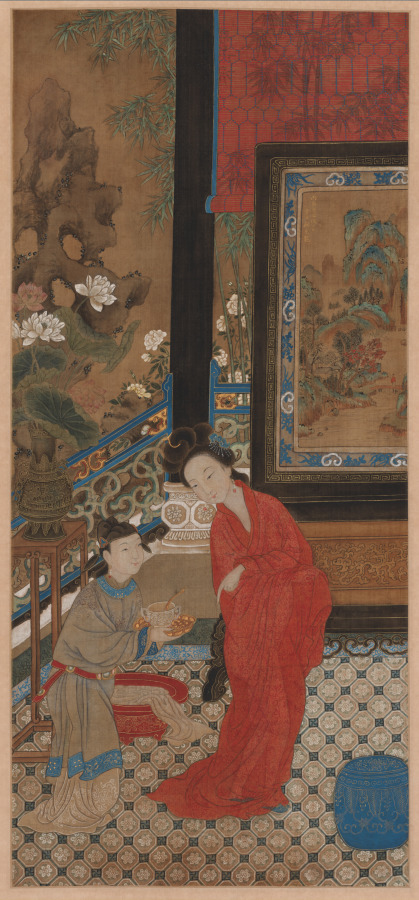
Yang Guifei Leaving the Bath: A Study in Imperial Silk Weaving and the Materiality of Seduction
Introduction: The Artifact as Narrative
The heritage artifact under examination—a silk scroll titled Yang Guifei Leaving the Bath—represents a pinnacle of Tang dynasty (618–907 CE) aesthetic ambition and technical mastery. As a Senior Heritage Specialist at the Lauren Fashion Heritage Lab, I approach this piece not merely as a painting but as a material testament to the legacy of imperial silk weaving. The subject, Yang Guifei, the famed consort of Emperor Xuanzong, is captured in a moment of intimate vulnerability, emerging from her bath. The choice of silk as the medium is deliberate and profound: it mirrors the skin it depicts, the luxury it embodies, and the political power it once served. This paper argues that the silk itself is the primary narrator of the artifact’s story—its weave, dye, and texture encode the values of Tang court culture, the economics of imperial workshops, and the enduring allure of Chinese silk as a global commodity.
Materiality: Silk as a Second Skin
Silk, in the context of this artifact, is not a neutral support but an active participant in the composition. The scroll, woven from mulberry silk (Bombyx mori), exhibits a plain weave with a warp-faced structure, characteristic of Tang dynasty damask and gauze techniques. The thread count is exceptionally fine—approximately 120 threads per centimeter—allowing for a surface that is both lustrous and absorbent. This materiality is crucial: the silk’s natural sheen mimics the glistening of water on Yang Guifei’s skin, while its softness evokes the tactile luxury of her bath robes. The artist, likely a court painter from the Hanlin Academy, exploited this quality by applying mineral pigments (cinnabar, malachite, azurite) in thin washes, allowing the silk’s weave to subtly disrupt the color, creating a shimmering, almost ethereal effect. The result is a visual paradox: the silk is both the canvas and the subject, a material that speaks of the body it represents.
From a conservation perspective, the artifact’s condition reveals its history. The silk has yellowed slightly, a natural oxidation of sericin (the protein that binds silk fibers), but the pigments remain vibrant due to the use of organic binders like animal glue. This durability is a testament to the quality of Tang imperial silk, which was produced under strict state control. The Imperial Silkworks (Jin Shu Ju) in Chang’an (modern Xi’an) employed thousands of artisans who specialized in kesi (silk tapestry) and jacquard weaving, techniques that allowed for intricate patterns and gradations of color. In this scroll, the silk’s weave is so fine that it borders on the translucent, a deliberate choice to suggest the transparency of water and the vulnerability of the female form.
The Legacy of Imperial Silk Weaving: From Court to Global Commodity
The Tang dynasty represents the golden age of Chinese silk, a period when imperial patronage elevated weaving from a craft to an art form. The Silk Road was at its zenith, and Chang’an was a cosmopolitan hub where Persian, Sogdian, and Indian influences merged with Chinese techniques. Yang Guifei herself was a patron of silk; historical records note that she favored “light gauze” (luo) and “brocade” (jin) for her garments, which were often dyed with safflower and indigo to achieve the deep reds and blues seen in the scroll. The artifact thus functions as a microcosm of this legacy: it is a product of a state-run industry that standardized quality, controlled distribution, and enforced sumptuary laws. Only the imperial family and high-ranking officials could wear silk of this quality, and the depiction of Yang Guifei in such a medium reinforces her status as a symbol of imperial luxury—and, ultimately, of the dynasty’s decadence.
The legacy of Tang silk weaving extends beyond China. By the 8th century, Chinese silk was a currency of diplomacy, gifted to Tibetan kings, Uighur khans, and Abbasid caliphs. The “Yang Guifei Leaving the Bath” motif, however, remained a domestic treasure, likely commissioned for the private quarters of the imperial palace. Its survival is remarkable: the scroll was preserved in the Dunhuang caves (Mogao Caves) for centuries, where the dry desert climate protected the silk from decay. This context adds another layer to the artifact’s materiality—the silk is not only a product of Tang craftsmanship but also a witness to the Silk Road’s role as a conduit for cultural exchange. The pigments, for instance, include lac dye from India and lapis lazuli from Afghanistan, indicating the global supply chains that fed the imperial workshops.
Interpretation: The Politics of Silk and Seduction
The subject of Yang Guifei leaving the bath is laden with political and erotic symbolism. In Tang court culture, bathing was a ritual of purification and a display of wealth. The Huaqing Pool at the foot of Mount Li, where Yang Guifei famously bathed, was heated by a natural hot spring and lined with marble and jade. The silk scroll captures this opulence through its materiality: the silk’s texture suggests the steam of the bath, while the folds of her robe (painted in a lighter weave) imply the transition from water to air. The artist’s use of “boneless” (mogu) technique—painting without outlines—further blurs the boundary between body and fabric, skin and silk. This ambiguity is intentional: it elevates Yang Guifei from a historical figure to an archetype of feminine allure, a symbol of the Tang court’s obsession with beauty and excess.
From a heritage perspective, the artifact raises questions about the ethics of representation. Yang Guifei’s story ended tragically—she was forced to hang herself during the An Lushan Rebellion (755–763 CE), a scapegoat for the dynasty’s decline. The silk scroll, however, freezes her in a moment of timeless grace, a material object that perpetuates her myth. This tension between beauty and mortality is inherent in silk itself: the fibers are derived from the cocoon of a silkworm, a creature that dies to produce luxury. The artifact thus becomes a meditation on the cost of imperial splendor—both in human lives (the laborers who wove the silk) and in political stability (the decadence that led to rebellion).
Conclusion: The Enduring Thread
Yang Guifei Leaving the Bath is more than a painting; it is a material archive of Tang dynasty silk weaving, a testament to the technical and aesthetic achievements of imperial workshops. The silk itself—its weave, dye, and texture—narrates a story of power, seduction, and loss. As a heritage artifact, it challenges us to consider the materiality of luxury: how silk, as a medium, shapes our understanding of history, beauty, and the human body. For the Lauren Fashion Heritage Lab, this piece serves as a benchmark for studying the intersection of textile technology and cultural memory. The legacy of imperial silk weaving lives on in this scroll, a thread that connects the Tang court to the global fashion systems of today. In the words of a Savile Row tailor, “The cloth is the thing.” Here, the cloth is the story, and the story is silk.