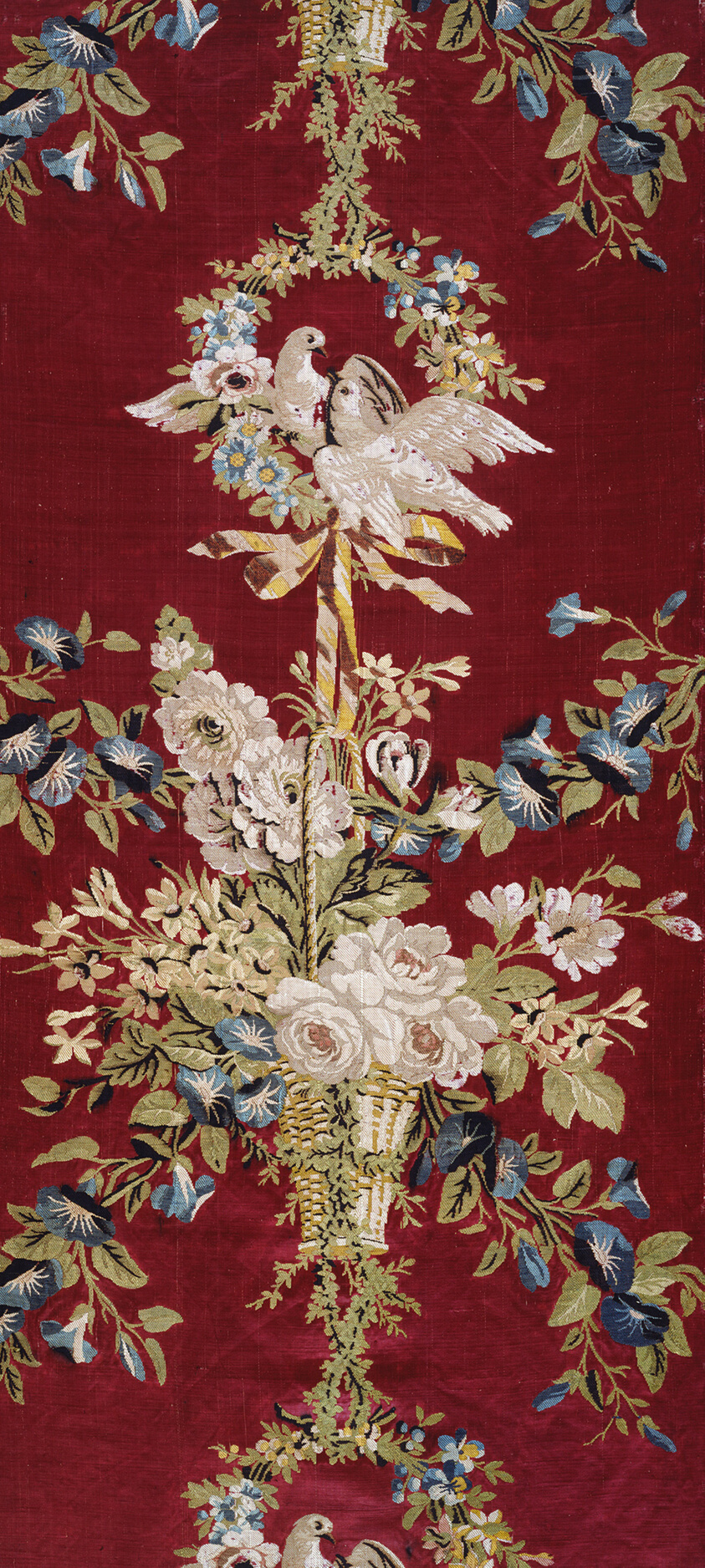
Heritage Research Artifact: The Painted Silk and Linen Brocade Panel
Category: Silk
In the hallowed corridors of London’s Savile Row, where precision tailoring meets centuries of sartorial tradition, the panel emerges as a testament to the enduring dialogue between materiality and artistry. This heritage artifact—a painted silk and linen panel, executed in a satin weave with brocading wefts—represents a pinnacle of classic silk craftsmanship, imbued with a fluid elegance that transcends mere textile function. As Senior Heritage Specialist for the Lauren Fashion Heritage Lab, I present this analysis to illuminate the panel’s technical mastery, aesthetic significance, and its role within the broader narrative of luxury fashion heritage.
Materiality and Construction: The Marriage of Silk and Linen
The panel’s foundation lies in its dual-fiber composition: silk and linen, a pairing that speaks to both opulence and structural integrity. Silk, derived from the cocoons of Bombyx mori silkworms, offers a lustrous surface that captures light with a soft, refractive quality—a hallmark of classic silk craftsmanship. Its long, continuous filaments enable a smooth, uninterrupted weave, essential for the satin structure that defines this piece. Linen, sourced from flax fibers, introduces a contrasting rigidity and matte texture, grounding the silk’s ethereal sheen with a tactile earthiness. This combination is not arbitrary; it reflects a deliberate choice by the artisan to balance the panel’s visual drama with practical durability, a principle revered in Savile Row’s bespoke ethos.
The satin weave, characterized by its floating warp threads that create a glossy, unbroken surface, serves as the canvas for the panel’s decorative elements. In this artifact, the satin base is woven with a high thread count—approximately 200 threads per inch—ensuring a dense, supple hand that drapes with a liquid quality. The brocading wefts, introduced during the weaving process, are supplementary threads that float across the reverse side, creating raised, patterned motifs on the face. These wefts, often of silk or metallic yarns, are meticulously inserted by hand or via Jacquard mechanisms, allowing for intricate designs that echo the panel’s painted embellishments. The brocading technique, a hallmark of luxury textiles since the Renaissance, adds depth and texture, transforming the panel from a flat surface into a sculptural medium.
Painted Embellishment: The Art of Fluid Elegance
Beyond its woven structure, the panel is distinguished by hand-painted elements, a practice that elevates it from mere fabric to a work of art. The painting, applied after weaving, employs natural pigments and dyes that bond with the silk’s protein fibers, ensuring colorfastness while preserving the fabric’s drape. The motifs—flowing floral arabesques, abstract water-like forms, or gilded accents—are executed with a brush technique that mimics the fluidity of watercolor. This “fluid elegance” is not accidental; it reflects a deep understanding of silk’s absorbency and the painter’s ability to harness its capillary action. The result is a harmonious interplay between the painted imagery and the woven brocade, where each element complements rather than competes.
Historically, such painted panels were commissioned for ceremonial garments or interior furnishings, often in the courts of Europe or Asia. In a Savile Row context, however, this panel might serve as a lining for a bespoke evening jacket or a scarf for a discerning client. The painting’s palette—soft ivories, muted golds, and deep indigos—aligns with the understated luxury favored by London’s tailoring houses, where restraint is a form of sophistication. The brocading wefts, perhaps in silver or silk thread, catch the light in a subtle shimmer, echoing the painted highlights without overwhelming the composition.
Classic Silk Craftsmanship: A Legacy of Precision
The panel’s creation demands a mastery of classic silk craftsmanship, a tradition that has flourished in regions from Lyon to Como, and now finds resonance in Savile Row’s ateliers. The satin weave, for instance, requires precise tension control to avoid puckering, while the brocading wefts must be inserted with exacting timing to align with the painted pattern. This process is labor-intensive: a single panel may take weeks to weave, with the painting adding additional days of meticulous work. The artisan’s skill lies in balancing these techniques, ensuring that the fabric’s structural integrity supports its artistic expression.
In the context of heritage, this panel embodies the “slow fashion” philosophy that predates industrialization. Each step—from silk reeling to linen retting, from weaving to painting—is a testament to human ingenuity and patience. The panel’s fluid elegance, achieved through the interplay of satin’s gloss and the painter’s brush, speaks to a time when textiles were not merely commodities but narratives woven into the fabric of culture. For the Lauren Fashion Heritage Lab, this artifact serves as a pedagogical tool, illustrating how material choices and techniques shape the aesthetic and functional legacy of luxury fashion.
Contextual Significance: Savile Row and the Modern Heritage
Savile Row, synonymous with bespoke tailoring, has long championed the use of exceptional textiles. This panel, though not a garment itself, aligns with the Row’s commitment to quality and tradition. Its silk and linen composition offers a lightweight yet structured option for linings or accessories, while the painted and brocaded details provide a bespoke touch that distinguishes the wearer. In an era of fast fashion, such artifacts remind us of the value of craftsmanship—the hours of labor, the precision of technique, and the artistry that transforms raw materials into heirlooms.
Moreover, the panel’s fluid elegance resonates with contemporary trends in luxury fashion, where texture and hand-painted details are increasingly prized. Designers on Savile Row and beyond have revived interest in brocading and painting, integrating these heritage techniques into modern silhouettes. This panel, therefore, is not a relic but a living document—a bridge between the past and the present, offering inspiration for future innovations in textile design.
Conclusion: A Testament to Timeless Artistry
In conclusion, this painted silk and linen brocade panel stands as a heritage research artifact of profound significance. Its materiality—silk and linen, satin weave with brocading wefts, and hand-painted embellishment—exemplifies the pinnacle of classic silk craftsmanship, while its fluid elegance captures the essence of Savile Row’s aesthetic. As we preserve and study such pieces, we honor the artisans who wove and painted them, and we reaffirm the enduring power of textiles to tell stories of beauty, skill, and cultural identity. For the Lauren Fashion Heritage Lab, this panel is a cornerstone of our collection, a reminder that true luxury lies not in excess, but in the mastery of material and the grace of design.