The Dialectics of Mortality and Form: A Terracotta Kylix as a Generative Source for 2026 Old Money Silhouettes
Introduction: The Vessel as Philosophical Prototype
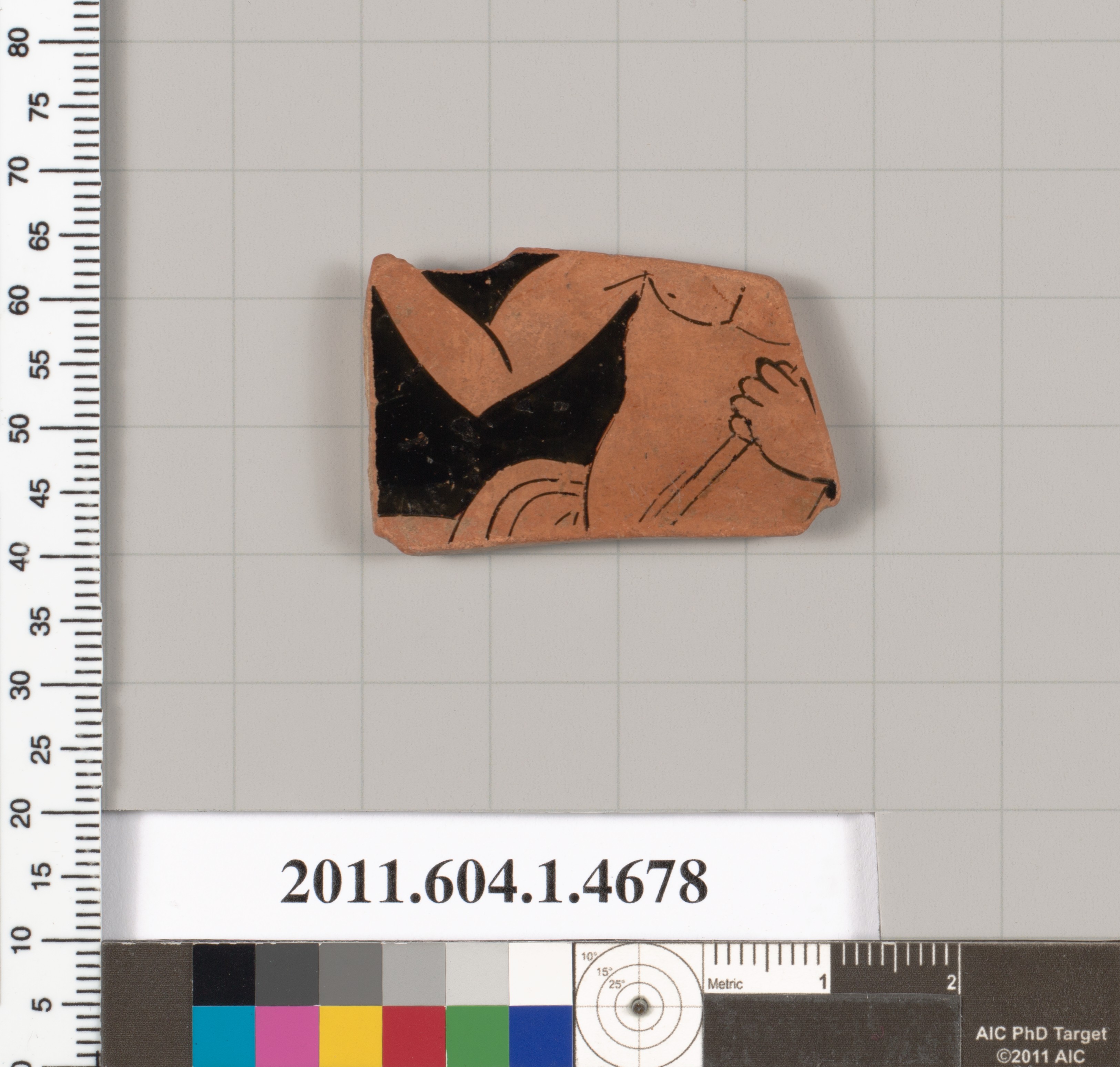
In the Lauren Fashion Heritage Lab’s ongoing investigation into the genetic code of timeless luxury, we encounter a seemingly modest artifact: a terracotta fragment of a kylix—an Attic Greek drinking cup from the 5th century BCE. This broken vessel, now housed in a museum collection, is far more than a shard of antiquity. It is a materialized philosophy. When synthesized with our internal archives—particularly the dialectical tension between the Western narrative of The Death of Socrates and the Eastern stillness of the Jar (Hu)—this kylix fragment becomes a critical design catalyst for the 2026 Old Money silhouette. The Old Money aesthetic, predicated on quiet power, inherited grace, and the refusal of ostentation, finds its deepest resonance not in novelty, but in the archaeology of form. This paper argues that the kylix’s fragmented geometry, its ritual function, and its material memory directly inform a new lexicon of draped, structured, and intentionally incomplete silhouettes for the coming season.
I. The Kylix as a Site of Contradiction: Narrative vs. Stillness
The kylix, in its original context, was a vessel for symposia—ritualized drinking that accompanied philosophical discourse. It is, therefore, an object of both consumption and contemplation. The terracotta fragment we examine retains the curve of the bowl and the stump of a handle, its red-figure decoration barely legible. This incompleteness is its most potent feature. Unlike the fully rendered narrative of The Death of Socrates—where the philosopher’s gesture toward the hemlock cup creates a theatrical climax—the kylix fragment offers no story. It offers only presence. This aligns with the aesthetic strategy of the Jar (Hu): a silent, unadorned object that does not depict death but bears its marks—the crack, the chip, the patina of use. The kylix, broken, becomes a monument to the passage of time, a three-dimensional echo of the painted jar’s “empty” space. For the 2026 Old Money silhouette, this suggests a move away from overt narrative tailoring (the power suit as a story of conquest) toward a silhouette that wears its history—a coat that drapes like a broken curve, a sleeve that terminates not in a perfect cuff but in a raw, deliberate edge.
II. Material Memory: Terracotta’s Influence on Texture and Weight
Terracotta is earth fired into permanence. Its surface is matte, porous, and warm—qualities that stand in direct opposition to the polished, synthetic gloss of fast fashion. The kylix fragment’s tactile reality—its slight roughness, the way light absorbs rather than reflects—offers a material directive for 2026. The Old Money silhouette has long favored natural fibers: cashmere, wool, silk. But the kylix pushes us toward a terracotta-toned wool crepe, a burnt umber cashmere, or a silk gazar with a matte, almost dusty finish. These are not colors of vibrancy; they are colors of earth, of the kiln, of the archaeological dig. The silhouette itself should mimic the vessel’s structural integrity: a coat with a rounded, amphora-like shoulder; a skirt that flares from a narrow waist like the kylix’s stem; a dress that wraps the body as the cup’s bowl once held wine. The weight of the fabric must feel substantial, not heavy—a gravity that anchors the wearer in time, much as the kylix anchors the symposium in history.
III. The Fragment as Design Principle: Incompleteness and the New Drape
The most radical insight from the kylix fragment is its deliberate incompleteness. In the context of The Death of Socrates, the narrative is complete; the moment of death is captured, frozen, resolved. In the Jar (Hu), the object is whole but its meaning is open—a vessel for the viewer’s projection. The kylix fragment occupies a third space: it is physically broken, yet its form remains legible. This suggests a silhouette that is structured but not finished. For 2026, we propose a jacket with a single missing sleeve—not as a deconstructive gimmick, but as a homage to the kylix’s absent handle. A trousers leg that tapers asymmetrically, one side falling straight, the other cut away to reveal the ankle. A coat that is fully constructed in the back but left raw and unlined in the front, exposing the canvas and the hand-stitching. This is not punk; it is archaeological luxury. It declares that the garment has a past, that it has endured, that its beauty lies in what remains rather than what is added.
IV. The Ritual of Dressing: From Symposium to Sartorial Ceremony
The kylix was not merely a cup; it was a tool for a ritual—the symposium, a space for men to debate philosophy, politics, and the nature of the good life. The act of drinking from the kylix was a performance of civic and intellectual identity. Similarly, the Old Money silhouette is not merely clothing; it is a ritual garment for a life of quiet cultivation. The 2026 silhouette, informed by the kylix, should facilitate a specific sartorial ceremony: the slow draping of a shawl-like overcoat, the deliberate cinching of a belt at the natural waist (echoing the kylix’s stem), the careful folding of a collar that mimics the cup’s lip. The silhouette must slow the wearer down, forcing a posture of dignity and reflection. A coat cut from a single piece of fabric, with no shoulder seams, drapes like the kylix’s continuous curve. A dress that requires the wearer to step into it, to adjust the folds, to become part of the garment’s ritual. This is the antithesis of fast fashion’s zipper-and-go ethos. It is garment as ceremony.
V. Synthesis: The Dialectic of the Vessel and the Body
Returning to our internal genetic code, the kylix fragment mediates between the narrative of death and the stillness of the jar. Socrates’ death is a story of the soul leaving the body; the jar is a story of the body containing the soul. The kylix, as a drinking vessel, is the object that bridges the two: it holds the wine that loosens the tongue for philosophy, it is passed from hand to hand in a chain of mortal connection, and it breaks, as all mortal things do. The 2026 Old Money silhouette must embody this dialectic. It must be a vessel for the body—not a display of the body, but a container that shapes and reveals its essence. A coat that is both armor and shroud. A dress that is both cup and chalice. The silhouette should not shout; it should resonate, like the sound of a terracotta cup set down on a marble table. It should hold the wearer in a moment of eternal symposium, where the self is both the philosopher and the wine, the vessel and the content.
Conclusion: The Eternal Return of the Fragment
The terracotta kylix fragment is not a relic of a dead past; it is a prophecy of future form. For the 2026 Old Money silhouette, it offers a blueprint of material honesty, structural incompleteness, and ritual gravity. It teaches us that true luxury is not about newness but about depth—the depth of a matte surface, the depth of a broken edge, the depth of a garment that has been lived in. As we synthesize the Western drama of Socrates’ death with the Eastern stillness of the jar, the kylix stands as the third term: the object that is both used and broken, both functional and philosophical. In the hands of Lauren Fashion, this ancient shard becomes a new silhouette—one that drapes the body in the quiet, enduring language of eternity.