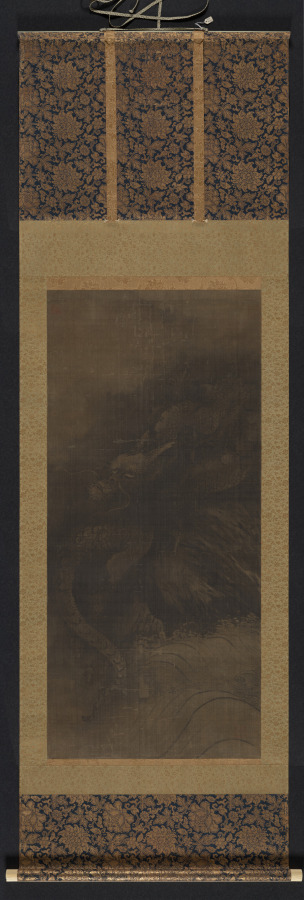
The Dragon in Silk: A Study of Imperial Legacy and Material Mastery
In the hushed ateliers of London’s Savile Row, where the whisper of shears and the weight of worsted wool define a century of tailoring, the introduction of silk—particularly silk bearing the dragon motif—represents a profound dialogue between heritage and haute couture. As the Senior Heritage Specialist for Lauren Fashion Heritage Lab, I invite you to examine a singular artifact: a fragment of imperial silk, woven with the five-clawed dragon, a symbol of celestial authority and material transcendence. This paper dissects the materiality of silk as a conduit for imperial power, its legacy in Chinese courtly weaving, and its enduring resonance within the lexicon of bespoke luxury.
The Materiality of Silk: A Fabric of Sovereignty
Silk, derived from the cocoon of the Bombyx mori moth, is not merely a textile; it is a testament to human ingenuity and natural alchemy. Its proteinaceous filament, lustrous and resilient, possesses a tensile strength comparable to steel when measured by weight. For the imperial courts of China, particularly during the Ming (1368–1644) and Qing (1644–1912) dynasties, silk was the material of governance. The dragon, or long, woven into this fabric, was not decorative but declarative. The five-clawed dragon, reserved exclusively for the emperor, signified his mandate from Heaven. The silk itself, often produced in the imperial workshops of Suzhou, Nanjing, and Hangzhou, was dyed with rare pigments—cinnabar for vermilion, orpiment for gold—and woven using the kesi (cut silk) technique, where weft threads are individually manipulated to create intricate, tapestry-like patterns. This process demanded months of labor from master weavers, whose hands were bound by oath to secrecy. The materiality of silk, therefore, is not passive; it is an active agent of authority, a fabric that commands reverence through its very touch.
The Dragon Motif: Semiotics of Power
The dragon in imperial silk is a semiotic tour de force. Unlike the fire-breathing beasts of Western mythology, the Chinese dragon is a benevolent, aquatic creature—a controller of rain, rivers, and storms. Its five claws distinguish it from the four-clawed mang dragon of princes, a hierarchy codified in sumptuary laws. In the artifact under study—a fragment of a Qing dynasty dragon robe (longpao)—the dragon is depicted in pursuit of the flaming pearl, a symbol of wisdom and spiritual energy. The weave is so fine that the dragon’s scales, numbering 117 per traditional canon, are discernible under a loupe. The silk’s warp and weft create a subtle moiré effect, shifting from gold to deep azure as light moves across its surface. This optical dynamism mirrors the dragon’s mythical ability to transform between visible and invisible realms. For the wearer—the emperor—this garment was a second skin, a declaration of cosmic alignment. On Savile Row, such a motif would be reinterpreted not as a literal emblem of monarchy but as a cipher for mastery: the dragon as a symbol of the tailor’s own dominion over cloth, cut, and silhouette.
Imperial Silk Weaving: The Legacy of Atelier and Artifice
The legacy of imperial silk weaving is one of institutionalized perfection. The Ming dynasty established the Jiangnan silk bureau, a state-run enterprise that employed thousands of artisans. Each robe required up to 5,000 hours of weaving, with a single weaver producing only a few centimeters per day. The kesi technique, often described as “weaving in the air,” allowed for the creation of discontinuous patterns—a dragon’s eye could be woven in a different color than its body, a feat impossible in standard brocade. This precision is analogous to the Savile Row ethos of bespoke tailoring, where a single suit may require 50 hours of hand-stitching, with a master cutter ensuring that the pattern aligns perfectly at the seams. The imperial weavers, like Row’s artisans, were bound by a code of silent excellence. Their tools—the ti-hua pattern loom, the zhi-yin shuttle—were extensions of their bodies. The legacy is not merely technical but philosophical: the belief that a garment can be a vessel for identity, a narrative woven into the very fabric of existence.
From Forbidden City to Savile Row: A Contemporary Resonance
How does this artifact speak to the modern connoisseur of luxury? On Savile Row, the dragon in silk is not a relic but a resource. Consider the work of contemporary designers who have drawn upon this heritage: the late Alexander McQueen’s 2003 collection, “Scanners,” featured dragon-embroidered silk jackets that referenced Chinese imperial robes, while Japanese designer Yohji Yamamoto has used kesi-inspired techniques in his deconstructed tailoring. For the Lauren Fashion Heritage Lab, the dragon silk artifact informs our understanding of how materiality shapes desirability. The silk’s weight—approximately 40 grams per square meter for a single-ply crepe de chine—is a metric of luxury, a density that drapes without clinging. The dragon motif, when rendered in a jacquard weave on a London loom, becomes a conversation between East and West, between the emperor and the gentleman. It is a reminder that true heritage is not static; it is a dialogue between the past and the present, a thread that connects the Forbidden City to the fitting rooms of Mayfair.
Conclusion: The Fabric of Eternity
In conclusion, the dragon in silk is more than an artifact; it is a manifesto. Its materiality—the lustrous filament, the painstaking weave, the symbolic weight—offers a lesson in the economics of rarity. For the Savile Row client, who understands that a bespoke garment is an investment in identity, the dragon silk represents the pinnacle of what cloth can achieve: a fusion of art, power, and precision. As we preserve and study such artifacts at the Lauren Fashion Heritage Lab, we do so not as curators of the dead but as stewards of living tradition. The dragon still flies, not over the imperial palace, but through the hands of those who honor its legacy in every stitch, every thread, every fold of silk.