Terracotta Fragments and the Architecture of Old Money: A Heritage Analysis for the 2026 Silhouette
Introduction: The Archaeological Gaze in Fashion Heritage
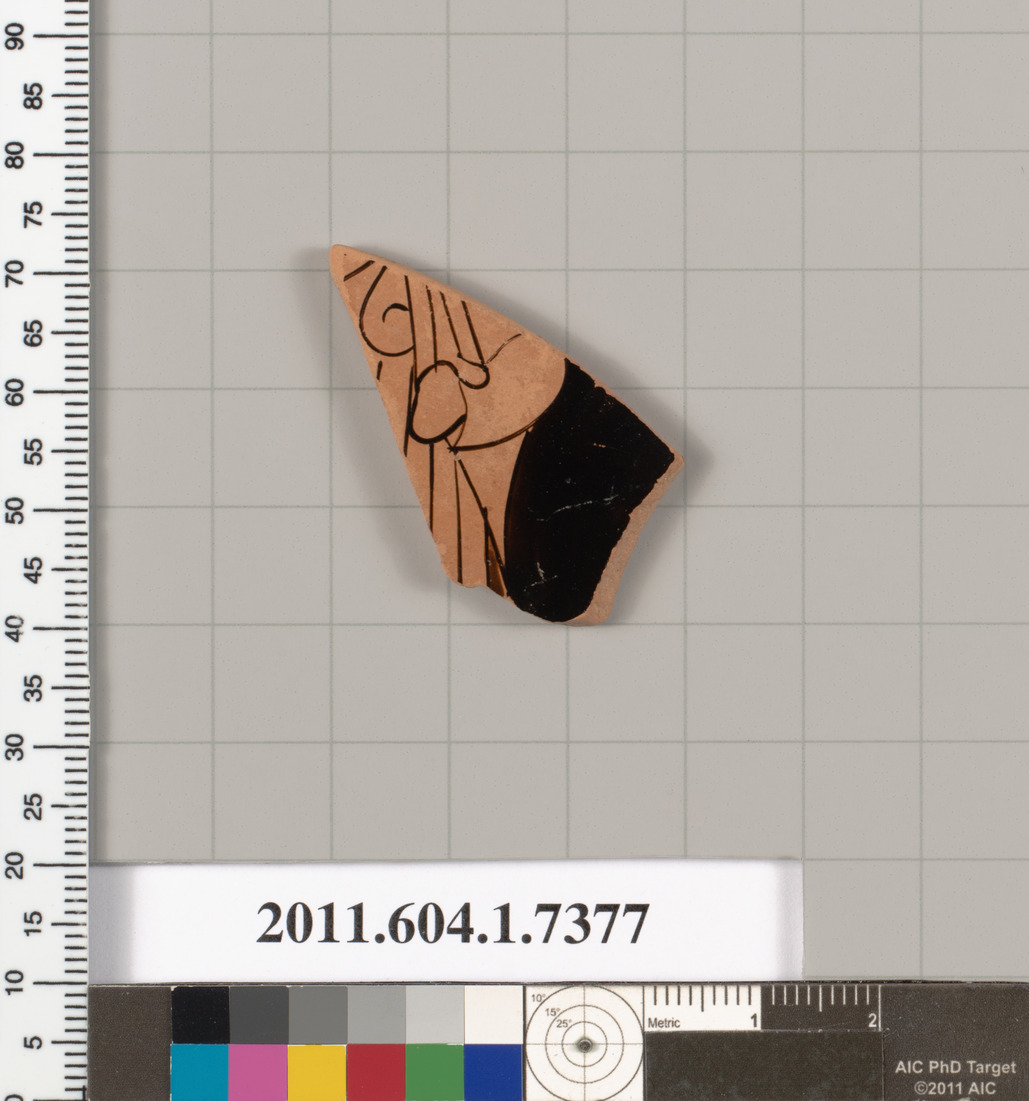
The Lauren Fashion Heritage Lab operates at the intersection of material memory and contemporary design. When we examine a terracotta fragment of a kylix—a Greek Attic drinking cup from the 5th century BCE—we are not merely studying an ancient artifact. We are decoding a genetic blueprint for silhouette, proportion, and the philosophy of restraint that defines the Old Money aesthetic. This fragment, with its broken edges, its residual black-figure decoration, and its intimate scale, speaks directly to the 2026 season’s imperative: the return to architectural clarity, tactile integrity, and narrative depth in menswear and womenswear. The kylix is not a garment, yet its formal principles—symmetry, balance, the tension between containment and release—offer a masterclass in how heritage shapes the future of luxury dressing.
Materiality and the Philosophy of Imperfection
The terracotta fragment embodies a material philosophy that resonates profoundly with the 2026 Old Money silhouette. Attic clay, fired to a warm, earthy orange-red, is neither precious nor ostentatious. It is humble, functional, and yet capable of extraordinary refinement. This duality—the marriage of utility and artistry—is the cornerstone of Old Money dressing. In the 2026 season, we see this manifest in the return of heavyweight wool flannels, unbleached linens, and densely woven cottons that reject synthetic shine in favor of natural luster. The kylix fragment teaches us that true luxury is not in perfection but in the patina of use. The chipped rim, the worn surface, the faded glaze—these are not flaws but testimonies to a life well lived. Similarly, the 2026 silhouette will privilege garments that age gracefully: a double-breasted blazer in undyed cashmere, a trench coat in waxed cotton, a pair of tailored trousers in herringbone wool. These pieces are designed to be worn, not merely displayed; they accumulate character through wear, much as the kylix accumulated the traces of symposium wine and the hands of its users.
Proportion and the Geometry of the Kylix
The kylix is a study in controlled asymmetry. Its shallow bowl, balanced on a slender stem and anchored by a wide foot, creates a visual rhythm of expansion and contraction. The handles, often horizontal or slightly upturned, extend outward like arms, inviting the drinker to grasp and lift. This dynamic equilibrium directly informs the 2026 Old Money silhouette. We observe a shift away from the exaggerated volumes of recent seasons toward a more sculpted, architectural line. The shoulders of a jacket, for instance, will echo the kylix’s foot: broad enough to provide stability, yet refined enough to avoid bulk. The waist of a coat will mimic the stem: cinched but not constricted, creating a sense of vertical lift. The hem of a skirt or trouser will reference the bowl’s rim: clean, unadorned, and precisely calibrated to the body’s proportions.
Consider the 2026 double-breasted overcoat in a dense black wool. Its silhouette is not unlike the kylix in profile: a strong, grounded base (the hem), a tapered middle (the waist), and a structured top (the shoulders). The lapels, like the kylix’s handles, extend outward with purpose, framing the chest. The buttons, placed in a strict vertical line, echo the kylix’s decorative bands. This is not coincidence but deep structural resonance. The kylix teaches us that proportion is not arbitrary; it is derived from function. The drinker’s hand, the symposium’s rituals, the physics of liquid—these dictated the kylix’s form. In the same way, the 2026 silhouette is dictated by the wearer’s movement, the occasion’s formality, and the fabric’s behavior. The result is a garment that feels inevitable, as if it could not have been otherwise.
Narrative and the Fragment as a Design Tool
The fragment is, by definition, incomplete. Yet its very incompleteness invites narrative. We imagine the full kylix: the symposium, the wine, the philosophical discourse. This imaginative act is central to the Old Money aesthetic, which values suggestion over statement. The 2026 silhouette will embrace this principle through strategic restraint. A jacket may have a single visible button, the rest concealed; a trouser may have a subtle pleat that only reveals itself in motion; a dress may feature a neckline that hints at the collarbone without exposing it. These are fragments of design, deliberately left unfinished to engage the viewer’s eye and mind.
The terracotta fragment also carries iconographic residue. Even in its broken state, we can discern the black-figure decoration: perhaps a musician, a dancer, or a mythological scene. This visual storytelling is echoed in the 2026 collection’s use of embroidery, jacquard, and subtle patterning. A cashmere sweater might feature a single embroidered motif at the hem—a laurel wreath, a Greek key, a stylized lyre—that references the kylix’s decorative tradition. A silk scarf might reproduce the fragment’s exact pattern, scaled and repeated, as a heritage cipher. These are not overt logos or branding; they are whispers of history, legible only to those who know how to look. This is the essence of Old Money: knowledge as ornament.
Color and the Palette of the Earth
The terracotta fragment offers a chromatic lesson in the power of earth tones. The warm orange-red of the clay, the deep black of the glaze, the occasional flash of white or ochre—these are colors that feel grounded, ancient, and enduring. For the 2026 Old Money silhouette, this translates into a palette of heritage blacks, burnt siennas, and ivory. The black is not a flat, synthetic black but a heritage black—a black that has depth, that absorbs light, that suggests age and authority. This is achieved through dye techniques that mimic the natural variations of ancient ceramics: over-dyeing, garment-washing, and the use of natural indigo and iron oxides. The result is a wardrobe that feels excavated from time, as if each piece has been worn by generations before.
Conclusion: The Kylix as a Blueprint for Timelessness
The terracotta fragment of a kylix is not a fashion artifact; it is a design manifesto. It teaches us that luxury is not about novelty but about enduring principles: proportion, materiality, narrative, and restraint. For the 2026 Old Money silhouette, these principles are not nostalgic but prophetic. They point toward a future where clothing is not disposable but hereditary, where each garment carries the memory of its making and the promise of its future. The kylix, broken yet beautiful, reminds us that the most powerful designs are those that withstand time, not by resisting it, but by embracing it. In the hands of the Lauren Fashion Heritage Lab, this ancient fragment becomes a compass for the next season, guiding us toward a silhouette that is at once archaeological and avant-garde, rooted in history and ready for the world.