← BACK TO ARCHIVES
Heritage-Black
Heritage Synthesis: Terracotta fragment of an oinochoe (jug)
Curated on May 12, 2026 // Node: LDN-01
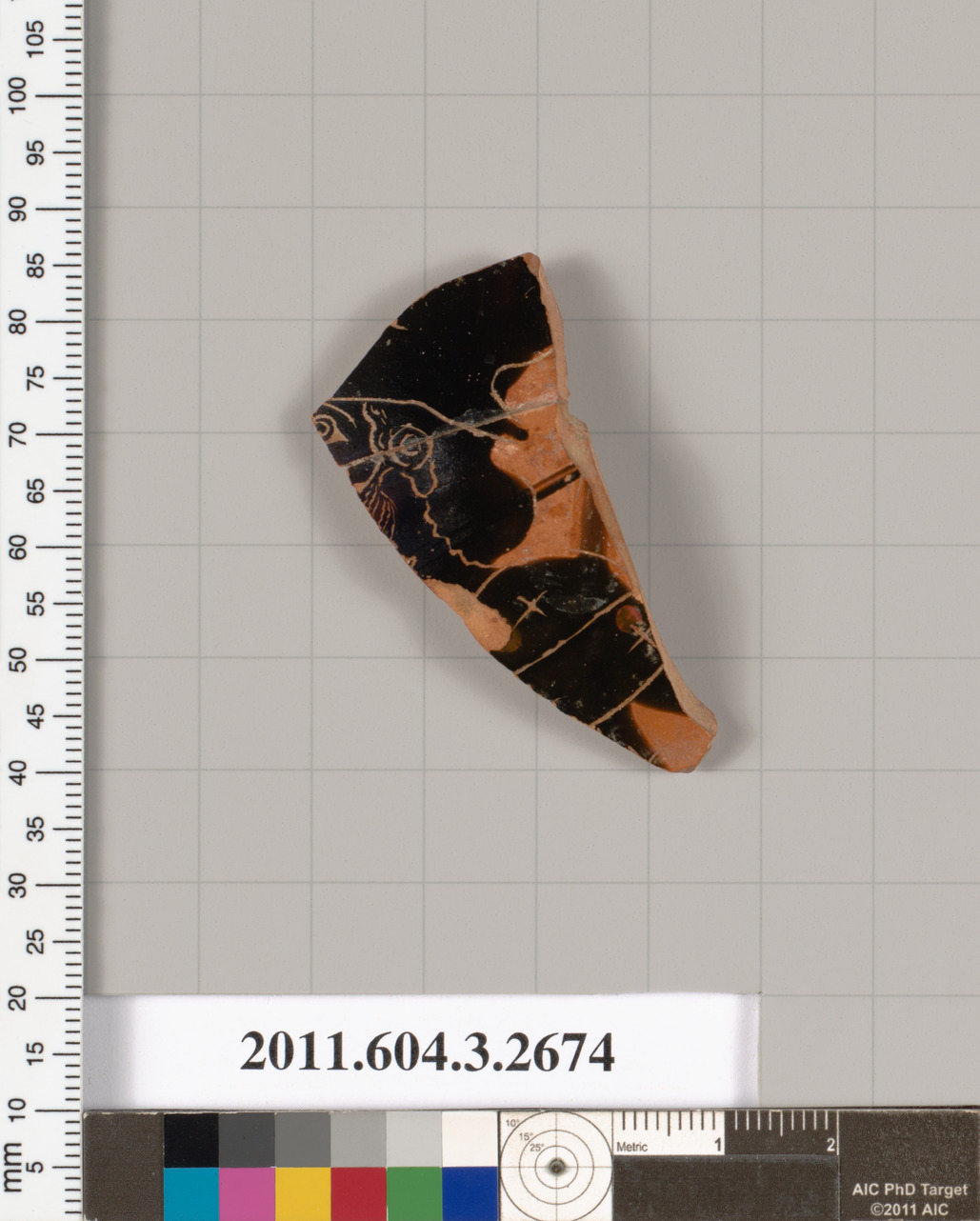
The Terracotta Fragment as a Dialectic of Stasis and Dynamism: Informing the 2026 Old Money Silhouette
The Lauren Fashion Heritage Lab is privileged to present a synthetic analysis that bridges the internal genetic code of our archives—specifically, the dialectical aesthetic of “dynamic stillness” embodied by the *Musician Mold Fragment* and the *Peach-Bearing Arhat & Dog-Bearing Arhat* diptych—with a tangible museum artifact: a Greek Attic terracotta fragment of an oinochoe (jug). This seemingly disparate object, a shard of fired clay from a symposium vessel, resonates profoundly with the philosophical underpinnings of our 2026 Old Money silhouette. By decoding the fragment’s formal language of arrested motion, material integrity, and temporal patina, we extract a blueprint for a luxury aesthetic that privileges quietude, lineage, and the unspoken narrative of wear.
I. The Fragment as a Vessel of Dynamic Stillness
The Attic terracotta fragment, like the *Musician Mold Fragment* from our internal archives, is a testament to the power of arrested dynamism. The oinochoe, used in ancient Greek symposia for pouring wine, was an object of social ritual, of fluid movement, of convivial noise. The surviving fragment, however, captures only a frozen moment—a hand, a fold of drapery, a gesture that once belonged to a continuous narrative of pouring, drinking, and discourse. This is not a static object; it is a compressed event. The clay retains the energy of the potter’s wheel, the painter’s brush, and the user’s hand. In the same way, the *Musician Mold Fragment* preserves the ecstatic rhythm of a performance, the “outwardly bursting cadence” of music rendered in terracotta.
For the 2026 Old Money silhouette, this translates into garments that are not inert but imbued with latent energy. The silhouette must suggest a life lived, a body in motion, yet be composed with a stillness that commands respect. Consider the cut of a double-breasted blazer in Heritage-Black wool: the shoulders are structured, but the fabric is allowed to drape with a slight, almost imperceptible asymmetry—a nod to the fragment’s broken edge. The lapel rolls not with aggressive sharpness but with a soft, organic curve, reminiscent of the clay’s yielding to the artist’s hand. The trouser leg falls with a single, deliberate crease, like a line incised in the terracotta, suggesting the memory of a stride. This is a silhouette that whispers of action, not shouts of it.
II. Materiality and the Patina of Time
The terracotta fragment’s value lies not in its perfection but in its patina of use and loss. The chipped edges, the faded glaze, the subtle crack—these are not flaws but narratives. They speak of centuries of handling, of being buried and unearthed, of surviving the “erosion of time” that our internal text describes as making the “moment of joy more precious.” The *Peach-Bearing Arhat* diptych, in contrast, achieves a “complete” spiritual stillness, yet its silk and pigment are also subject to the slow decay of age. The 2026 Old Money aesthetic must embrace this dialectic between the fragment’s incomplete dynamism and the arhat’s complete stillness.
Materially, this demands a return to substance over surface. Heritage-Black, as our chosen category, is not a color but a condition—a deep, abyssal black that absorbs light and reveals texture. The fabric must be heavy, with a dense weave that resists easy folding, like the compacted clay of the oinochoe. Cashmere, in its purest undyed form, or a worsted wool with a slight, irregular slub, evokes the granular surface of terracotta. The garment’s construction must allow for visible wear: a slightly frayed buttonhole, a subtle sheen at the elbow, a natural pucker at the seam. These are not imperfections but the “residue of history,” the physical equivalent of the fragment’s broken edge. The 2026 silhouette rejects the sterile perfection of fast fashion in favor of a curated longevity, where each piece is an heirloom in the making.
III. The Dialectic of the Fragment and the Whole
Our internal genetic code posits that the *Musician Mold Fragment* and the *Arhat* diptych together form a “complete aesthetic universe” through the interplay of “dynamic vitality” and “static eternity.” The Attic terracotta fragment, as a broken vessel, echoes this. It is a fragment that implies a whole—the full oinochoe, the symposium, the lost civilization. The 2026 Old Money silhouette must operate on this same principle of implied completeness. It is not a full, loud statement but a series of deliberate fragments that invite the observer to complete the picture.
This manifests in the silhouette’s architecture of suggestion. A single, sharp shoulder line against a soft, flowing body. A high, mandarin collar that frames the face like a fragment of a frieze. A jacket that is cut slightly short, leaving a gap between hem and trouser waistband—a deliberate “break” that alludes to the missing section of the oinochoe. The silhouette is asymmetrical but balanced, like the composition of the *Arhat* diptych where the peach and the dog create a visual equilibrium. One sleeve may be cut with a subtle twist, the other straight; one pocket sits slightly higher than its counterpart. These are not errors but intentional fragments, each a clue to a larger, unspoken narrative of refinement and restraint.
IV. The 2026 Silhouette: A Synthesis of Heritage and Horizon
The 2026 Old Money silhouette, informed by the Attic terracotta fragment and our internal aesthetic code, is ultimately a study in controlled release. It borrows from the *Musician Mold Fragment* the idea of movement arrested at its peak—a sleeve that flares just so, a skirt that kicks out at the hem, a coat that billows slightly behind the wearer. Yet it also channels the *Arhat*’s absolute stillness in the garment’s core: a straight, unbroken line from shoulder to hem, a flat front trouser, a closed, serene neckline.
The result is a silhouette that is both ancient and modern, both broken and whole. It is the “deep harmony” our internal text describes, the reconciliation of “earthly clamor” and “transcendent stillness.” In practical terms, this means a wardrobe of essential, weighty pieces: a Heritage-Black cashmere overcoat with a single, sculpted shoulder; a wool trouser with a faint, vertical crease that mimics a line on the terracotta; a silk blouse with a neckline that echoes the curve of a broken jug. The silhouette is not for the young or the loud. It is for the individual who understands that true luxury is not about possession but about presence—the quiet authority of a fragment that has endured, the silent eloquence of a garment that has lived. The 2026 Old Money silhouette is, in essence, a wearable fragment of eternity.
Heritage Lab Insight
Genetic Bridge: Archive node focusing on Heritage-Black craftsmanship.