From Attic Kylix to Old Money Silhouette: The Terracotta Fragment as a Hermeneutic Lens for 2026 Lauren Fashion
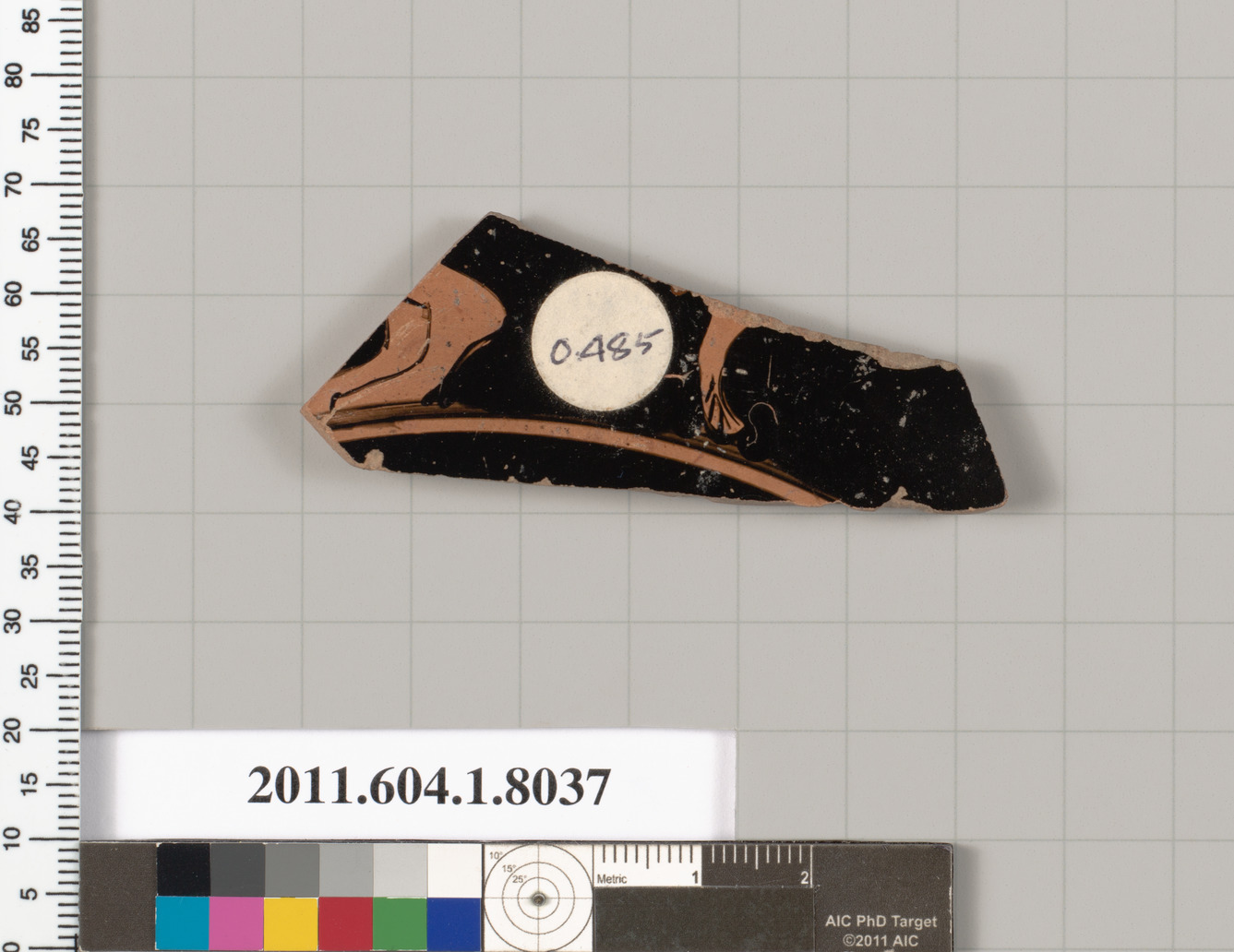
The terracotta fragment of an Attic kylix, a Greek drinking cup from the 5th century BCE, presents a seemingly incongruous muse for a heritage fashion house. Yet, when examined through the dual prism of the Lauren Fashion Heritage Lab’s internal genetic code—specifically the dialectic between the “Udumbara Flowers” temple plaque and the Square Wine Container (Fangyou)—this shard of antiquity yields profound insights for the 2026 Old Money silhouette. The kylix fragment, with its broken rim, residual black-figure decoration, and palpable sense of ritual use, does not merely offer a motif; it provides a methodological framework for translating ancient materiality into modern sartorial restraint. This analysis will argue that the kylix fragment, when synthesized with the Eastern aesthetic principles of “emptiness and solidity” (空灵与沉雄), informs a 2026 silhouette defined by architectural integrity, patinated finish, and a deliberate economy of gesture—the very hallmarks of Old Money quietude.
I. Material Translation: The Kylix as a Third Term in the Wood-Bronze Dialectic
The internal genetic code establishes a binary: the temple plaque’s wood, with its “natural flow of grain simulating the curl of petals,” embodies the soft, breathable, faith-oriented materiality of the East; the Fangyou’s bronze, with its “rigid edges” and “ordered awe,” represents the hard, rule-bound materiality of ritual. The terracotta kylix fragment introduces a third material logic: fired clay. Unlike wood, which yields to the carver’s touch, or bronze, which is cast in a mold, terracotta is a medium of compression and calcination. The clay is shaped, dried, and then irrevocably hardened in the kiln. This process mirrors the Old Money ethos of permanence through discipline. For the 2026 silhouette, this translates into fabrics that are not merely draped but structured through heat and tension.
Consider the application: a double-faced cashmere coat, where the outer layer is treated with a subtle, heat-set crush that mimics the kylix’s fired texture, while the inner lining retains the softness of raw wool. This is not a literal print of a Greek vase; it is a material quotation of the kiln’s transformative power. The kylix fragment’s broken edge—its “incompleteness”—becomes a design principle. A 2026 Lauren jacket might feature a raw, unhemmed seam at the shoulder, evoking the fragment’s rupture, but executed in a precise, controlled manner that speaks of deliberate imperfection. This aligns with the Eastern concept of wabi-sabi, but filtered through a Western, Attic sensibility: the beauty of a thing that has been used, broken, and preserved.
II. Spatial Rhetoric: The Kylix’s Interiorized Gaze and the Old Money Silhouette
The internal code contrasts the temple plaque’s “inward space, for the mind’s eye alone” with the Fangyou’s “outward-proclaiming, orderly cosmic image.” The kylix fragment, however, offers a hybrid spatial rhetoric. As a drinking cup, its primary function is to be held, to be brought to the lips. Its decoration—often a symposium scene or a mythological tableau—is painted on the interior of the bowl. The viewer does not stand before the kylix as a spectator; the viewer becomes the vessel’s center. The wine, when drunk, reveals the image. This is a profoundly intimate, inward-turning experience, yet one that is shared in a social context (the symposium).
For the 2026 Old Money silhouette, this translates into garments that reveal their richness only upon close inspection. The exterior of a suit jacket might be a sober charcoal wool—the “bronze” of the ensemble—but the lining is a silk jacquard woven with a subtle, abstracted kylix motif: a broken amphora, a stylized grapevine. The wearer knows; the observer must draw near. This is the opposite of logo-driven luxury. It is a spatial inversion of the Fangyou’s outward declaration. The kylix teaches us that true power in the Old Money lexicon is not broadcast but discovered. The silhouette itself—a lean, single-breasted jacket with a slightly higher armhole—creates a contained volume, like the kylix’s bowl, that draws the eye inward to the wearer’s face and hands, the true sites of presence.
III. Temporal Construction: Patina as a Narrative of Use
The internal code posits two temporalities: the temple plaque’s “instant of eternity” (the udumbara flower blooming for a moment, frozen in wood) and the Fangyou’s “accumulated centuries” (the bronze’s patina as “layer upon layer of frost and wind”). The terracotta kylix fragment occupies a third temporality: it is neither a frozen instant nor a slow accumulation, but a record of a single, catastrophic event—the breaking of the cup. Its broken edge is not a patina; it is a scar. Yet, that scar is now two and a half millennia old. The fragment’s temporality is one of rupture and survival.
For the 2026 silhouette, this suggests a new approach to aging and wear. Old Money fashion has long valued the “well-worn” look—a cashmere sweater with a mended elbow, a leather shoe with a softened sole. The kylix fragment pushes this further: it proposes that a garment can be designed with its own future breakage in mind. A 2026 Lauren trench coat might feature a detachable collar or cuff that is deliberately designed to be lost, to be replaced, to become a fragment. The patina is not just a surface effect; it is a structural narrative. The coat’s cotton gabardine is treated with a micro-wax that will, over years of wear, develop a distinct “memory” of folds and creases—not unlike the kylix’s black-figure glaze, which cracks and fades in patterns unique to each vessel.
This temporal logic also informs the silhouette’s proportions. The kylix fragment, missing its handles and much of its rim, forces the viewer to mentally reconstruct the whole. A 2026 Old Money silhouette does the same: it is deliberately incomplete. A trouser might be cut with a slight break at the ankle, as if the hem has been “broken” by time. A sleeve might end just above the wrist bone, leaving the hand exposed like a fragment of a larger form. This is not minimalism; it is archaeological dressing. The wearer becomes a living museum, carrying the memory of a complete form within the fragment of a garment.
IV. Synthesis: The 2026 Silhouette as a Vessel for Quiet Power
The Attic kylix fragment, when read through the Eastern aesthetic framework of “emptiness and solidity,” yields a 2026 Old Money silhouette that is neither purely Greek nor purely Japanese, but a third thing: a Heritage-Black synthesis. The silhouette is defined by:
1. Architectural Shoulder, Fluid Body: The jacket’s shoulder is structured like the kylix’s rim—a clear, defining edge—while the body falls in soft, unlined folds, like the cup’s interior curve. This echoes the Fangyou’s “rigid lines” and the plaque’s “soft wood.”
2. Patinated Surface, Not Print: The fabric is not printed with a Greek key; rather, it is woven with a subtle, irregular twill that catches light like aged terracotta. The color palette is restricted to Heritage-Black, deep ochre, and a faded Attic red—the colors of the kylix’s clay and glaze.
3. The Fragment as Detail: A single, asymmetrical seam runs diagonally across the back of the jacket, suggesting a break. A pocket is placed slightly off-center, as if “broken” from its original position. These details are not decorative; they are hermeneutic. They invite the observer to read the garment as a text, to reconstruct its lost whole.
4. Ritual Weight: The garments are heavier than expected. A wool coat is lined with a dense, unbleached linen, adding a sense of ceremonial heft. This weight is not burdensome; it is grounding, like the kylix’s thick base. It reminds the wearer that clothing is a vessel for presence.
In conclusion, the terracotta kylix fragment is not a source of motifs but a source of method. It teaches the 2026 Lauren Fashion silhouette to embrace incompleteness as a form of completeness, to treat patina as a narrative, and to design for the inward gaze. When the kylix fragment is held, its broken edge tells a story of use, of ritual, of time. The 2026 Old Money silhouette, informed by this logic, does the same: it is a vessel that has been broken, preserved, and worn with the quiet authority of one who knows that true luxury is not newness, but survival.