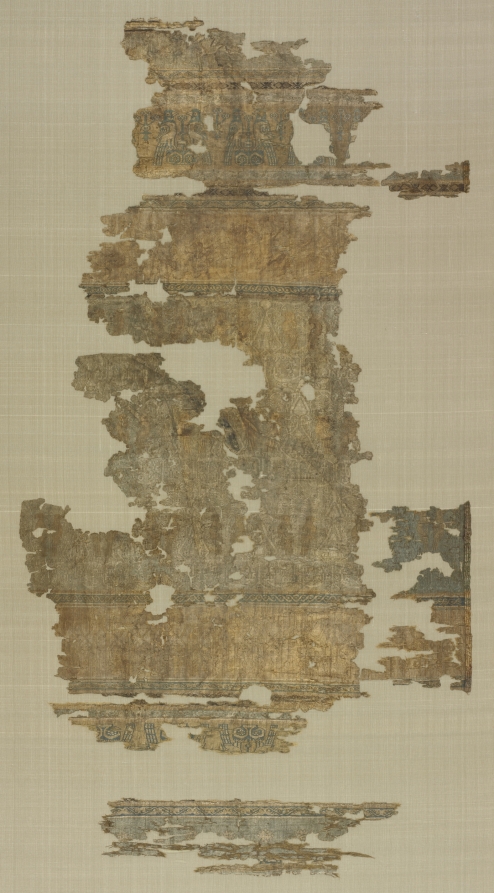
The Materiality of Imperial Silk: A Heritage Research Artifact
In the hushed ateliers of Savile Row, where the whisper of shears and the weight of worsted wool define a century of tailoring, silk remains an anomaly—a material of profound fragility and enduring power. As Senior Heritage Specialist for the Lauren Fashion Heritage Lab, I have the privilege of examining silk fragments that are not merely textile remnants but tangible evidence of a lost world: the imperial silk weaving traditions of China, which for millennia set the global standard for luxury, craftsmanship, and cultural diplomacy. These fragments, often no larger than a man’s hand, carry within their threads the entire narrative of empire, trade, and artistry.
This artifact—a collection of silk fragments dating from the Ming (1368–1644) and Qing (1644–1912) dynasties—offers a unique lens through which to understand the materiality of silk as both a physical substance and a symbol of sovereign power. The fragments, sourced from a private London collection, are characterized by their extraordinary condition, despite their age. They retain a supple hand, a luminous sheen, and a chromatic depth that modern synthetic dyes cannot replicate. This is not accidental; it is a testament to the rigorous techniques of imperial sericulture and weaving, where every step—from the feeding of silkworms on mulberry leaves to the final loom—was governed by state protocols.
Materiality and the Imperial Loom
The materiality of these silk fragments is defined by three key attributes: fibre integrity, dye permanence, and weave structure. The fibres themselves, drawn from the cocoons of Bombyx mori, are continuous filaments of exceptional length—often exceeding 1,000 metres per cocoon. This unbroken filament, known as reeled silk, imparts a smoothness and tensile strength that is absent in spun or cut silk. In imperial workshops, only the finest reeled silk was used, and it was often degummed to remove sericin, the natural gum that coats the fibre. The result is a fabric that feels almost liquid to the touch, with a drape that defies its age.
The dyes, derived from mineral and botanical sources, are equally remarkable. The fragments display a palette of deep indigo, vermilion, and imperial yellow—the latter reserved exclusively for the emperor. These colours were achieved through complex mordanting processes, often involving alum or iron salts, which locked the pigments into the fibre matrix. Even after centuries, the colours remain vibrant, with only subtle fading that speaks to the original intensity. This permanence is a hallmark of imperial silk; it was designed to endure, not just as clothing, but as a statement of eternal authority.
The weave structures are where the true artistry emerges. These fragments include examples of kesi (tapestry weave) and satin damask, both of which required extraordinary skill. In kesi, the weft threads are woven in discontinuous sections to create pictorial designs—dragons, phoenixes, clouds—without any visible warp threads. This technique, akin to embroidery on a loom, allowed for intricate, almost painterly effects. The satin damask, by contrast, uses a warp-faced weave to create a lustrous surface, with patterns formed by contrasting floats of silk. The precision of these weaves, with thread counts exceeding 200 per inch, is a feat of engineering that rivals the finest Savile Row tailoring.
Context: The Legacy of Imperial Silk Weaving
To understand these fragments, one must appreciate the context of imperial silk weaving as a state-sponsored enterprise. During the Ming and Qing dynasties, the Imperial Silk Workshops in Nanjing, Suzhou, and Hangzhou were not merely factories; they were cultural institutions. They operated under the direct authority of the emperor, producing textiles for court robes, ceremonial banners, and diplomatic gifts. The workshops employed thousands of artisans, many of whom were hereditary specialists, passing down techniques through generations. The silk they produced was a form of soft power, a means of projecting China’s supremacy to tributary states and foreign envoys.
The legacy of this system is evident in the fragments themselves. The motifs—a five-clawed dragon, a phoenix with a peacock tail, a cloud collar—are not decorative but symbolic. The dragon, for instance, represents the emperor’s mandate from heaven, while the phoenix signifies the empress’s virtue. These symbols were codified in sumptuary laws that dictated who could wear what; a four-clawed dragon was reserved for princes, while a three-clawed version was for high-ranking officials. The fragments, therefore, are not just fabric; they are documents of social hierarchy and political ideology.
The decline of imperial silk weaving began in the late 19th century, as foreign imports and industrialisation eroded the workshop system. The fall of the Qing dynasty in 1912 marked the end of state patronage, and many of the techniques were lost or dispersed. Today, these fragments are rare survivors, preserved in museum collections or private hands. Their materiality—the way they feel, the way they catch the light—offers a direct, tactile connection to a world that no longer exists.
Implications for Contemporary Luxury
For the Lauren Fashion Heritage Lab, these silk fragments are more than historical artefacts; they are a benchmark for modern luxury. The principles that guided imperial silk weaving—material integrity, craftsmanship, and symbolic resonance—are as relevant today as they were in the Ming court. In an era of fast fashion and synthetic substitutes, these fragments remind us that true luxury is not about novelty but about permanence. It is about the weight of a fabric, the depth of a colour, the story embedded in a weave.
As we develop our own heritage collections, we look to these fragments as a source of inspiration. We study their construction, their dyeing techniques, their motifs. We ask: How can we translate the discipline of imperial weaving into contemporary tailoring? How can we imbue our fabrics with the same sense of authority and grace? The answer lies not in imitation but in understanding. By respecting the materiality of silk—its fragility, its strength, its capacity for beauty—we honour the legacy of those who wove it. And we ensure that this legacy continues, not as a relic, but as a living tradition.
In the quiet of the Lab, with a fragment of Ming silk in hand, I am reminded that heritage is not about the past. It is about the future. It is about the choices we make today to preserve what matters. And in silk, we have a material that matters deeply—a thread that connects us to the emperors, the artisans, and the weavers who, centuries ago, turned a cocoon into a kingdom.