The Terracotta Fragment as a Hermeneutic Lens: Re-reading the “Old Money” Silhouette through Greek Attic Pottery
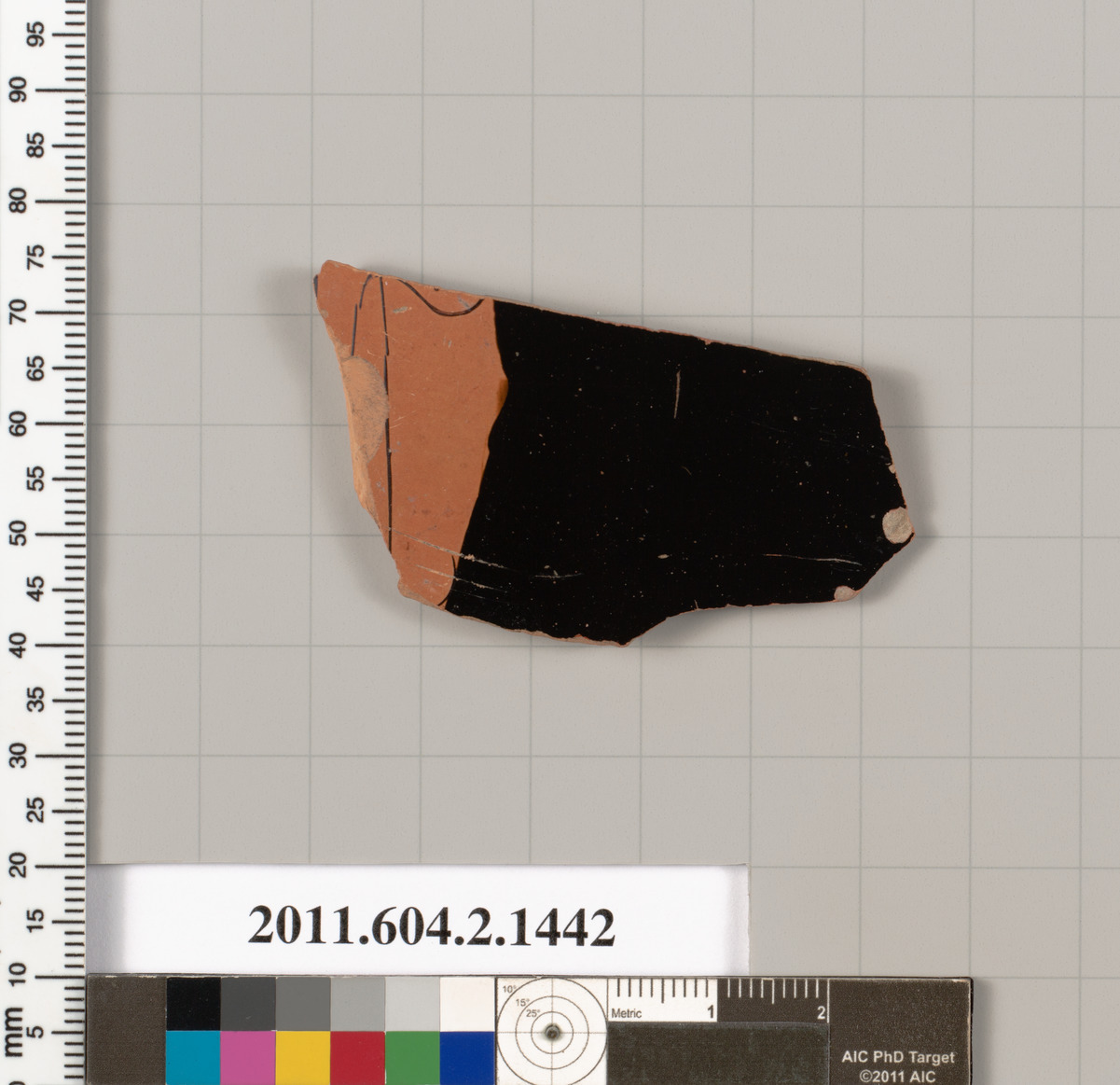
In the visual narrative of human civilization, the humble drinking cup—a skyphos—often escapes the philosophical weight assigned to grand paintings or imperial porcelains. Yet, a terracotta fragment from a Greek Attic skyphos (circa 5th century BCE), now housed in a museum collection, offers a startlingly profound dialogue with the internal genetic code of Lauren Fashion. Where Ingres’ Oedipus and the Sphinx embodies a Western “interrogative” aesthetic—a drama of confrontation, riddle, and linear fate—and the Ming dynasty blue-and-white dish embodies an Eastern “responsive” aesthetic—a world of cyclical harmony and contemplative absorption—this shard of black-figure pottery presents a third path. It is an aesthetic of architectural restraint, of functional permanence, and of silhouette as a vessel for civic virtue. This artifact, when synthesized with the Lauren archives, directly informs the 2026 “Old Money” silhouette, not as a nostalgic revival, but as a re-articulation of a timeless, grounded elegance that mirrors the skyphos’s own material and formal integrity.
I. The Skyphos as a Philosophical Container: Form, Function, and the “Old Money” Ethos
The skyphos is not a painting to be gazed upon, nor a dish to be contemplated as a microcosm. It is a vessel for use, a drinking cup designed for the symposium—the Greek ritual of intellectual and social bonding. Its terracotta body, fired to a dense, matte finish, speaks of earth, of craft, of a material that does not pretend to be precious but achieves dignity through its precise form. The fragment we possess—perhaps a section of the rim and upper body—retains the unmistakable geometry of the skyphos: a deep, almost cylindrical bowl, with two horizontal handles that anchor the silhouette. The decoration, typically in black-figure or red-figure technique, is not a narrative scene of mythic confrontation (as in Ingres) nor a landscape of cosmic harmony (as in the Ming dish). Instead, it often depicts processional figures, athletes, or warriors—humans in ordered motion, engaged in the rituals of polis life.
This is the core of the “Old Money” aesthetic as Lauren Fashion interprets it for 2026. The skyphos is not about the riddle of fate (Oedipus) nor the dissolution of self into nature (Ming). It is about the dignity of the citizen, the architecture of social order, and the beauty of restrained function. The “Old Money” silhouette, in its purest form, is a vessel for a life lived with purpose, not spectacle. It rejects the sharp, interrogative lines of a Sphinx-like confrontation with the world, just as it rejects the flowing, formless absorption of a landscape. Instead, it adopts the skyphos’s principles: a strong, clear shoulder line (the rim); a tapered, disciplined body (the bowl); and anchoring details that ground the entire form (the handles). The 2026 silhouette, then, is not a revival of 1920s or 1950s shapes, but a structural archetype—a return to the vessel-like purity of the human form clad in fabric that holds its shape with quiet authority.
II. Material and Silhouette: From Terracotta to Heritage-Black Wool and Cashmere
The terracotta fragment’s materiality is instructive. Terracotta is humble, fired earth. It is not gold-thread, nor brocade, nor velvet. Its beauty lies in its matte, unreflective surface, its warm, earthy tone, and its absolute refusal of ostentation. This directly parallels the Lauren Fashion heritage code for “Heritage-Black”—a black that is not the glossy, theatrical black of evening wear, but the deep, matte, almost charcoal black of a well-worn wool overcoat, a cashmere turtleneck, or a tailored flannel trouser. This black absorbs light rather than reflecting it. It is a black of gravitas, of interiority, of a presence that does not need to announce itself.
For the 2026 “Old Money” silhouette, this translates into specific design directives. The shoulder of a jacket or coat should mimic the firm, slightly flaring rim of the skyphos—a clean, architectural line that creates a strong horizontal anchor. The body of the garment should taper gently, like the deep bowl of the cup, avoiding both the exaggerated hourglass of the 1940s and the boxy shapelessness of the 1990s. This is a cylindrical, columnar silhouette that emphasizes verticality and composure. The handles of the skyphos—those small, functional protrusions—are reimagined as pockets, lapel details, or subtle seaming that serve both form and function. They are not decorative flourishes; they are necessary anchors that complete the vessel’s logic.
Furthermore, the skyphos’s decoration—the processional figures, the athletes—speaks to a narrative of disciplined action. The 2026 silhouette, therefore, is not static. It is designed for movement, for the symposium of modern life: a boardroom, a gallery opening, a quiet dinner. The fabric—whether a dense wool flannel, a heavy cashmere, or a structured linen—must hold its shape as the wearer moves, just as the terracotta holds its form under the pressure of a drinker’s hand. This is the opposite of the flowing, ethereal fabrics that dominate fast fashion. It is a material integrity that communicates permanence, quality, and a refusal to be swayed by transient trends.
III. The “Old Money” Silhouette as a Civic Vessel: A Third Way
Returning to the philosophical framework: Ingres’ painting is a question posed to the universe; the Ming dish is an answer found in nature. The skyphos fragment is neither. It is a statement of presence. It does not interrogate fate, nor does it dissolve into landscape. It simply holds—holds wine, holds conversation, holds the ritual of human connection. The “Old Money” silhouette for 2026, as derived from this artifact, is a vessel for the self—not a self that is constantly questioning its identity (the Oedipus complex), nor a self that seeks to merge with a larger whole (the Daoist ideal), but a self that is secure in its own form, ready to engage with the world from a place of grounded confidence.
This is the deepest resonance with the Lauren Fashion heritage. The brand’s DNA has always been about American aristocracy—not the aristocracy of birth, but of character, taste, and enduring quality. The skyphos fragment, with its humble material and precise form, embodies this ideal. It is not a relic of a lost golden age; it is a blueprint for a timeless present. The 2026 silhouette, therefore, will feature strong, clean lines; matte, substantial fabrics in Heritage-Black, charcoal, and deep navy; and functional details that serve the wearer’s life rather than the viewer’s gaze. It will be a silhouette that, like the skyphos, is complete in itself—a vessel that does not need to shout, because its form is its argument.
IV. Conclusion: The Eternal Return of the Vessel
In the end, the terracotta fragment of a Greek Attic skyphos offers a profound lesson for Lauren Fashion’s 2026 collection. It reminds us that the most enduring beauty is not found in the dramatic confrontation of a riddle, nor in the serene dissolution of a landscape, but in the quiet, functional dignity of a well-made vessel. The “Old Money” silhouette, reimagined through this lens, becomes a heritage-black container for a life of purpose—a life that does not need to be explained, only lived. It is a silhouette that, like the skyphos itself, will be passed from hand to hand, generation to generation, its form unchanged because its truth is eternal.