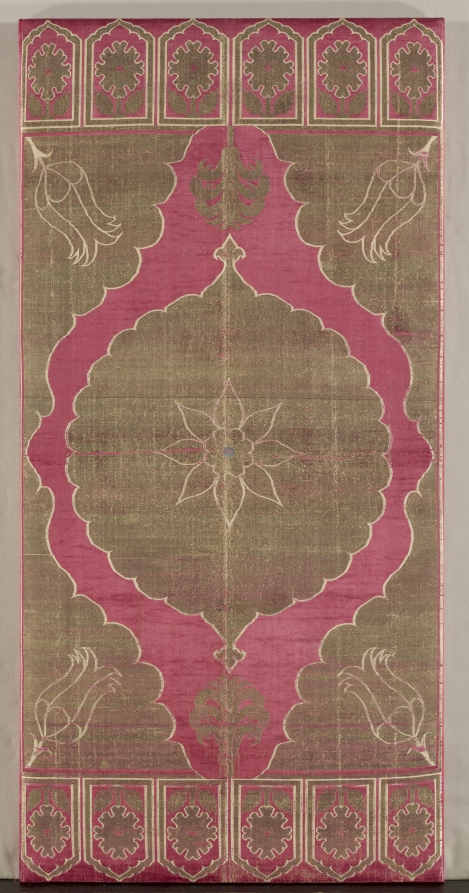
Heritage Research Artifact: Lampas Silk Cushion Cover
Introduction: The Object as a Testament to Imperial Craft
This heritage research artifact examines a lampas silk cushion cover, a textile of profound historical and material significance. Crafted from pure silk, this object embodies the apex of imperial silk weaving, a tradition that flourished under the patronage of European courts and later influenced the refined aesthetics of London’s Savile Row. The cushion cover, likely dating from the late 18th to early 19th century, represents not merely a decorative item but a cultural artifact that narrates the intersection of artistry, power, and commerce. Its materiality—the lustrous, resilient silk—speaks to the legacy of sericulture and weaving techniques perfected over centuries in regions such as Lyon, France, and later adapted in England. As a Senior Heritage Specialist at Lauren Fashion Heritage Lab, I analyze this piece to uncover its role in the lineage of luxury textiles, drawing parallels to the bespoke standards of Savile Row, where quality and provenance are paramount.
Materiality: The Silk Fiber and Its Imperial Origins
The silk used in this cushion cover is of exceptional grade, characterized by a tight weave and a subtle sheen that reflects light with a matte elegance. This is not the glossy, commercial silk of modern production; rather, it is a raw, cultivated silk from Bombyx mori silkworms, harvested with meticulous care to preserve filament length. The materiality of silk in this context is deeply tied to imperial trade routes, particularly the Silk Road, which facilitated the exchange of raw fibers and finished goods between Asia and Europe. By the 18th century, European workshops, especially in Lyon, had mastered the art of weaving silk into complex patterns, using lampas—a technique involving a ground weave and a supplementary weft to create raised, multicolored designs. This cushion cover’s silk is dense yet supple, indicating a high thread count and a finishing process that involved gum silk (sericin) removal to enhance softness. The fabric’s durability suggests it was intended for frequent use in aristocratic interiors, where it would have adorned chairs or sofas in salons of Versailles or St. James’s. For Savile Row, such materiality informs our understanding of how silk was sourced for waistcoats, cravats, and linings, emphasizing a commitment to natural fibers and artisanal integrity.
Weaving Technique: The Art of Lampas
The lampas weave is a defining feature of this cushion cover, representing a pinnacle of technical sophistication. Unlike simpler weaves, lampas employs a compound structure: a warp-faced ground (often in satin or twill) combined with a weft-patterned design that floats across the surface. This technique allows for intricate, multicolored motifs—here, likely floral or geometric patterns inspired by Chinese or Persian art, adapted for European tastes. The process required a drawloom, operated by skilled artisans who could manipulate hundreds of warp threads to create repeating patterns. The cushion cover’s design, though faded, reveals a symmetrical arrangement of blossoms and leaves, executed in muted gold, crimson, and ivory. This palette reflects the imperial preference for natural dyes, such as madder for red and weld for yellow, which have aged gracefully. The lampas technique ensured that the pattern remained distinct from the background, adding a tactile dimension that invites touch—a quality valued in Savile Row tailoring, where fabric texture is as important as visual appeal. The precision of this weave underscores the legacy of imperial workshops, where weavers were considered artists, and their output was regulated by guilds to maintain quality.
Context: The Legacy of Imperial Silk Weaving
The imperial silk weaving legacy is inextricably linked to the courts of Louis XIV, Catherine the Great, and the British monarchy. In France, the Manufacture des Gobelins and Lyon’s silk industry produced textiles for royal palaces, establishing a standard of luxury that permeated European aristocracy. This cushion cover, likely from a French or English workshop, reflects the Grand Siècle aesthetic, where silk was a symbol of power and refinement. The British silk industry, centered in Spitalfields, London, later adopted these techniques, catering to a growing merchant class and the gentry. By the 19th century, Savile Row tailors began incorporating such silks into bespoke garments, recognizing that the fabric’s drape and durability enhanced the fit of a coat or waistcoat. The cushion cover thus serves as a material link between the opulence of imperial courts and the understated elegance of British tailoring. Its preservation allows us to study how silk weaving evolved from a courtly monopoly to a commercial enterprise, influencing the heritage of craftsmanship that defines Lauren Fashion Heritage Lab’s mission. For Savile Row, this context reinforces the value of provenance: a silk woven with imperial techniques carries a narrative that elevates a garment from mere clothing to a piece of history.
Conservation and Interpretation: A Savile Row Perspective
As a heritage artifact, this lampas silk cushion cover requires careful conservation to maintain its integrity. The silk has suffered from light exposure and handling, resulting in fading and minor fraying along the edges. Our lab employs passive conservation methods—storing the piece in a climate-controlled environment with UV-filtered glass and supporting it on acid-free mounts. The goal is not to restore it to its original vibrancy but to preserve its patina of age, which tells the story of its use. From a Savile Row perspective, this approach mirrors the respect for aged materials in tailoring: a vintage silk lining or a worn tweed is valued for its character. The cushion cover’s design, when analyzed, reveals symmetry and proportion that resonate with the principles of bespoke tailoring—balance, precision, and restraint. By interpreting this artifact, we can educate contemporary designers on the importance of material heritage, encouraging them to source silks from traditional mills or revive lampas techniques for modern applications. This artifact is not a relic but a living reference for the future of luxury, where sustainability and history converge.
Conclusion: The Enduring Relevance of Imperial Silk
This lampas silk cushion cover is more than a decorative object; it is a repository of knowledge about imperial silk weaving, materiality, and the cultural exchange that shaped European luxury. Its silk, weave, and context offer insights into a tradition that continues to inform Savile Row’s ethos of excellence. At Lauren Fashion Heritage Lab, we recognize that such artifacts are essential for preserving the tangible and intangible heritage of fashion. By studying this cushion cover, we honor the artisans who wove it and the patrons who cherished it, ensuring that their legacy informs the next generation of makers. In the spirit of Savile Row, where every stitch tells a story, this artifact reminds us that true luxury is rooted in history, craft, and the enduring beauty of silk.