The Udumbara Dialectic: Terracotta Fragments and the Architecture of Restraint in 2026 Old Money Silhouettes
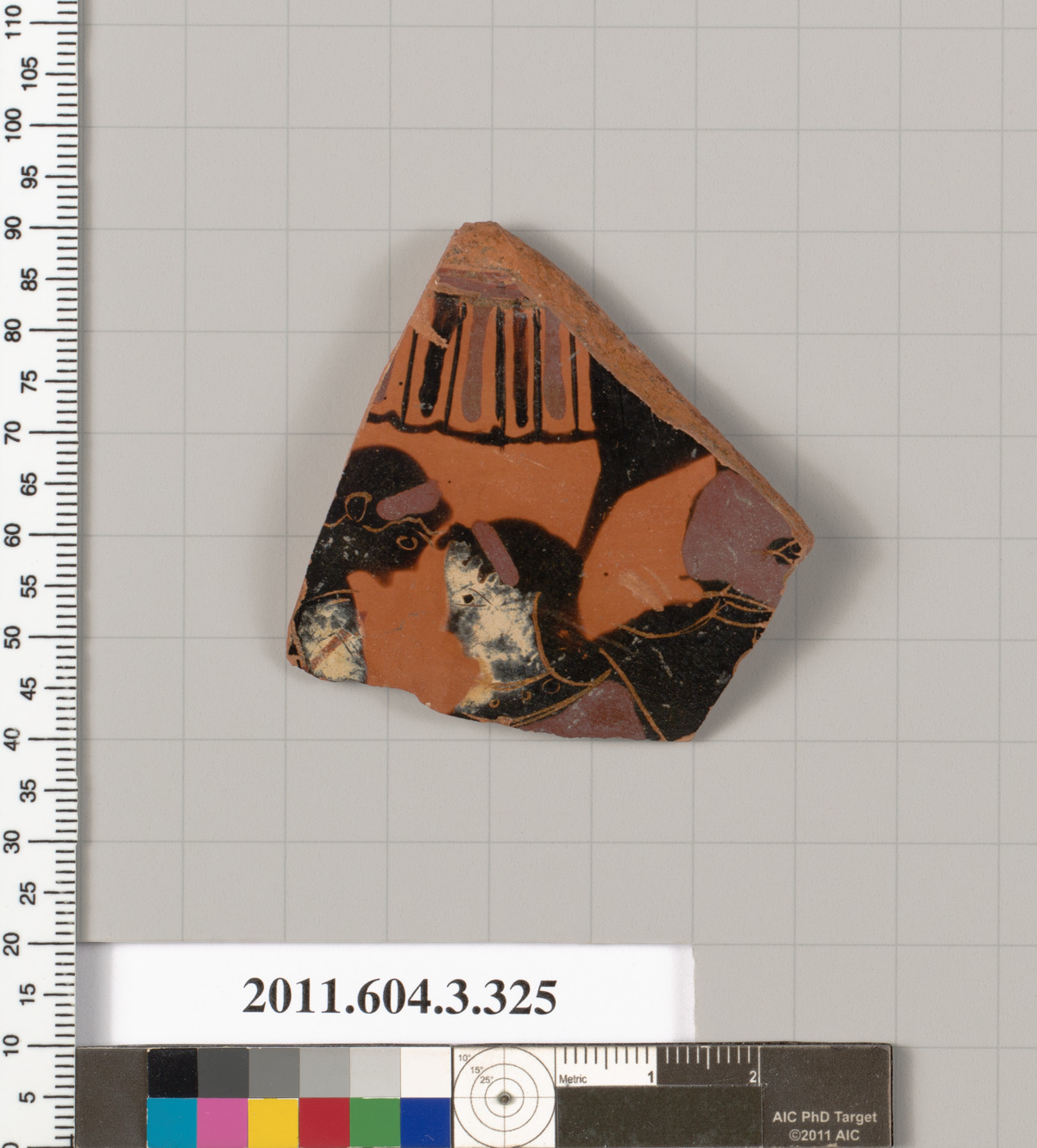
The Lauren Fashion Heritage Lab’s internal genetic code, juxtaposing the Udumbara flower—a Buddhist emblem of ephemeral transcendence—against the visceral carnality of The Hunt, presents a foundational aesthetic tension. This binary of “being-in-absence” versus “being-in-intensity” finds a startlingly concrete analogue in the museum artifact under consideration: a terracotta fragment of an Attic neck-amphora (jar), circa 530 BCE. This shard, bearing the ghost of a black-figure hunting scene, is not merely a decorative relic. It is a material manifesto for the 2026 Old Money silhouette, a design philosophy that rejects ostentation in favor of a deeply internalized, almost monastic, rigor. The fragment’s broken edge, its faded glaze, and its compressed narrative of pursuit become the template for a garment that speaks of lineage, restraint, and the profound elegance of the incomplete.
The Aesthetics of the Fragment: Absence as Presence
The terracotta fragment, by its very nature, embodies the Udumbara principle of “being-in-absence.” Unlike a complete vase, which presents a closed, resolved narrative, the fragment is an open question. Its jagged perimeter is a visual silence, a void that demands the viewer’s imaginative completion. The Udumbara flower, as described in the internal code, is “not a flower” but a metaphor for the miraculous, a “visual symbol of the transcendental” rendered in “near-abstract pale ink outlines and empty space.” Similarly, the terracotta shard does not show us the full hunt; it shows us a fragment of a hoof, the curve of a hound’s back, the tension in a spear arm. The rest—the forest, the sky, the climax—is left to the mind’s eye. This is the core of the 2026 Old Money silhouette: a silhouette that suggests wealth and history not through overt display, but through strategic omission. A jacket cut with a severe, almost architectural shoulder, devoid of any lapel ornamentation. A trouser that falls with a weight that implies generations of tailoring, yet is hemmed with a raw, unfinished edge. The garment becomes a “fragment” of a larger, unseen wardrobe, a collection of pieces that speak of a life lived, not a life performed.
The Hunt in Stasis: Compressed Violence and the Line of Discipline
The internal code’s analysis of The Hunt—with its “struggling bodies, flying manes, and spastic entanglement”—is directly mirrored in the black-figure decoration on the amphora. The Greek artist, working in the archaic tradition, did not aim for naturalistic movement. Instead, he compressed the violence into a frozen, hieratic pattern. The hounds are reduced to stylized, angular forms; the prey is a series of taut, geometric lines. This is not the Baroque “tyranny of color and brushstroke” described in the code, but a tyranny of line and silhouette. The hunt is rendered as a diagram of tension, a study in controlled energy. For the 2026 Old Money silhouette, this translates into a discipline of cut. The “hunt” is not a literal pursuit, but the daily navigation of power, status, and legacy. The garment must therefore be an armor of composure. A double-breasted blazer is cut with a suppressed waist, the lapels a sharp, unbroken line from shoulder to button. The shoulders are not padded into aggressive width, but are sculpted, clean, and precise. The fabric—a heavy, dark wool, perhaps a vicuña or a worsted—falls without a wrinkle, its weight a physical reminder of the wearer’s rootedness. This is the “existence of intensity” made still, the “life will” of the hunt channeled into the quiet authority of a perfectly executed silhouette.
From Clay to Cloth: Materiality as a Carrier of Time
The terracotta itself—a fired, earthen material—is a crucial informant. It is not the luxurious, ephemeral silk or the soft, yielding cashmere. It is primordial, baked, and permanent. Its surface, once bright with slip, is now matte, pitted, and scarred by centuries. This materiality dictates the 2026 palette and texture. The “Old Money” aesthetic, in this iteration, rejects the high-shine of new wealth. It embraces the matte, the dense, the tactilely complex. Think of a herringbone tweed woven from undyed, natural wools, its surface a subtle topography of browns, grays, and blacks. Or a double-faced cashmere in a deep, almost black charcoal, its nap absorbing light rather than reflecting it. The construction itself must echo the amphora’s fragmentary nature. Seams are not hidden; they are exposed, felled, and stitched with precision, becoming a deliberate part of the garment’s narrative. A lining, perhaps in a deep, faded oxblood silk, is glimpsed only at the cuff or the hem—a secret, a fragment of color that hints at a private world of taste. This is the “emptiness” of the Udumbara made manifest in cloth: a garment that is defined by what it does not say, by the spaces it leaves for the wearer’s own history to fill.
The Dialectic Resolved: A Silhouette of Balanced Extremes
The internal code concludes that the Udumbara and The Hunt represent two “truths”: one of “re-perception after stillness,” the other of “existential intuition in passion.” The 2026 Old Money silhouette, informed by the terracotta fragment, does not choose between them. It synthesizes them. The silhouette is austere and disciplined, like the Udumbara’s “restraint and void,” yet it is charged with the latent energy of the hunt. A long, lean overcoat, cut from a dense, felted wool, falls in a single, unbroken line from shoulder to ankle. It is a monument of stillness. Yet the cut is so precise, the shoulders so sharp, that it suggests a body coiled for action. The trousers are wide and flowing, a gesture of ease, but they are pleated at the waist with a military precision that speaks of control. The entire ensemble is a fragment of a larger, unspoken narrative—a life of inherited taste, of quiet power, of a hunt that has already been won. The wearer is both the contemplative monk, gazing at the invisible flower, and the hunter, whose discipline has made the pursuit effortless. The terracotta fragment, with its broken edge and frozen chase, is the perfect emblem for this new luxury: a luxury that is not about accumulation, but about distillation. It is the art of the missing piece, the power of the unspoken, the elegance of the enduring fragment.