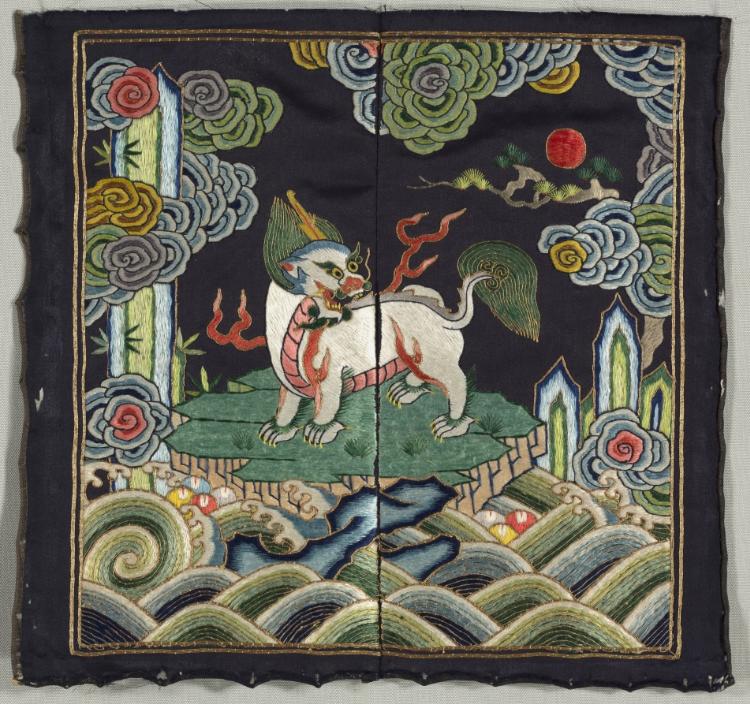
Rank Badge (Buzi): The Embodied Authority of Imperial Silk Weaving
In the hushed ateliers of London’s Savile Row, where the weight of a cloth and the precision of a stitch speak volumes about lineage and taste, we find an unexpected yet profound kinship with a textile artifact from imperial China: the Rank Badge, or buzi. This square of silk, once sewn onto the surcoat of a Ming or Qing dynasty official, is not merely a decorative patch. It is a heritage research artifact of extraordinary materiality—a testament to the legacy of imperial silk weaving that resonates with the principles of bespoke craftsmanship, hierarchical precision, and enduring quality. As the Senior Heritage Specialist for the Lauren Fashion Heritage Lab, I present this analysis to illuminate how the buzi embodies authority through its silk medium, weaving a narrative of power, artistry, and timeless material culture.
The Materiality of Silk: A Foundation of Prestige
Silk, the very fabric of the buzi, is the cornerstone of its significance. In imperial China, silk was not a commodity; it was a currency of status, a medium reserved for the emperor, his court, and the highest echelons of bureaucracy. The buzi was woven from the finest mulberry silk, a material that required months of labor—from silkworm cultivation to thread spinning—before it ever touched a loom. This materiality is not incidental; it is intrinsic to the badge’s function. The luster of the silk, its drape, and its resilience signified the wearer’s proximity to imperial favor. A Savile Row tailor would recognize this: the cloth must first be worthy of the garment. In the buzi, the silk is the canvas upon which authority is embroidered, and its quality is non-negotiable.
The legacy of imperial silk weaving—centered in cities like Suzhou, Hangzhou, and Nanjing—was a state-controlled enterprise. The Imperial Silkworks, or Jiangning Weaving Bureau, produced these badges with exacting standards. Each buzi was woven on a drawloom, a complex apparatus that allowed for the creation of intricate patterns. The silk threads, often dyed with natural pigments from plants and minerals, achieved a chromatic depth that synthetic dyes cannot replicate. This material integrity is what makes surviving buzi artifacts so resonant: they are not merely historical documents but physical embodiments of a system that valued perfection in craft.
Design and Iconography: The Language of Rank
The buzi is a square, typically measuring 30 to 40 centimeters per side, and its design is a lexicon of power. For civil officials, the badge featured birds—a crane for the highest rank, a golden pheasant for the second, and so on down to the quail for the ninth. Military officials bore beasts—a qilin for the first rank, a lion for the second, and a rhinoceros for the ninth. These motifs were not arbitrary; they drew from Confucian symbolism and natural hierarchy. The crane, for instance, symbolized longevity and wisdom, while the qilin represented righteousness and strength. The precision of the embroidery—often in gold and silver thread on a silk ground—was a measure of the wearer’s station. A poorly executed badge would have been an insult to the court, much as a poorly cut suit would be an affront on Savile Row.
The buzi also incorporated auspicious clouds, waves, and the shou (longevity) character, all rendered in silk thread. The color palette was strictly regulated: the background silk was typically a deep blue or black for formal wear, with the embroidery in vibrant hues of red, green, and gold. This chromatic discipline mirrors the restrained elegance of a Savile Row bespoke suit, where a navy worsted wool is elevated by a subtle windowpane check. In both cases, the material and the design work in concert to communicate status without ostentation—a hallmark of true luxury.
Weaving Techniques: The Art of the Loom
The production of a buzi required mastery of satin weave, twill weave, and brocade techniques. The satin weave, with its long floats of silk thread, created a lustrous surface that caught light and conveyed opulence. The twill weave provided structure, ensuring the badge could withstand the rigors of wear. Brocade, a technique where supplementary weft threads are woven into the fabric to create raised patterns, was used for the most intricate details—the feathers of the crane or the scales of the qilin. This layering of threads is analogous to the layering of a bespoke garment: the canvas, the interlining, the outer cloth, each chosen for its specific role. The buzi weaver, like a Savile Row cutter, understood that the unseen layers are as important as the visible ones.
The legacy of imperial silk weaving is also one of innovation. The kesi technique, or “cut silk,” was sometimes employed for the highest-ranking badges. In kesi, the weft threads are not carried across the entire width of the fabric but are woven only where needed, creating a tapestry-like effect. This technique allowed for unprecedented detail and a crispness of line that embroidery alone could not achieve. The result was a badge that was not just a garment but a miniature painting in silk. This commitment to technical excellence is a thread that runs from the imperial workshops to the modern atelier, where a hand-stitched buttonhole is a mark of distinction.
Preservation and Legacy: The Buzi in the Modern Context
Today, surviving buzi artifacts are housed in museums and private collections, their silk often faded but still imbued with authority. The conservation of these pieces requires a deep understanding of silk’s fragility—its susceptibility to light, humidity, and handling. At the Lauren Fashion Heritage Lab, we approach these artifacts with the same reverence that a Savile Row tailor reserves for a bolt of Scottish tweed. The buzi is not a relic; it is a pedagogical tool. It teaches us that materiality is not separate from meaning. The silk, the weave, the dye, the motif—all are part of a coherent system that values craftsmanship as a form of communication.
The legacy of imperial silk weaving, as embodied by the buzi, offers a blueprint for contemporary luxury. In an age of fast fashion and digital printing, the buzi reminds us that true heritage lies in the tactile, the laborious, and the precise. The silk of a buzi is not just a fabric; it is a statement of intent. For the modern designer, the buzi challenges us to consider how we use materiality to convey authority—whether in a boardroom, a runway, or a museum vitrine. The rank badge is, in essence, a bespoke artifact: tailored to its wearer, woven with purpose, and enduring in its legacy.
In conclusion, the buzi is more than a historical curiosity. It is a masterclass in materiality, where silk becomes the medium for hierarchy, artistry, and power. As we study its weave and its symbolism, we are reminded that the finest garments—whether from imperial China or Savile Row—are those that honor the material from which they are made. The buzi stands as a testament to the legacy of imperial silk weaving, a legacy that continues to inform our understanding of what it means to dress with authority.