Heritage Research Artifact: The Fragment as a Testament to Craft
Introduction: The Fragment as a Complete Narrative
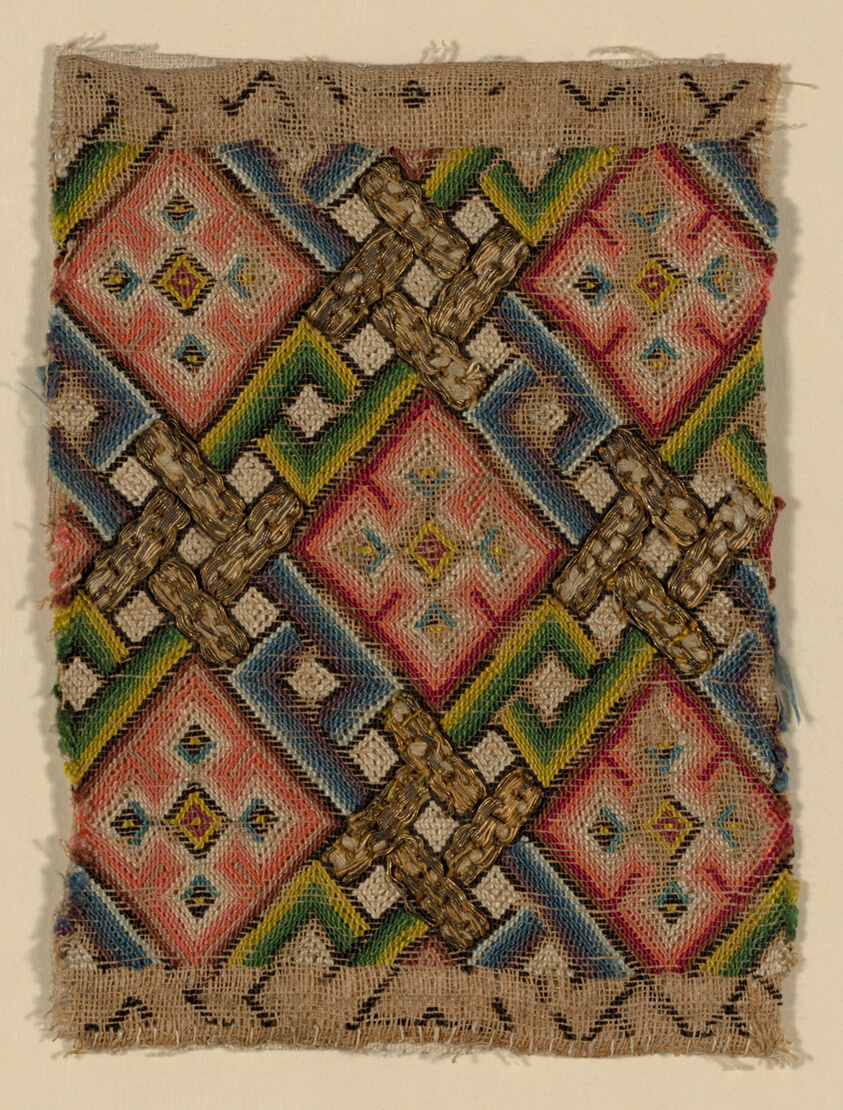
In the lexicon of heritage, the fragment is often misconstrued as a relic of incompletion—a mere remnant of a greater whole. Yet, within the hallowed halls of the Lauren Fashion Heritage Lab, we approach the fragment not as a broken object, but as a concentrated artifact of mastery. The subject under examination—a linen plain-weave base, embroidered with silk floss, gilt- and silvered-metal-strip-wrapped silk, executed in tent stitches and padded couching—is a singular document of the late 18th or early 19th century. It speaks with the quiet authority of London’s Savile Row: precise, restrained, and utterly uncompromising. This is not a scrap; it is a syllabus in silk craftsmanship and fluid elegance.
Materiality: The Architecture of Linen and Silk
The foundation of this fragment is a linen plain weave, a material choice that reveals a profound understanding of structural integrity. Linen, with its long, lustrous flax fibers, offers a stability that silk alone cannot provide. The plain weave—the simplest interlacing of warp and weft—creates a grid of remarkable tensile strength. This is the silent scaffolding upon which the embroidery is built. In Savile Row tailoring, the canvas is the unsung hero; here, the linen serves the same purpose, ensuring that the delicate silk floss and metal threads are not merely applied, but anchored with permanence.
The embroidery itself is a dialogue between opulence and discipline. The silk floss, unspun and lustrous, is worked in tent stitches—a diagonal, half-cross stitch that covers the ground fabric with a dense, satin-like surface. This stitch, often used in petit point, allows for minute gradations of color and light. The effect is not unlike the subtle sheen of a well-pressed worsted wool suit: understated, yet unmistakably luxurious. The silk floss here is not a display of excess, but of control. Every stitch is a decision, a measured contribution to a larger rhythm of elegance.
The Metal Threads: Gilt and Silvered-Strip-Wrapped Silk
Where the fragment ascends to the extraordinary is in its use of gilt- and silvered-metal-strip-wrapped silk. These threads are composed of a silk core, tightly wound with a thin strip of metal—gold or silver, or a gilt or silvered alloy. The technique is ancient, yet its application here is distinctly modern in its restraint. The metal strips are not used to overwhelm; they are deployed as accents, catching light with the same precision as a Savile Row buttonhole or a bespoke cufflink. The padded couching technique further elevates the work. The metal thread is laid over a padding of silk or wool, then couched—secured with small, invisible stitches—to create a raised, three-dimensional effect. This is not flat ornament; it is sculptural, lending the fragment a tactile depth that invites the hand as much as the eye.
The combination of silk floss and metal threads in tent stitches and padded couching is a masterclass in contrast. The silk floss offers a matte, velvety richness; the metal threads provide a reflective, almost liquid shimmer. Together, they create a surface that shifts with the light, much like the drape of a silk-lined jacket or the fall of a couture gown. This is not embroidery for the sake of decoration; it is embroidery as a form of architectural dressing.
Context: The Language of Fluid Elegance
To understand this fragment, one must situate it within the tradition of classic silk craftsmanship. The 18th and 19th centuries were the golden age of silk embroidery in Europe, particularly in France and England, where guilds of embroiderers produced work for court, church, and the aristocracy. Yet this fragment eschews the baroque excess of its era. There is no gilding for gilding’s sake, no superfluous flourish. Instead, the design—though we see only a portion—suggests a flowing, organic motif, perhaps a leaf or a tendril, rendered with a fluidity that mimics the natural movement of silk itself. The padded couching adds a subtle relief, as if the design were breathing beneath the surface. This is elegance that moves, that adapts, that lives.
In the context of the Lauren Fashion Heritage Lab, this fragment is a teaching tool. It demonstrates that true luxury is not about volume, but about intention. The choice of linen over silk as a base, the use of tent stitches for density, the sparing application of metal threads—all speak to a philosophy of craftsmanship that values precision over profusion. This is the same philosophy that underpins the best of Savile Row: a suit is not a collection of fabric and thread, but a system of relationships—between cloth and cut, between stitch and silhouette. Here, the fragment is the suit in miniature.
Conclusion: The Fragment as a Living Document
This fragment is not a relic; it is a living document of heritage. It teaches us that the most profound expressions of elegance are often the most disciplined. The linen, the silk floss, the gilt and silvered threads, the tent stitches, the padded couching—each element is a choice, a commitment to a standard that transcends time. In the Lauren Fashion Heritage Lab, we do not preserve fragments as objects of nostalgia. We study them as blueprints for the future. This fragment, with its quiet mastery and fluid grace, is a reminder that the art of silk craftsmanship is not lost; it is waiting to be rediscovered, stitch by stitch.
— The Lauren Fashion Heritage Lab, London, 2023