← BACK TO ARCHIVES
Silk
Heritage Synthesis: Kasuga Deer Mandala
Curated on May 15, 2026 // Node: LDN-01
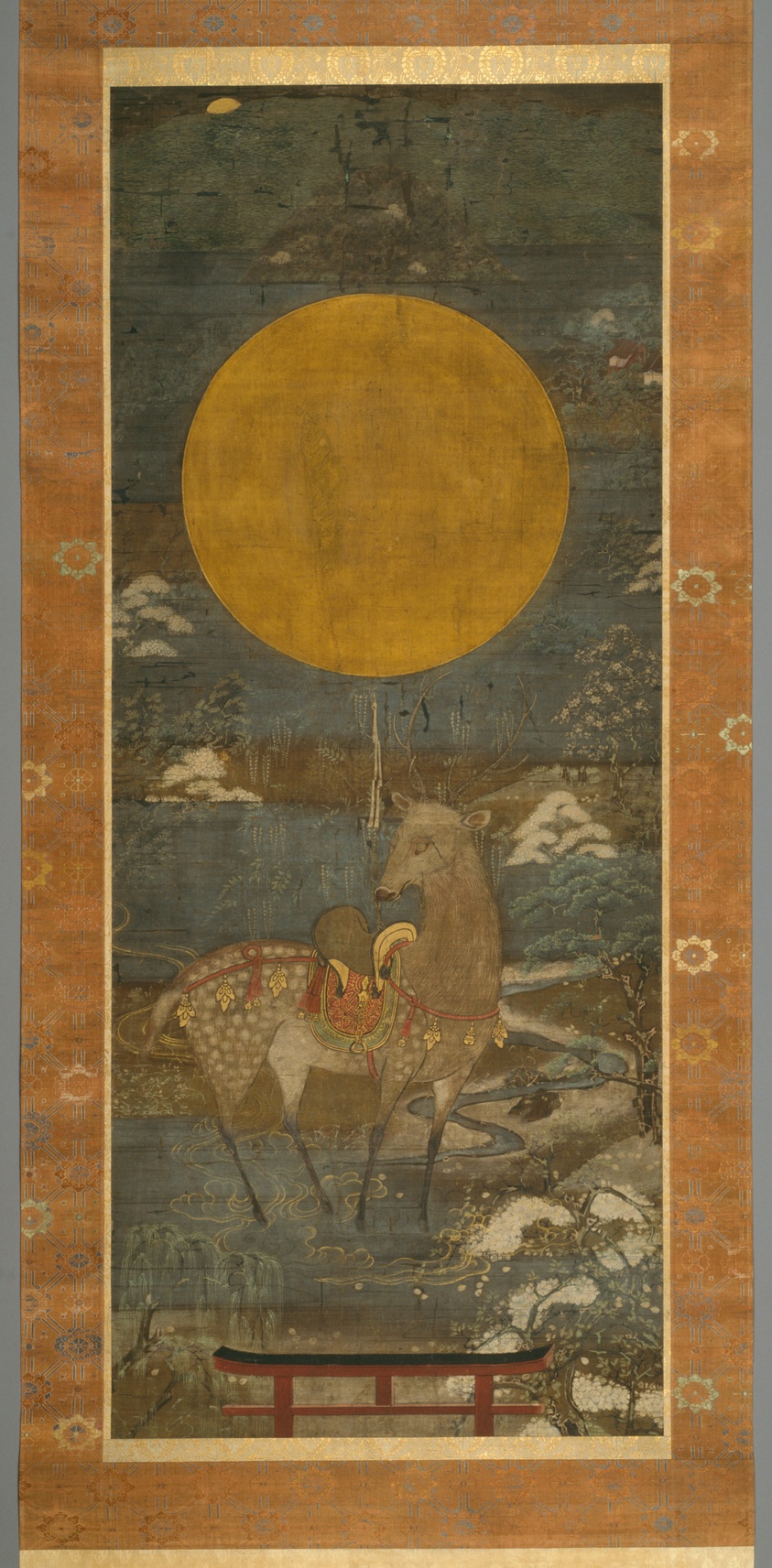
The Kasuga Deer Mandala: A Study in Silk, Sovereignty, and the Sacred Thread
In the hushed corridors of heritage preservation, where the whisper of silk against time is a language unto itself, the *Kasuga Deer Mandala* stands as a singular artifact—a testament to the confluence of divine narrative and artisanal mastery. As a Senior Heritage Specialist within the Lauren Fashion Heritage Lab, I am compelled to examine this work not merely as a religious icon, but as a profound expression of material culture, where the medium of silk becomes the very fabric of spiritual and temporal power. This analysis, rendered in the measured, exacting tone of London’s Savile Row, dissects the mandala’s materiality, its contextual craftsmanship, and its enduring resonance within the lexicon of luxury.
Materiality: The Alchemy of Ink, Color, and Gold on Silk
The foundational element of this artifact—its *raison d’être* in terms of heritage value—is the silk support. Unlike the coarser hemp or paper substrates common to contemporaneous East Asian works, the use of silk here signals a deliberate elevation. Silk, in its raw state, is a filament of extraordinary tensile strength and luminous depth, capable of absorbing pigment with a unique, almost aqueous translucency. The *Kasuga Deer Mandala* exploits this property with surgical precision. The ink, applied with a brush that must have been as fine as a single strand of human hair, defines the deer’s antlers—a complex, branching architecture that echoes the sacred Kasuga Shrine’s forest. The lines are not rigid; they possess a fluid elegance, a *shin* (formal) quality tempered by *gyo* (semi-cursive) dynamism, suggesting the deer’s movement through a metaphysical space.
The colors, predominantly vermillion, indigo, and ochre, are derived from mineral and organic pigments—cinnabar, azurite, and orpiment—ground to a fineness that allows them to bond with the silk’s weave. This is not a surface application; it is an integration. The gold, applied as *kinpaku* (gold leaf) or *surihaku* (powdered gold), is the masterstroke. It does not merely highlight; it sanctifies. On Savile Row, we speak of a cloth’s “hand”—its tactile and visual character. Here, the gold’s hand is one of controlled opulence. It catches the light not as a flat reflection, but as a series of micro-refractions, mimicking the dappled sunlight of the Kasuga primeval forest. This is a materiality that demands reverence, not ostentation.
Context: Classic Silk Craftsmanship and Fluid Elegance
To understand the *Kasuga Deer Mandala* is to understand the ecosystem of its creation. The silk itself would have been woven on a drawloom, a technology that allowed for complex patterns and a consistent, even tension—essential for a surface that must bear the weight of detailed painting without distortion. The weavers, likely operating in Kyoto’s Nishijin district, were not mere artisans; they were custodians of a lineage stretching back to the Heian period (794–1185). Their craft was one of *monozukuri*—the art of making things with a soul. The silk’s warp and weft, typically a plain weave (*hira-ori*) or a twill (*aya-ori*), provided a ground that was both stable and supple. This is the Savile Row equivalent of a Super 150s wool worsted: a foundation that allows the tailor—or in this case, the painter—to execute with absolute confidence.
The fluid elegance of the mandala’s composition is a direct consequence of this silk’s behavior. Unlike a rigid panel, silk moves. The deer, depicted in a state of graceful alertness, seems to breathe with the fabric. Its body is rendered with *tsukuri-e* (built-up painting) techniques, where layers of pigment are applied to create volume, yet the silk’s translucency prevents any sense of weight. The antlers, painted with a single, continuous brushstroke that follows the silk’s grain, appear to float. This is not static iconography; it is a living vision. The mandala’s circular form, a *mandara* in Japanese, is not a cage but a portal. The deer, a messenger of the Kasuga deities, stands at its center, its hooves barely touching the ground. The silk’s inherent flexibility allows the viewer to perceive this as a moment of suspension—a divine pause.
Heritage Resonance: The Thread Between Sacred and Sartorial
From a heritage perspective, the *Kasuga Deer Mandala* offers a critical lesson in the preservation of intangible values through tangible materials. The silk is not a passive carrier; it is an active participant in the artifact’s meaning. The choice of silk over paper, for instance, was a declaration of status. In medieval Japan, silk was a controlled commodity, often reserved for the imperial court, the shogunate, and major temples. By commissioning this mandala on silk, the patron—likely a member of the Fujiwara clan, who founded the Kasuga Shrine—was asserting a divine mandate that was both spiritual and political. The deer, a sacred animal in Shinto, becomes a symbol of the clan’s own authority, woven into the very fibers of luxury.
For the Lauren Fashion Heritage Lab, this artifact is a case study in how materiality informs narrative. The gold, the pigments, the silk—each element is a thread in a broader tapestry of cultural memory. The fluid elegance of the painting style, with its emphasis on *yūgen* (mysterious depth) and *wabi-sabi* (imperfect beauty), resonates with the principles of modern luxury design: restraint, quality, and a respect for the hand. The mandala’s preservation—its careful storage in a climate-controlled environment, its mounting on a silk backing that mimics its original tension—echoes the bespoke care given to a Savile Row suit. Both are investments in perpetuity.
In conclusion, the *Kasuga Deer Mandala* is not merely an artifact of religious devotion; it is a masterclass in the integration of material and meaning. The silk, with its ink, colors, and gold, becomes a sacred text, written in a language of light and texture. For the scholar, the curator, or the connoisseur, it offers a profound meditation on how the finest materials, when handled with consummate skill, can transcend their physical form to become vessels of the eternal. This is the heritage of silk—a thread that binds the earthly to the divine, the past to the present, and the craft to the soul.
Heritage Lab Insight
Lab Insight: AIC Silk Archive Node #12032.