Fragments of the Whole: Terracotta, Negative Space, and the 2026 Old Money Silhouette
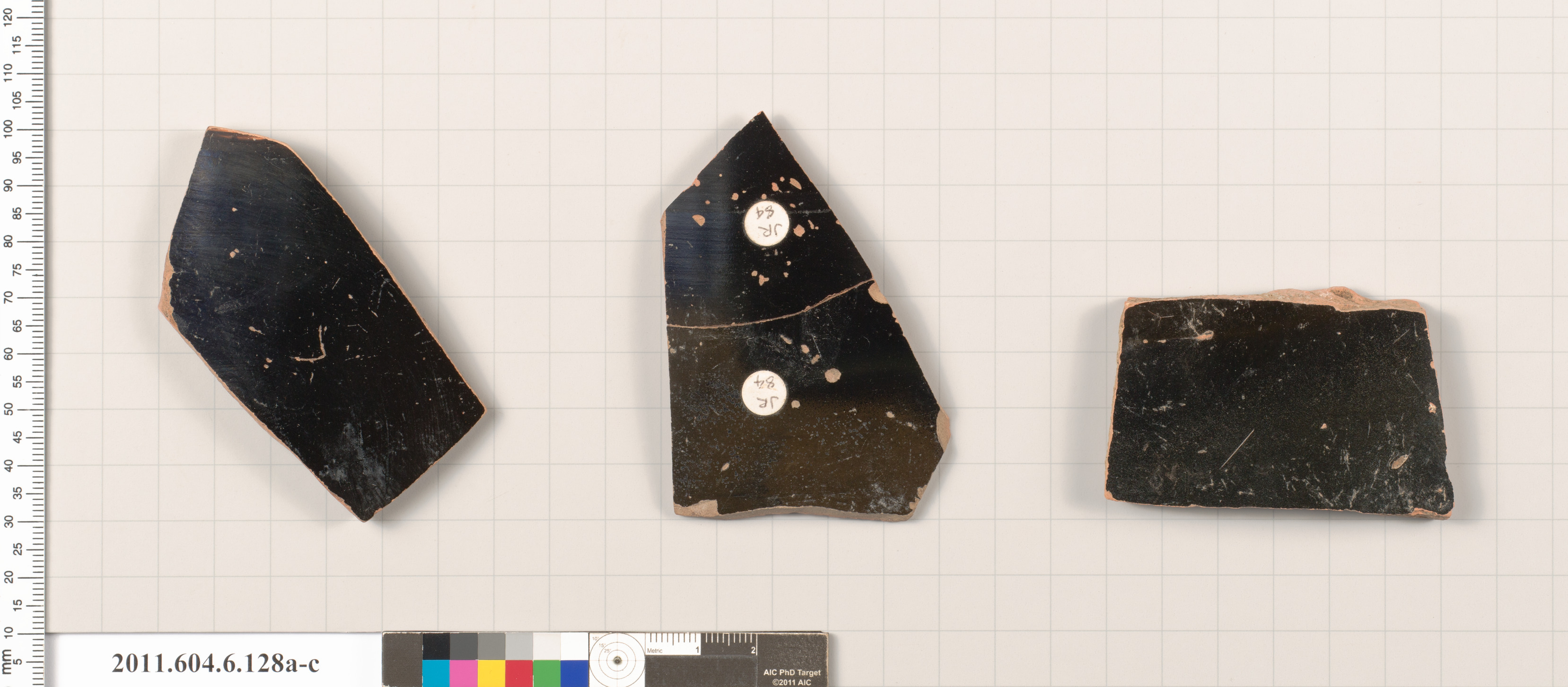
The pursuit of the Old Money aesthetic in fashion is, at its core, an exercise in cultural archaeology. It seeks not mere replication of past forms, but the distillation of an ethos—an aura of permanence, effortless authority, and cultivated taste that transcends seasonal whims. For the 2026 iteration, Lauren Fashion Heritage Lab looks beyond the well-trodden archives of twentieth-century preppy and aristocratic wardrobes, delving deeper into the philosophical foundations of form itself. Our inquiry is guided by a seemingly humble yet profoundly evocative source: terracotta fragments of open shapes from Attic Greece. These broken remnants of vessels, often the edges of kylikes (drinking cups) or kraters (mixing bowls), are not studied for their intact iconography, but for their revelation of structure through absence. They inform a 2026 silhouette defined not by opulent accumulation, but by strategic reduction, where negative space and architectural integrity become the ultimate signifiers of inherited elegance.
The Artifact: A Grammar of Absence and Structure
The Attic terracotta fragments in question are characterized by their “open shapes”. Unlike a sealed amphora, these fragments reveal the vessel’s profile—the elegant curve of a bowl transitioning into a slender stem, the sharp yet fluid angle where a handle once met the lip. The value lies in the breakage: the missing portions force the viewer to mentally reconstruct the whole, engaging with the essential geometry that governed its creation. The clay, once fired, possesses a matte, earthy rigidity, a testament to its structural purpose. The decoration, often a remnant of black-figure or red-figure painting, is secondary to the form it adorns. This artifact teaches a fundamental design principle: true sophistication resides in the inherent correctness of the silhouette, in the purity of line that remains legible even in fragmentation. It speaks of a beauty that is enduring because it is structural, not superficial.
Philosophical Synthesis: From Hellenic Form to Modern Silhouette
This classical fragment dialogues powerfully with Lauren’s internal genetic code, which juxtaposes the fluid, narrative-driven form of the Shancai Tongzi琉璃 with the vertical, symbolic order of the medieval Finial. From that analysis, we derived the principles of “dynamic versus ordered” narratives and the creation of “spiritual space.” The terracotta fragment offers a third, crucial axis: the aesthetics of essence. It represents a point of convergence between the Finial’s devotion to absolute, proportional structure and the Shancai Tongzi’s embrace of a captured, dynamic moment. The fragment is the moment of dynamic form frozen and made permanent, its order revealed through rupture.
This synthesis directly informs the 2026 Old Money silhouette. The “old money” ethos rejects the explicit, the logo-laden, and the temporally bound. It embraces what is implicit, enduring, and self-evident. Therefore, the 2026 silhouette moves away from overt tailoring statements and towards a sculptural integrity that mirrors the terracotta fragment’s revelation of essential form.
Manifestation in the 2026 Collection: The Architecture of Implication
The translation of this artifact study into a contemporary silhouette is manifested through three key design strategies:
1. Silhouette as Vessel: Garments are conceived as architectural forms that define space around the body. A wool-cashmere blend overcoat is not merely cut wide but engineered with a parabolic curve from shoulder to hem, its volume precise and intentional like the belly of a krater, creating a powerful, sheltering negative space. The body moves within this form, its presence implied rather than outlined. Seaming is minimized and strategically placed to emphasize the garment’s inherent geometry, much like the subtle ridges on terracotta that reveal its method of construction.
2. The Logic of the Fragment & Strategic Omission: Inspired by the fragment’s power to suggest the whole, the 2026 silhouette employs strategic omission as a hallmark of sophistication. A Heritage-Black evening gown may feature a meticulously engineered open back—a “fragment” of the dress—whose cut is derived from the sweeping line of a Greek vase’s handle, leaving the rest of the gown a column of severe, unadorned matte crepe. The eye completes the shape. Similarly, a tailored jacket may dispense with traditional lapels, using instead a stark, clean fold line that suggests the garment’s structure without stating it outright, echoing the broken edge of the terracotta that implies the original lip of the vessel.
3. Matte Rigidity and Earth-Toned Palette: The materiality of the terracotta—its dry, matte, rigid yet brittle quality—informs fabric choices. We move beyond glossy, pliable fabrics towards those with a quiet authority: dense, non-lustrous wools, heavy linen with a tangible grain, matte technical silks that hold a shape. The color palette draws from the clay itself and the Attic earth: baked terracotta, ash grey, ochre, deep charcoal, and our foundational Heritage-Black. These are colors that feel discovered, not applied; permanent, not fleeting. Embellishment, like the painted figures on the vase, is secondary and symbolic—a single, discreet intarsia or a geometric embroidered line following a seam, always in service to the form.
Conclusion: The Permanence of the Essential
The 2026 Old Money silhouette, as informed by the Attic terracotta fragment, is an argument for elegance as intellectual rigor. It rejects the superfluous in favor of the essential line, the implied volume, the structural truth. It understands that true legacy is not about being perfectly preserved, but about possessing a form so fundamentally correct that its authority remains palpable even in abstraction or reduction. In a world of noise and excess, this silhouette offers a sanctuary of clarity. It does not shout its status; it quietly, irrevocably, assumes it, much like a fragment of classical pottery in a museum vitrine continues to speak volumes about the civilization that shaped it, its broken edges telling a more powerful story than any intact, ordinary vessel ever could. This is the new language of inherited elegance: spoken not in full sentences, but in perfectly composed, resonant fragments.