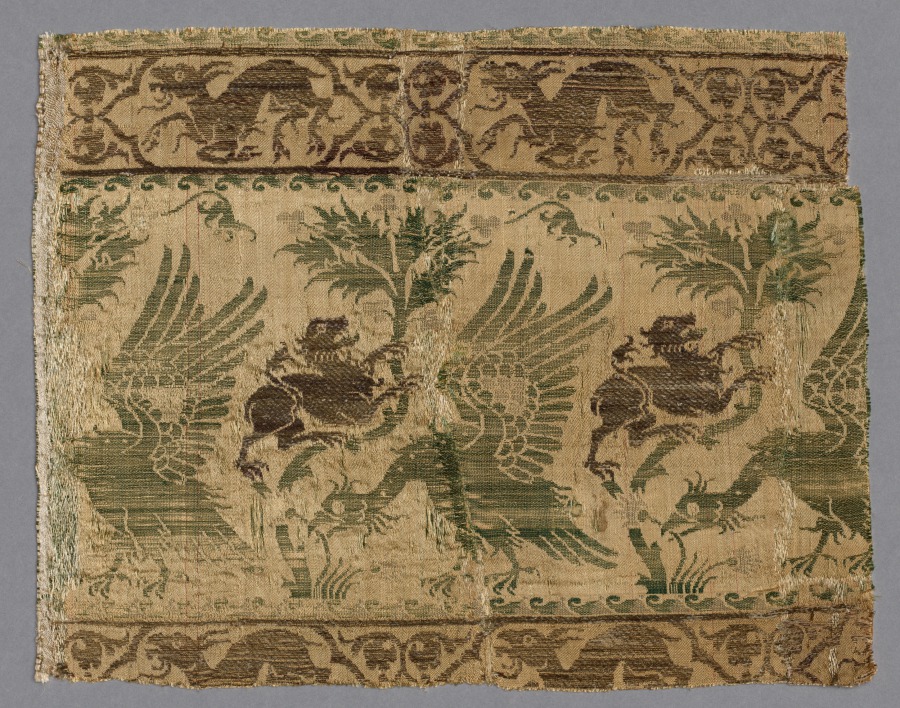
The Enduring Legacy of Silk and Gold: A Heritage Artifact from Imperial Weaving
Introduction: The Fabric of Empire
In the hallowed ateliers of London’s Savile Row, where precision tailoring meets centuries of craftsmanship, few materials command the reverence reserved for silk and gold textiles. These are not mere fabrics; they are artifacts of imperial ambition, woven with threads that carry the weight of dynasties, trade routes, and artistic mastery. As Senior Heritage Specialist at the Lauren Fashion Heritage Lab, I present this research artifact to illuminate the materiality and legacy of silk and gold—a union that defined the opulence of empires from Byzantium to Ming China, and whose influence persists in the bespoke luxury of today’s finest tailoring.
Silk, derived from the cocoon of the Bombyx mori silkworm, is a protein fiber of unparalleled luster, strength, and drape. Its production, a closely guarded secret for millennia, originated in China around 2700 BCE. Gold, in its elemental form, was transformed into thread through gilding—wrapping fine strips of gold leaf around a silk or linen core—creating a material that shimmered with the wealth of kingdoms. Together, silk and gold textiles became the ultimate signifier of power, reserved for emperors, clergy, and the elite. This artifact examines their materiality, historical context, and enduring relevance to heritage fashion.
Materiality: The Science of Splendor
Silk’s Structural Elegance: The molecular composition of silk—a fibroin protein with a crystalline structure—grants it exceptional tensile strength, surpassing steel of equivalent diameter. Its triangular prism-like cross-section refracts light, producing a natural sheen that no synthetic fiber replicates. For imperial weavers, this luminosity was essential: it captured candlelight in palace halls, making the wearer appear almost divine. The weight of silk, measured in momme (a Japanese unit), ranges from lightweight 5 momme for sheer gauzes to heavy 30 momme for brocades. In imperial contexts, heavier silks were preferred for their durability and status, often woven with intricate patterns using techniques like kesi (Chinese silk tapestry) or lampas (a compound weave).
Gold Thread: Alchemy in Textiles: Gold thread was not pure gold but a composite. The finest examples, such as those from the Ming Dynasty (1368–1644), used gold leaf beaten to a thickness of 0.1 microns, then cut into strips and wound around a silk core. This process, known as or nué in European contexts, required immense skill: a single gram of gold could produce over 10,000 meters of thread. The resulting material was both flexible and radiant, capable of withstanding the rigors of ceremonial use. However, gold thread oxidized over time, darkening to a warm bronze hue—a patina that modern conservators value as evidence of age. In Savile Row terms, think of it as the equivalent of a perfectly aged tweed: its character deepens with time.
Weaving Techniques: The production of silk and gold textiles demanded mastery of the drawloom, a device that allowed for complex pattern repeats. In imperial workshops—such as the Nanjing Silk Factory during the Qing Dynasty—weavers worked in teams, with one operator managing the warp threads and another guiding the weft. Gold threads were often used as supplementary wefts, creating raised patterns that caught light. The jin (brocade) technique, for instance, involved weaving gold into the fabric’s structure, leaving it visible only on the surface. This was not mere decoration; it was a statement of resource control. A single robe could require months of labor and consume gold equivalent to a peasant’s annual income.
Historical Context: The Imperial Silk Road
China: The Cradle of Silk: The legacy of imperial silk weaving begins in China, where the Yellow Emperor’s consort, Leizu, is credited with discovering silk around 2700 BCE. By the Han Dynasty (206 BCE–220 CE), silk was a state monopoly, with production centers in Suzhou, Hangzhou, and Chengdu. The Silk Road, a network of trade routes spanning 6,400 kilometers, carried these textiles to Rome, Persia, and beyond. Emperors wore silk and gold robes as symbols of the Mandate of Heaven—the divine right to rule. The dragon robe (longpao) of the Qing Dynasty, embroidered with gold thread and five-clawed dragons, was reserved for the emperor alone. Its design encoded cosmic order: the dragon represented imperial power, while the gold thread signified the sun and the emperor’s role as the Son of Heaven.
Byzantium: The Silk of Empire: In the Byzantine Empire (330–1453 CE), silk weaving was a closely guarded imperial prerogative. Emperor Justinian I (527–565 CE) famously smuggled silkworm eggs from China in hollowed-out bamboo canes, establishing a silk industry in Constantinople. Byzantine silks, often woven with gold thread, were used for diplomatic gifts, ecclesiastical vestments, and court regalia. The purple silk of Byzantium, dyed with Tyrian purple from murex shells and embroidered with gold, was so valuable that its production was regulated by imperial decree. This tradition influenced European courts, where silk and gold textiles became synonymous with sovereignty.
The Mughal and Safavid Empires: In the Islamic world, silk and gold weaving reached new heights under the Mughals (1526–1857) and Safavids (1501–1736). Mughal pashmina shawls, woven with gold thread and floral motifs, were prized by European aristocrats. Safavid silk carpets, such as the “Ardabil Carpet,” used gold-wrapped threads to create intricate medallions and arabesques. These textiles were not just decorative; they were portable wealth, used as currency in trade and as symbols of political alliance.
Conservation and Legacy: A Heritage for Tomorrow
Preserving the Artifact: Silk and gold textiles are exceptionally fragile. Silk degrades when exposed to light, humidity, and pollutants; gold thread can tarnish and become brittle. Conservation requires controlled environments—dark, cool, and stable—with minimal handling. At the Lauren Fashion Heritage Lab, we use archival-grade storage and digital imaging to document these artifacts without physical contact. For instance, a Ming Dynasty kesi panel in our collection, woven with gold thread and depicting a phoenix, is stored in a nitrogen-filled case to prevent oxidation. This approach mirrors the precision of Savile Row tailoring: every detail matters, from the thread count to the stitch.
Influence on Modern Fashion: The legacy of silk and gold textiles endures in luxury fashion. Designers like Alexander McQueen and Guo Pei have reinterpreted imperial motifs, using gold embroidery and silk brocades in haute couture. Savile Row tailors, such as Henry Poole & Co., offer bespoke suits with silk linings and gold-thread monograms, echoing the opulence of imperial robes. This is not mere nostalgia; it is a continuation of a craft that values materiality, heritage, and artistry. The silk and gold textile is a bridge between past and present—a reminder that true luxury is timeless.
Conclusion: The Thread of History
Silk and gold textiles are more than artifacts; they are narratives woven into the fabric of civilization. From the imperial workshops of China to the ateliers of Savile Row, they represent the pinnacle of human ingenuity and the enduring desire for beauty and power. As heritage specialists, our duty is to preserve these materials, not as relics, but as living inspirations. The next time you see a silk tie with a subtle gold stripe or a gown embroidered with metallic thread, remember: you are wearing history. And in the world of heritage fashion, that is the ultimate statement.
— Senior Heritage Specialist, Lauren Fashion Heritage Lab