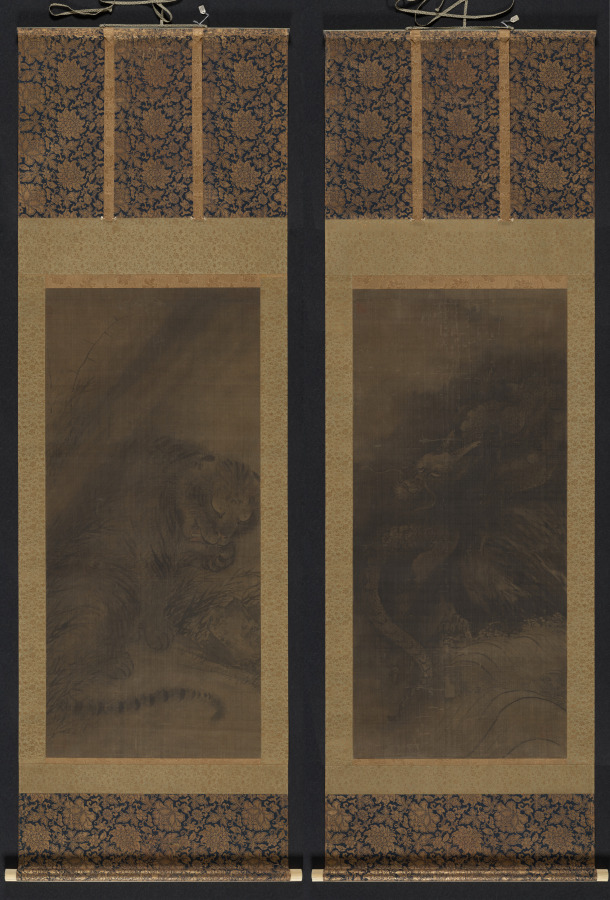
Dragon and Tiger: The Unseen Code of Imperial Silk
In the hushed ateliers of Savile Row, where the sheen of a well-cut worsted wool is a language unto itself, the whisper of silk carries a different weight. It is not merely a fabric; it is a document. As the Senior Heritage Specialist for Lauren Fashion Heritage Lab, I invite you to consider a specific artifact: a fragment of imperial silk, woven in the late Ming Dynasty, depicting the entwined forms of a dragon and a tiger. This is not a decorative flourish. It is a strategic, materialised statement of power, cosmology, and the very essence of sovereignty—a legacy that the discerning gentleman of today might do well to understand, for it speaks to the enduring tension between authority and raw instinct.
The Materiality of Authority: Silk as a Conduit
To handle this silk is to understand the profound weight of its materiality. Imperial silk was not a commodity; it was a monopoly. The looms of Suzhou, Nanjing, and Hangzhou were state-controlled, their output reserved for the Emperor, his court, and the highest echelons of the bureaucracy. The very fibre—the undulating, lustrous filament of the Bombyx mori silkworm—was a metaphor for the Emperor’s mandate: delicate, yet unbreakable; labour-intensive, yet supremely refined. The weave, often a complex satin or a five-end twill, was engineered for durability and a depth of colour that could only be achieved through multiple dye baths of madder, indigo, and the precious, insect-derived carmine. The hand of this silk is cool, dense, and almost liquid. It resists creasing, a physical testament to the unyielding nature of imperial decree. This is not the flimsy, ephemeral silk of a modern fast-fashion scarf; this is silk as architecture, as armour.
The Dragon: The Sovereign’s Breath
The dragon (long) on this fragment is not the fire-breathing beast of Western myth. It is a celestial composite, a creature of yang energy, of the heavens, of rain and thunder. Its five claws—a privilege reserved exclusively for the Emperor—are rendered with a precision that borders on the obsessive. Each scale is a tiny, perfect arc; each whisker a calligraphic stroke. The dragon’s body, sinuous and muscular, coils through a field of clouds, its gaze fixed forward, not in aggression, but in a state of perpetual, watchful dominion. In the context of imperial silk, the dragon was the logo of the state. To wear it, even as a courtier, was to be a satellite of that power. The dragon’s presence on this textile is not a suggestion; it is a declaration of cosmic order. It is the Emperor’s breath, woven into the very fabric of the realm.
The Tiger: The Untamed Counterpoint
And then there is the tiger (hu). It is a jarring, brilliant counterpoint. The tiger is the creature of the west, of autumn, of the yin principle. It is the lord of the mountains, the guardian of the earthly realm. In this weaving, the tiger is not subservient to the dragon. It is locked in a dynamic, almost equal, tension. Its stripes are rendered in a darker, more aggressive black; its eyes are a piercing, amber gold. The tiger’s posture is coiled, ready to spring. It does not bow. In the hierarchy of Chinese symbolism, the dragon and tiger together represent the balance of feng shui—the wind and the water, the celestial and the terrestrial. But on this imperial silk, the balance is a deliberate, calculated tension. The tiger is the Emperor’s shadow, the raw, martial power that underpins the dragon’s celestial mandate. It is the reminder that sovereignty is not merely a matter of divine right, but of the ability to command the earth itself.
The Legacy of Imperial Weaving: A Lesson in Restraint
The legacy of imperial silk weaving is not one of mere opulence. It is a lesson in restraint and intention. Every thread, every colour, every motif was a decision. The warp and weft were not just technical terms; they were the axes of a political map. The dye was a signature of provenance. The pattern was a code of rank. For the modern gentleman, this offers a profound insight. The finest tailoring, like the finest imperial silk, is not about shouting. It is about the quiet, assured articulation of a personal code. The dragon and the tiger on this fragment do not roar; they exist. Their power is in their presence, in the weight of their materiality.
Conclusion: The Fabric of the Future
As we at Lauren Fashion Heritage Lab continue to study these artifacts, we are reminded that heritage is not a static archive. It is a living dialogue. The dragon and the tiger, woven in silk, speak to a timeless human need: to balance the celestial and the earthly, the sovereign and the instinctive. For the Savile Row client, this is not a history lesson. It is a design brief. The next time you choose a silk tie, a pocket square, or a lining, consider the weight of its materiality. Is it a mere accessory, or is it a statement of your own personal code? The imperial weavers knew that the fabric you choose is the legacy you leave. Choose wisely.