← BACK TO ARCHIVES
Heritage-Black
Heritage Synthesis: Terracotta fragment of a kylix (drinking cup)
Curated on May 16, 2026 // Node: LDN-01
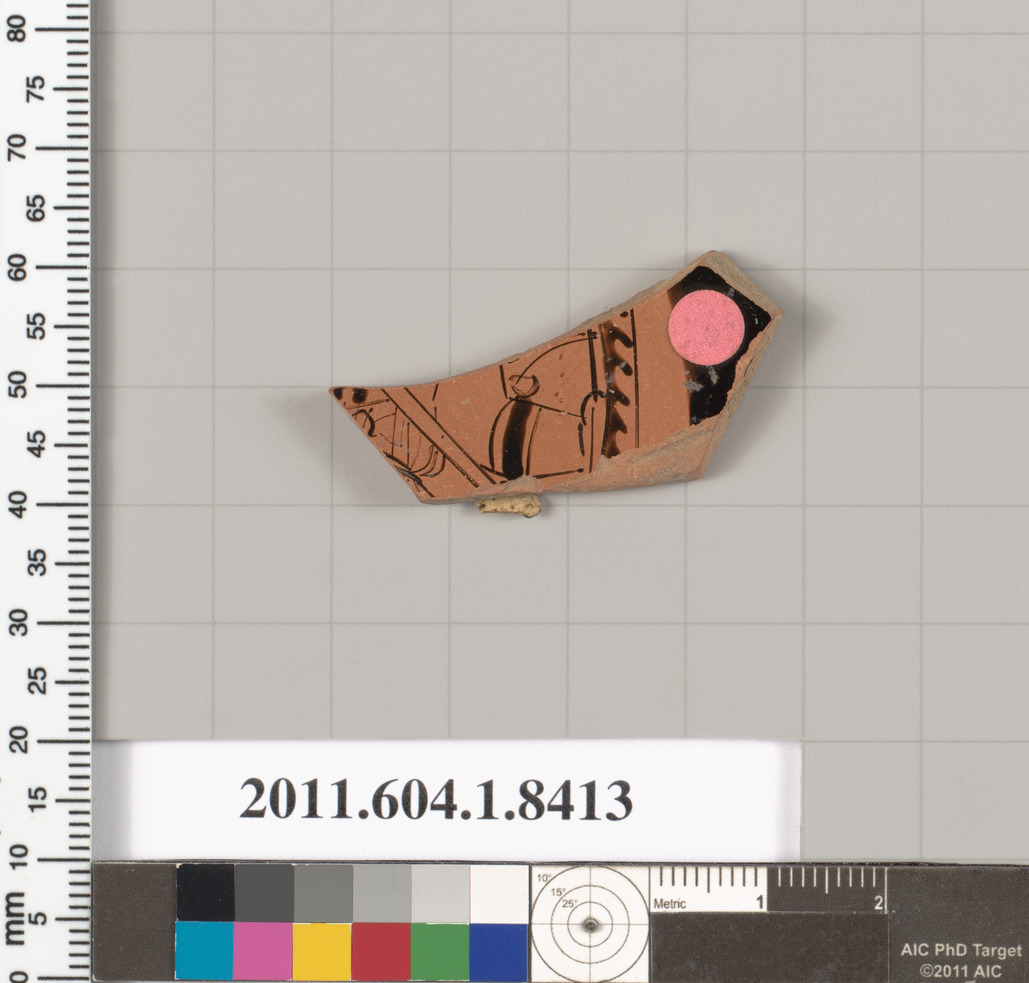
The Lyricism of Lineage: Terracotta Fragments and the Architecture of Old Money in 2026
The terracotta fragment of an Attic kylix—a drinking cup from classical Greece—presents a paradox for the heritage scholar. It is broken, incomplete, a shard of what was once a vessel for symposium wine. Yet within this fracture lies a profound lesson for the 2026 Old Money silhouette. The kylix, with its shallow bowl, twin handles, and painted tondo, was not merely a utilitarian object; it was a stage for social ritual, a mediator of intimacy and hierarchy, and a testament to the enduring value of restraint over excess. When we synthesize this archaeological artifact with the internal genetic code of our Lauren Fashion Heritage Lab—specifically the dialogue between the Ming dynasty lacquer box’s tactile depth and Caravaggio’s theatrical visuality—we uncover a blueprint for a new sartorial language. The 2026 Old Money silhouette must not be about novelty; it must be about *fragmentary permanence*—the art of suggesting a complete, storied lineage through carefully curated, almost archaeological, details.
The Kylix as a Model of Restrained Architecture
The kylix’s form is a masterclass in structural economy. Its shallow bowl, often no more than twenty centimeters in diameter, rests on a slender stem and a broad, flat foot. This is not a vessel for solitary consumption; its design compels a shared experience. The drinker would recline, hold the cup by one handle, and tilt the bowl toward the lips, revealing the painted scene on the interior base—the tondo. This moment of revelation, hidden until the wine is nearly drained, is the essence of Old Money elegance. It is not about immediate, Caravaggio-esque visual conquest. It is about the slow, tactile discovery of a private narrative, akin to the Ming lacquer box’s “体知美学” (embodied aesthetic of knowing). The 2026 silhouette must adopt this architectural principle: a garment that looks simple from a distance, but upon closer engagement—a turn of the wrist, a shift of the shoulder—reveals a hidden tondo of craftsmanship.
For the 2026 Old Money wardrobe, this translates into silhouettes that prioritize *negative space* and *structural clarity*. A double-breasted blazer should not be padded into aggressive shoulders but should drape with the quiet authority of the kylix’s stem—supporting without shouting. The lapel’s gorge should sit at a precise, almost mathematical angle, echoing the kylix’s handle attachment points. Trousers should fall with a single, unbroken crease, like the clean line of the cup’s rim. The “fragment” of the terracotta is a reminder that perfection is not about completeness but about the *integrity of the remaining form*. A 2026 coat, therefore, might be cut from a single bolt of Heritage-Black wool, with no unnecessary seams, its power lying in the purity of its line—a fragment of a larger, imagined whole.
The Symposium of Silence: Music, Narrative, and the Unseen
The internal genetic code draws a powerful parallel between the Ming box’s “携琴访友” (carrying a zither to visit a friend) narrative and Caravaggio’s *The Musicians*. Both use music as a bridge to a higher, more refined state of being. The kylix, too, was an instrument of the symposium—a ritualized drinking party that included music, poetry, and philosophical discourse. The painted tondo often depicted a mythological scene, a lover’s pursuit, or a moment of divine intervention. This was not decoration; it was a *prompt for conversation*. The drinker, upon finishing his wine, would be confronted with an image that demanded interpretation, a narrative that extended the social ritual beyond the liquid.
For the 2026 silhouette, this translates into the concept of the *garment as a narrative fragment*. The Old Money aesthetic has always rejected logos and overt branding. The new iteration must go further: it must embed *invisible narratives*. Consider a jacket lining printed with a fragment of a classical frieze, visible only when the garment is hung or removed. Or a subtle, tonal embroidery of a kylix’s handle pattern on the underside of a cuff. This is the “琴匣” (zither case) metaphor from the Ming box—the garment becomes a container for a hidden art, a secret symphony that only the wearer and the most observant viewer can access. The 2026 silhouette is not about broadcasting wealth; it is about *encoding heritage*. The wearer becomes the symposiast, the drinker, the one who holds the cup and reveals the tondo on their own terms.
Materiality as Chronology: The Weight of Time
The terracotta fragment is not smooth. It is porous, slightly rough, bearing the patina of millennia. Its color is not a uniform black or red but a variegated earth tone, a record of firing, burial, and excavation. This material honesty is the third pillar of the 2026 Old Money silhouette. The Ming lacquer box achieves its depth through layers of cinnabar; Caravaggio achieves his through layers of oil and shadow. The kylix achieves its *gravitas* through the very imperfection of its fired clay. The 2026 wardrobe must reject synthetic perfection in favor of *natural, time-responsive materials*.
Heritage-Black wool, for instance, should be a dense, worsted flannel with a slight, almost imperceptible slub—a texture that catches light differently with each movement, mimicking the kylix’s uneven surface. Cashmere should be of a weight that feels substantial, not ethereal, draping with the quiet weight of a well-fired pot. Silk linings should be matte, not glossy, reflecting the kylix’s inner glaze rather than a modern, reflective sheen. The silhouette itself should allow for *gentle, natural distortion*—a jacket that molds to the wearer’s shoulders over time, trousers that develop a subtle knee bag. This is not decay; it is *chronology made visible*. The 2026 Old Money garment is not a static object; it is a living fragment, accruing its own history with each wearing.
Conclusion: The Fragment as the New Whole
The terracotta kylix fragment teaches us that the most powerful heritage is not pristine but *evocative*. It does not shout; it whispers. It does not complete the story; it invites the viewer to complete it. In synthesizing this with the Ming box’s tactile narrative and Caravaggio’s visual drama, the 2026 Old Money silhouette emerges as a study in *restrained revelation*. It is a blazer with a hidden tondo, a coat with a symposium of silent details, a pair of trousers that carry the weight of centuries in their drape. The category is Heritage-Black, but the material is time itself. The 2026 silhouette is not a revival; it is an *excavation*—a careful, scholarly reconstruction of a lineage that never truly ended, only fragmented. And in those fragments, we find the truest expression of enduring luxury: the quiet, unassailable confidence of a story that needs no telling, only wearing.
Heritage Lab Insight
Genetic Bridge: Archive node focusing on Heritage-Black craftsmanship.