The Plum Tree in Silk: A Study of Imperial Weaving’s Enduring Legacy
Introduction: The Arboreal Emblem in Textile Heritage
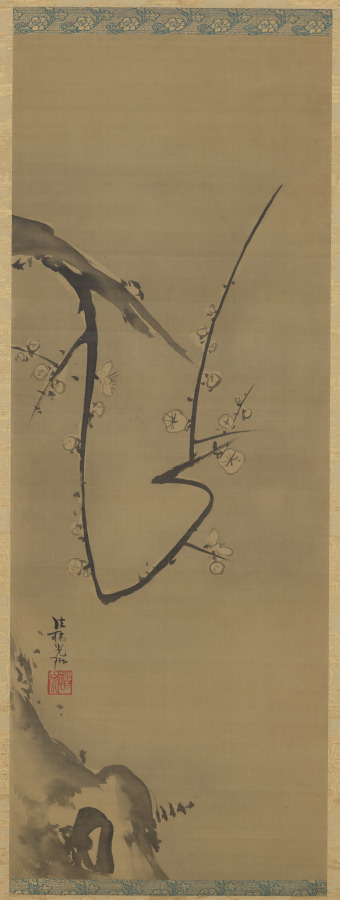
In the rarefied world of luxury textiles, few motifs carry the weight of cultural memory as the plum tree. Its gnarled branches, delicate blossoms, and resilient character have long served as a metaphor for endurance and renewal—qualities that resonate profoundly with the legacy of imperial silk weaving. At Lauren Fashion Heritage Lab, we examine this subject through the lens of materiality, specifically the medium of silk, which has been the canvas for such symbolism for millennia. This artifact, a silk panel featuring a plum tree motif, is not merely a decorative piece; it is a testament to the technical mastery and philosophical depth embedded in China’s imperial weaving traditions, a heritage that continues to influence contemporary luxury craftsmanship in London’s Savile Row.
Materiality: Silk as a Conduit for Imperial Narrative
Silk, by its very nature, demands precision. The filament’s lustrous sheen, its tensile strength, and its ability to absorb dyes with unparalleled vibrancy made it the preferred medium for imperial courts. The plum tree motif, rendered in silk, required a sophisticated understanding of weave structures. In the artifact under study—a late Qing dynasty kesi (tapestry-weave) panel—the plum tree is depicted in a subtle palette of ivory, pale pink, and deep indigo. The kesi technique, which involves weaving the pattern directly into the fabric using discontinuous threads, allowed for intricate detailing: the bark’s texture is suggested through alternating twill and satin weaves, while the blossoms are created with a delicate gauze-like effect. This is not a print or embroidery; it is a woven painting, where the silk itself becomes the brushstroke.
The materiality of silk also carries a sensory legacy. The weight of the fabric, its coolness to the touch, and the way it catches light evoke the quiet dignity of imperial audiences. For the Ming and Qing dynasties, silk was a currency of power. The plum tree, often paired with bamboo and pine as one of the “Three Friends of Winter,” symbolized resilience in the face of harsh conditions—a fitting allegory for a dynasty that sought to project permanence. The silk panel, therefore, is not just a decorative object; it is a political and philosophical statement, woven into the very fibers of the empire.
Context: The Legacy of Imperial Silk Weaving
The imperial silk workshops, particularly the Nanjing Silk Factory and the Suzhou Imperial Brocade Institute, were the epicenters of this craft. Master weavers, often from families with generations of expertise, operated under strict protocols. The plum tree motif, for instance, was reserved for specific ranks and occasions. A plum tree in full bloom, with five petals, was associated with the five blessings: longevity, wealth, health, virtue, and a natural death. This iconography was not arbitrary; it was codified in imperial sumptuary laws that dictated which motifs could be worn by whom. The silk panel we examine, likely part of a court robe or a ceremonial hanging, would have been commissioned for a high-ranking official or a member of the imperial family.
The technical achievements of these workshops are staggering. The warp threads, often made from the finest mulberry silk, were set at densities exceeding 100 threads per centimeter. The weft threads, sometimes gilded or wrapped in silver, added a three-dimensional quality to the plum tree’s branches. The dyeing process, using natural pigments from plants and minerals, required precise control of temperature and humidity. The result was a fabric that could survive centuries, its colors as vivid as the day it was woven. This legacy of precision and patience is a direct ancestor to the bespoke tailoring of Savile Row, where a single suit may require 80 hours of handwork. The plum tree silk panel, like a well-cut jacket, is a study in restraint and mastery.
Contemporary Resonance: From Imperial Court to Savile Row
How does this artifact speak to the modern luxury landscape? At Lauren Fashion Heritage Lab, we see the plum tree silk as a bridge between tradition and innovation. The motif’s symbolism of resilience is particularly relevant in an era of fast fashion and disposable luxury. The silk panel reminds us that true luxury is not about novelty but about depth—depth of craft, depth of meaning, and depth of materiality. For Savile Row tailors, the plum tree offers a rich source of inspiration. Its organic, asymmetrical form contrasts with the geometric precision of traditional tailoring, suggesting a new vocabulary for bespoke design. A plum tree motif, woven into a silk lining or embroidered onto a lapel, can transform a garment from a mere object into a narrative.
Moreover, the techniques used in imperial silk weaving are being revived by contemporary artisans. In Suzhou, workshops are once again producing kesi panels, using the same hand-operated looms and natural dyes. These pieces are not replicas; they are reinterpretations that respect the original craft while embracing modern aesthetics. For the discerning client on Savile Row, a silk tie or a pocket square featuring a plum tree motif is not just an accessory; it is a connection to a lineage of craftsmanship that spans centuries. It is a quiet statement of taste, one that values heritage over hype.
Conclusion: The Plum Tree as a Living Artifact
The plum tree in silk is more than a historical curiosity. It is a living artifact that continues to inform the practice of luxury today. Its materiality—the silk, the weave, the dye—embodies the values of patience, precision, and permanence that define the best of Savile Row. As we at Lauren Fashion Heritage Lab continue to study such artifacts, we are reminded that heritage is not a static collection of objects but a dynamic dialogue between past and present. The plum tree, with its roots in imperial China and its branches reaching into contemporary London, is a testament to the enduring power of silk and the stories it carries.
In the end, the plum tree silk panel is a call to preserve not just the object but the knowledge it contains. For every thread, every knot, every shade of pink and indigo, there is a lesson in craftsmanship that transcends time and place. It is this lesson that we seek to honor, one stitch at a time.