← BACK TO ARCHIVES
Heritage-Black
Heritage Synthesis: Terracotta fragment of a kylix (drinking cup)
Curated on May 16, 2026 // Node: LDN-01
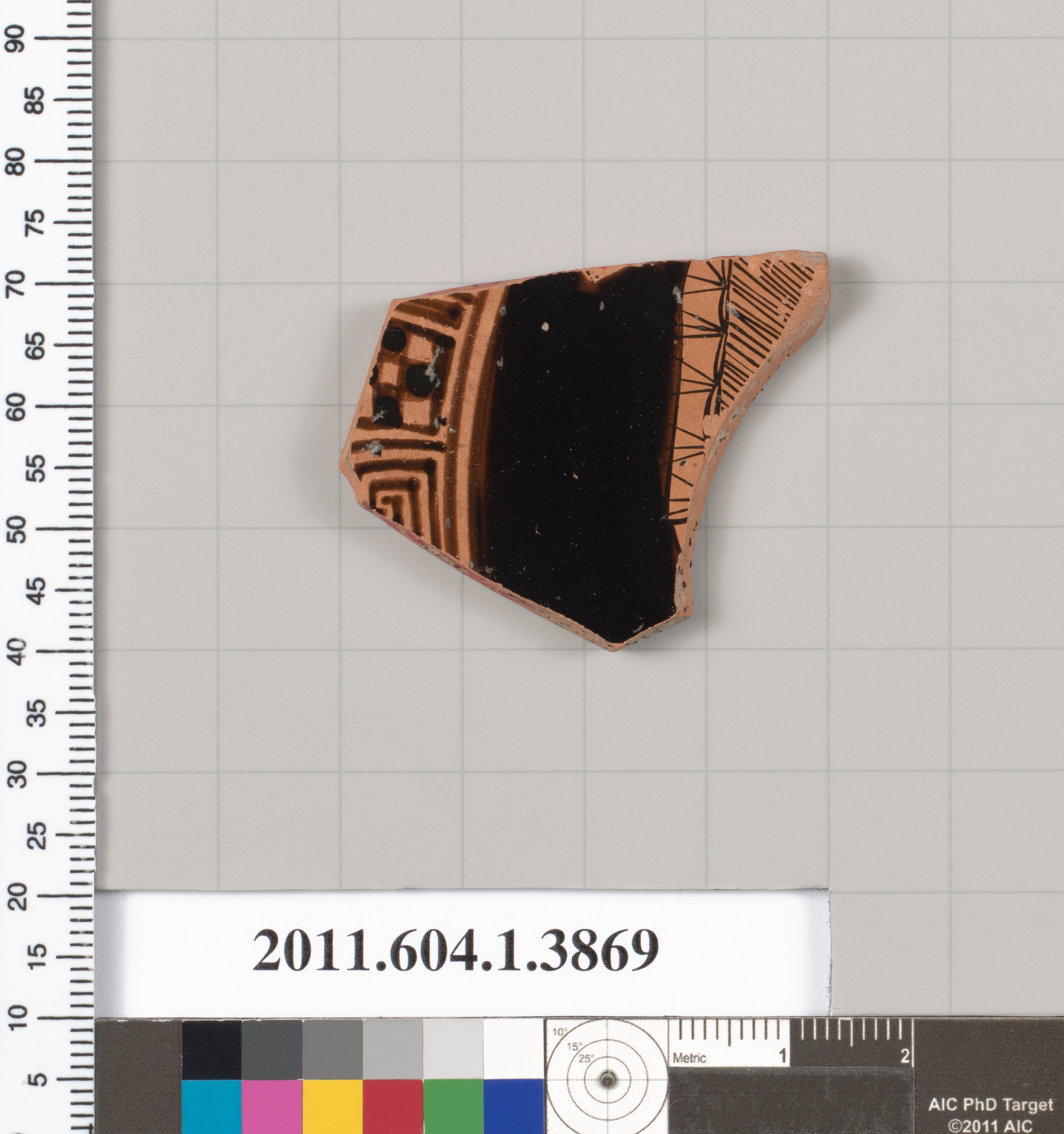
The Vessel and the Void: Terracotta Fragments and the Architecture of Old Money in 2026
The internal genetic code of Lauren Fashion Heritage Lab posits a profound dialogue between the Damascus Room and the base of the Daoist Immortal He Xiangu, a dialogue centered on the principles of “layering” and “void” as pathways to transcendence. This framework, when applied to the seemingly disparate museum artifact—a terracotta fragment of a Greek Attic kylix—yields a critical insight for the 2026 Old Money silhouette. The kylix, a drinking cup, is not merely a vessel for wine; it is a microcosm of social ritual, material mastery, and the deliberate construction of a space for human interaction. Its fragmentary state, a shard of a once-whole object, speaks directly to the core tenets of Old Money aesthetics: the valorization of lineage, the quiet power of incompleteness, and the profound elegance of a form that contains a void.
The Kylix as a Paradigm of Layered Restraint
The Greek kylix, particularly in its Attic black-figure or red-figure forms, is a study in controlled layering. The terracotta body, fired to a warm, earthy orange, provides a foundational ground. Upon this, the painter applied a slip of refined clay that fired black, creating a stark, graphic contrast. This is not the exuberant, multi-material layering of the Damascus Room, but a disciplined, two-dimensional layering of material and narrative. The black figures, often depicting mythological scenes or aristocratic symposia, are themselves layered with incised details—lines for musculature, folds of drapery, the curve of a lyre. This is a layering of *meaning* as much as of matter. The kylix, like the Damascus Room, uses its decorative program to construct a microcosm. The symposium, the ritualized drinking party for which the kylix was designed, was itself a space of layered social codes: the mixing of wine and water, the recitation of poetry, the performance of philosophical debate. The cup’s interior, the *tondo*, often featured an image that would be revealed only as the drinker drained the vessel—a final, intimate layer of surprise and contemplation.
For the 2026 Old Money silhouette, this principle translates into a rejection of surface-level opulence in favor of material depth and narrative restraint. The silhouette is not built from a cacophony of competing textures, but from a carefully curated sequence of refined materials: a base of dense, matte wool, layered with a whisper of silk charmeuse at the collar, a single row of jet-black buttons carved from fossilized palm wood, a hem finished with a hand-rolled edge that is invisible to the casual observer. This is the layering of the kylix—a deliberate, almost archaeological approach to construction. The “black” of the figures is not a flat color but a deep, absorbing heritage-black, a shade that holds light rather than reflects it, suggesting age, permanence, and a history that precedes the wearer. The terracotta fragment teaches us that true luxury is not in the *quantity* of layers, but in the *quality of their relationship*—the precise tension between the warm ground and the cool, graphic figure.
The Void as a Site of Power and Presence
The most profound lesson of the kylix, however, lies in its central void. The cup is a form designed to be empty. Its entire structure—the shallow bowl, the two elegant handles, the raised stem and foot—exists to create and define a space for liquid, for ritual, for human connection. This is the “虚空” (xūkōng) or “void” that the internal code identifies as the hidden soul of the Damascus Room and the He Xiangu base. The kylix’s emptiness is not an absence; it is a potential. It is the space where the wine is mixed, where the conversation flows, where the symposium’s spirit is conjured. The fragment, broken as it is, still powerfully evokes this void. We see the curve of the bowl, the remnant of the lip, and we instinctively understand the missing whole—the space it once contained.
This concept is the single most critical driver for the 2026 Old Money silhouette. In an era of maximalist trends and logo-driven visibility, the Old Money aesthetic reasserts itself through the power of the void. The silhouette is not about the fabric clinging to the body, but about the architectural space between the fabric and the form. A perfectly tailored double-breasted jacket, for instance, is not a second skin; it is a structure that creates a void—a dignified, uncluttered volume around the torso. The shoulders are subtly extended, the waist gently shaped, the fabric falling in a clean, uninterrupted column. This is the kylix’s bowl. The lapels, like the cup’s handles, are not merely functional; they define the boundaries of this void, guiding the eye and framing the wearer’s presence. The trousers, cut with a full leg and a precise break over the shoe, create a negative space around the ankle, a void that suggests ease and unforced confidence. The “void” in the silhouette is where the wearer’s character resides—unspoken, unadorned, and utterly commanding.
The Fragment as a Statement of Lineage
Finally, the kylix fragment itself—its broken edge, its missing pieces—offers a powerful metaphor for the 2026 Old Money identity. It is an object that speaks of time, of history, of a narrative that is both incomplete and revered. The fragment is not a failure; it is a testament to survival. It carries the patina of centuries, the memory of a thousand hands that held it, the echo of symposiums long past. This is the essence of the “old” in Old Money: not a static inheritance, but a living, evolving connection to a lineage.
The 2026 silhouette must embody this fragmentary quality. It does not strive for a pristine, untouched perfection. Instead, it embraces the beauty of the well-worn, the subtly imperfect, the quietly inherited. A cashmere sweater might have a mended elbow, visible only on close inspection. A pair of wool trousers might show the gentle sheen of age at the seat and knees. The silhouette’s lines are not aggressively modern but are drawn from a continuous, unbroken tradition of tailoring—the soft shoulder of the 1930s, the clean lines of the 1960s, the restrained proportions of the 1990s. This is not retro pastiche; it is a deliberate, scholarly layering of historical references, much like the kylix’s layering of myth and ritual. The wearer is not a blank slate but a living fragment of a larger, ongoing story. The heritage-black palette, the precise cut, the deliberate void—all of these elements coalesce to create a silhouette that is not about making a statement, but about *being* a statement of enduring, unassailable taste. Just as the kylix fragment invites us to reconstruct the whole, the 2026 Old Money silhouette invites us to perceive the lineage, the ritual, and the quiet power of the void it so masterfully contains.
Heritage Lab Insight
Genetic Bridge: Archive node focusing on Heritage-Black craftsmanship.