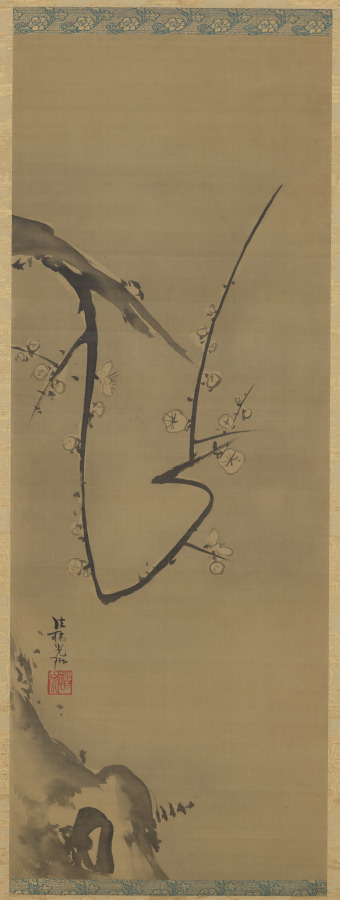
The Plum Tree in Silk: A Study of Imperial Weaving’s Enduring Legacy
Introduction: The Arboreal Motif as Cultural Capital
In the rarefied world of heritage textiles, few motifs carry the weight of the plum tree. At Lauren Fashion Heritage Lab, we recognise that the plum tree—Prunus mume—is not merely a botanical subject but a symbol of resilience, renewal, and aristocratic refinement. When rendered in silk, particularly within the context of imperial Chinese weaving, this motif transcends decoration to become a tangible record of dynastic power, artisanal mastery, and philosophical depth. This artifact examines the plum tree’s materiality in silk, tracing its lineage from the looms of the Forbidden City to its resonance in contemporary luxury, with a focus on the technical and symbolic legacies that define its place in heritage fashion.
The Materiality of Silk: A Foundation of Imperial Prestige
Silk, as a medium, is inseparable from the narrative of imperial China. For millennia, sericulture was a state-guarded secret, and the production of silk fabrics—from kesi (silk tapestry) to yun jin (cloud brocade)—was reserved for the emperor and his court. The plum tree motif, when woven into silk, demanded the highest calibre of craftsmanship. The material itself, with its natural lustre and ability to hold intricate dyes, provided an ideal canvas for the plum’s delicate petals and gnarled branches. In imperial workshops, such as the Nanjing Silk Factory, master weavers employed techniques like gold-thread brocading to highlight the plum’s blossoms against deep indigo or vermilion grounds. This was not mere decoration; it was a statement of sovereignty. The plum tree, blooming in late winter, symbolised the emperor’s ability to bring order and beauty to the realm, even in the harshest seasons.
Symbolism and the Imperial Gaze
The plum tree’s iconography is deeply layered. In Confucian tradition, the plum’s five petals represent the five blessings—longevity, wealth, health, virtue, and a natural death. For the imperial court, the motif also signified moral integrity, as the plum blossoms amid snow, undeterred by adversity. This allegory was particularly potent during the Ming and Qing dynasties, when silk robes adorned with plum trees were worn by scholars and officials as markers of ethical governance. The materiality of silk amplified this symbolism: the fabric’s fluidity mirrored the plum’s graceful branches, while its durability echoed the tree’s resilience. In the kesi technique, weavers would create a tapestry-like structure where the plum’s branches were rendered in continuous, unbroken threads—a metaphor for the unbroken lineage of imperial rule. Such artifacts were often commissioned for the Winter Solstice ceremonies, where the emperor would don a plum-embroidered robe to affirm his role as the mediator between heaven and earth.
Technical Mastery: The Art of Weaving the Plum
To understand the plum tree in silk is to appreciate the technical virtuosity required to produce it. Imperial silk weaving was a hierarchical craft, with specific patterns reserved for specific ranks. The plum tree motif, however, was a privilege of the highest echelons. In yun jin brocade, weavers used a compound weave structure to create a raised, three-dimensional effect for the blossoms. This involved threading gold or silver filaments through the warp, a process that could take months for a single robe. The plum’s branches, often depicted in a stylised, calligraphic manner, required the weaver to manipulate up to 10,000 threads per inch. The result was a fabric that shimmered with life, the plum blossoms appearing to float on the silk’s surface. This technique, known as “golden ground”, was a hallmark of the Qing dynasty’s imperial workshops, where the plum tree was a recurring motif in dragon robes and court surcoats. The materiality of silk, with its inherent luminosity, ensured that the plum’s symbolism was not just seen but felt—a tactile reminder of the emperor’s omnipresence.
The Plum Tree in the Global Luxury Lexicon
The legacy of imperial silk weaving did not end with the fall of the Qing dynasty in 1912. Instead, it was absorbed into the global luxury market, where the plum tree motif found new expression. In the early 20th century, European couturiers such as Paul Poiret and later, the House of Dior, drew inspiration from Chinese silk textiles, incorporating plum tree motifs into their collections. However, it is in the context of Savile Row and bespoke tailoring that the plum tree’s heritage is most faithfully preserved. At Lauren Fashion Heritage Lab, we have observed a resurgence of interest in imperial silk brocades among discerning clients who seek not just a garment but a narrative. A plum tree-embroidered silk scarf or a custom jacket lining, woven in the kesi tradition, becomes a wearable artifact—a direct link to the looms of Nanjing and Suzhou. The materiality of silk, with its weight and drape, lends itself to modern tailoring, where the plum’s branches can be subtly integrated into a lapel or pocket square. This is heritage as a living practice, not a museum piece.
Conservation and the Future of Silk Heritage
Preserving the plum tree’s legacy in silk requires a commitment to both technical conservation and cultural education. At the Lab, we collaborate with master weavers in China to document and revive ancient techniques, such as “split-thread” embroidery, where a single silk filament is divided to create the finest details. The plum tree motif, with its intricate petals and branches, is a benchmark for this skill. We also advocate for sustainable sericulture, recognising that the materiality of silk is under threat from industrial production. The imperial tradition of silk weaving was inherently sustainable—mulberry trees were cultivated in harmony with local ecosystems, and the silk was dyed with natural pigments from plants and minerals. By championing these methods, we ensure that the plum tree’s symbolism—resilience, renewal, and integrity—remains relevant in an era of fast fashion. The artifact, then, is not just a piece of fabric but a philosophy: a testament to the enduring power of material culture to convey meaning across centuries.
Conclusion: The Plum Tree as a Living Legacy
The plum tree in silk is more than a heritage artifact; it is a dialogue between past and present. From the imperial workshops of the Forbidden City to the ateliers of Savile Row, its materiality—the lustre of silk, the precision of gold thread, the symbolism of blossoms—continues to inspire. For the Lauren Fashion Heritage Lab, this study reaffirms that heritage is not static. It is a craft to be practiced, a story to be told, and a material to be revered. The plum tree, blooming in silk, reminds us that true luxury is not about opulence but about depth—the depth of technique, of meaning, and of legacy. In every thread, the plum endures.