← BACK TO ARCHIVES
Heritage-Black
Heritage Synthesis: Terracotta fragment of a kylix (drinking cup)
Curated on May 17, 2026 // Node: LDN-01
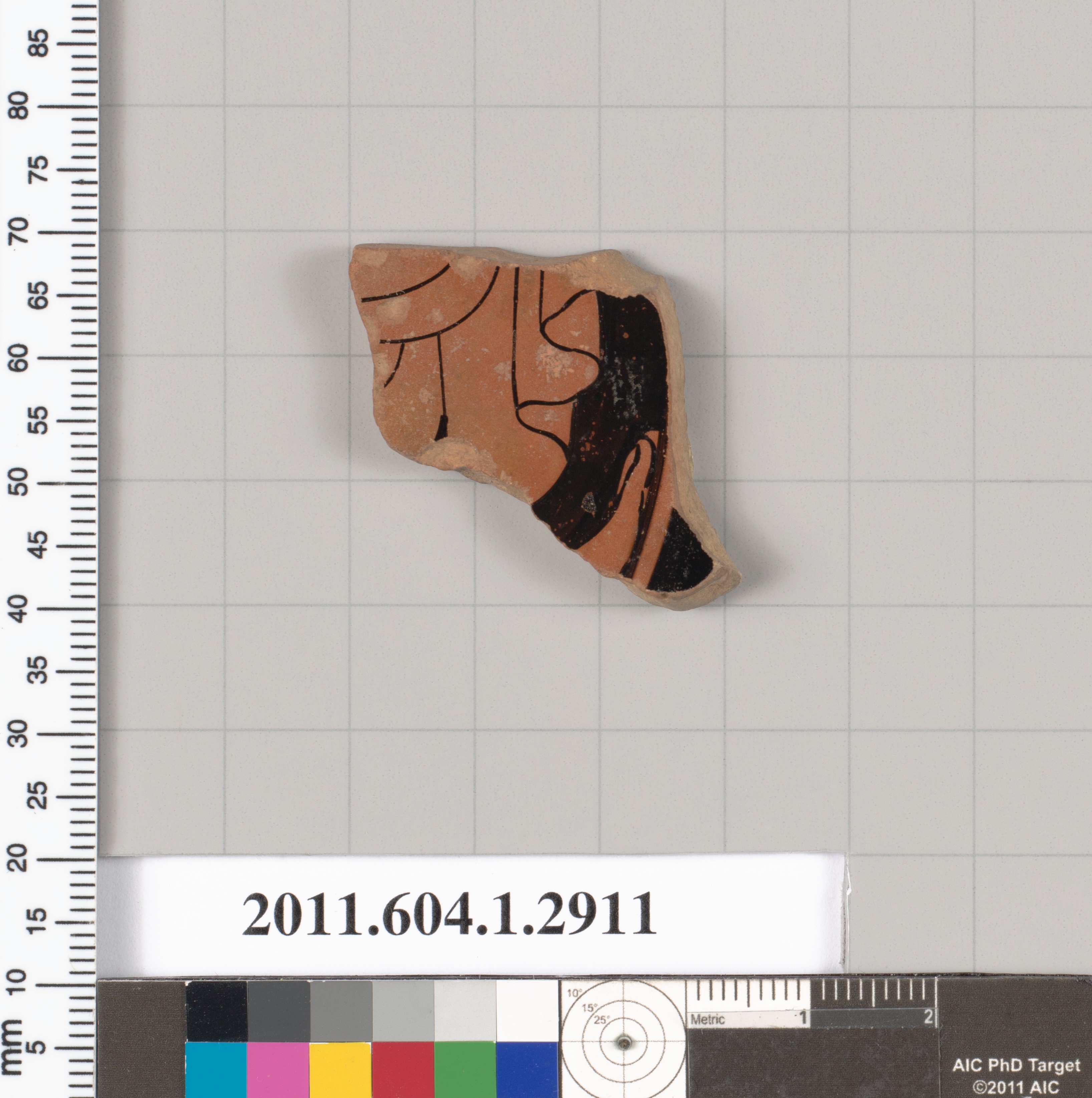
The Absent Bloom: Terracotta Fragments and the Architecture of Old Money Silence
The Lauren Fashion Heritage Lab’s internal genetic code—a meditation on the “Udumbara Flowers” temple plaque and Piero della Francesca’s *The Hunt*—reveals a profound paradox: the most potent aesthetic experiences arise not from presence, but from absence. The plaque, bearing the name of a flower that blooms once in three millennia, is a signifier without a signified. *The Hunt* freezes motion into geometric eternity, capturing not the deer, but the shadow of time itself. This dialectic of presence and absence, of material weight and immaterial grace, finds a startlingly concrete analogue in the terracotta fragment of an Attic kylix (drinking cup) from the Lauren archive. This shattered relic of ancient Greek symposia—a vessel for wine, for conversation, for the fleeting pleasures of the mortal world—becomes a foundational text for understanding the 2026 Old Money silhouette. It teaches us that true luxury is not about accumulation, but about the eloquent management of what is withheld.
Fragment as Form: The Kylix and the Grammar of Restraint
The terracotta fragment is, by definition, incomplete. Its broken edges are not flaws; they are the very source of its authority. The original kylix was a functional object, a shallow bowl on a stem with two handles, designed for communal drinking. But the fragment we possess is no longer a cup. It has been liberated from utility. Its remaining painted surface—perhaps a sliver of a figure, a geometric band, a streak of black glaze—no longer serves a narrative. Instead, it becomes a pure index of craft: the precise curve of the potter’s wheel, the controlled oxidation of the kiln, the steady hand of the painter. This is the essence of the Old Money aesthetic. The 2026 silhouette rejects the “full cup” of conspicuous branding, of logos, of overt status signaling. Instead, it presents itself as a *fragment* of a larger, unseen whole. A jacket is cut with a severity that suggests a missing sleeve; a trouser hem falls with a weight that implies a vanished cuff. The garment is not a statement; it is a clue.
This aligns directly with the temple plaque’s strategy. The plaque names the Udumbara flower, but the flower is never there. The viewer is forced to conjure it. Similarly, the terracotta fragment does not depict a complete symposium; it offers a shard, and the viewer must reconstruct the lost ritual. The 2026 Old Money silhouette operates on this principle of *negative space*. A cashmere overcoat, for instance, is not defined by its padding or its structure, but by the precise emptiness of its drape. The fabric falls away from the body, creating a void that the wearer’s presence must fill. The silhouette is a frame around an absence. The “luxury” is not in the material itself—though the cashmere is undeniably fine—but in the *silence* that the material creates. It is a garment that whispers, never shouts. It is, like the plaque, a “blank name’s bearer,” a symbol of an invisible grace.
Geometric Stillness: The Hunt and the Tailored Line
Piero della Francesca’s *The Hunt* is not a narrative of pursuit; it is a study in arrested time. The horses, the hounds, the hunters—all are locked in a crystalline geometry. The painting’s power lies in its refusal to complete the action. The arrow is not yet loosed; the deer is not yet caught. This suspension is the very structure of the 2026 Old Money silhouette. The tailoring is not about movement; it is about *potential* movement. A double-breasted jacket, with its precise lapel roll and its sharp shoulder, does not suggest a body in motion. It suggests a body *poised* for motion, held in a state of perfect readiness. The silhouette is a frozen moment of intention.
The terracotta fragment reinforces this. The painted figures on a kylix were often caught in mid-gesture—a hand reaching for a lyre, a mouth opening to speak. But the fragment isolates that gesture, removing it from its temporal flow. The 2026 silhouette does the same. A pair of wool trousers is cut with a break that is just so—not pooling on the shoe, not sharply creased, but hovering in a state of perfect equilibrium. A silk tie is knotted with a dimple that is neither too tight nor too loose, but held in a state of geometric perfection. These are not details; they are *events* of stillness. They are the “last millimeter of pause before all things vanish,” as the internal code describes *The Hunt*. The Old Money wearer does not chase trends; they inhabit a tailored eternity.
Material as Metaphor: From Terracotta to Heritage-Black
The terracotta itself is a humble material—baked earth, fired clay. It is not precious in the way of gold or silk. Yet its fragmentary state renders it precious. It has survived. It carries the memory of fire, of hands, of a thousand vanished symposia. This is the logic of the 2026 palette, which I have categorized as *Heritage-Black*. This is not the black of mourning, nor the black of rebellion. It is the black of *depth*—a black that absorbs light, that refuses to reflect, that holds its secrets. It is the black of a kiln’s interior, of a temple’s shadow, of the void where the Udumbara flower might bloom.
The 2026 Old Money silhouette, rendered in Heritage-Black wool, cashmere, and silk, is a direct descendant of the terracotta fragment. It is a garment that has been stripped of all extraneous narrative. There is no logo, no pattern, no embellishment. There is only the *cut*—the geometry of the shoulder, the fall of the lapel, the precise width of the trouser. The garment is a fragment of a lost whole, a shard of a forgotten ritual. It invites the viewer to complete the picture, to imagine the life that would fill this silent architecture. This is the “invisible space” that both the plaque and *The Hunt* point toward. The wearer is not displaying wealth; they are displaying *restraint*. They are offering a blank space for the world to project its own meaning.
Conclusion: The Echo in the Void
The terracotta fragment, the temple plaque, and *The Hunt* converge on a single truth: the most profound beauty resides at the boundary of perception and absence. The 2026 Old Money silhouette, forged in Heritage-Black, is a vessel for this truth. It is not a garment to be seen; it is a garment to be *sensed*. It is the echo of a cup that no longer holds wine, the name of a flower that never blooms, the frozen arrow of a hunt that never ends. In the silence of its cut, in the void of its drape, the wearer becomes a participant in an ancient dialogue—a dialogue about time, about grace, and about the exquisite power of what is left unsaid. The true luxury is not the object, but the *resonance* it leaves behind in the mind of the beholder.
Heritage Lab Insight
Genetic Bridge: Archive node focusing on Heritage-Black craftsmanship.