The Primordial Code: Etruscan Terracotta and the Archaeology of "Old Money" Silhouette
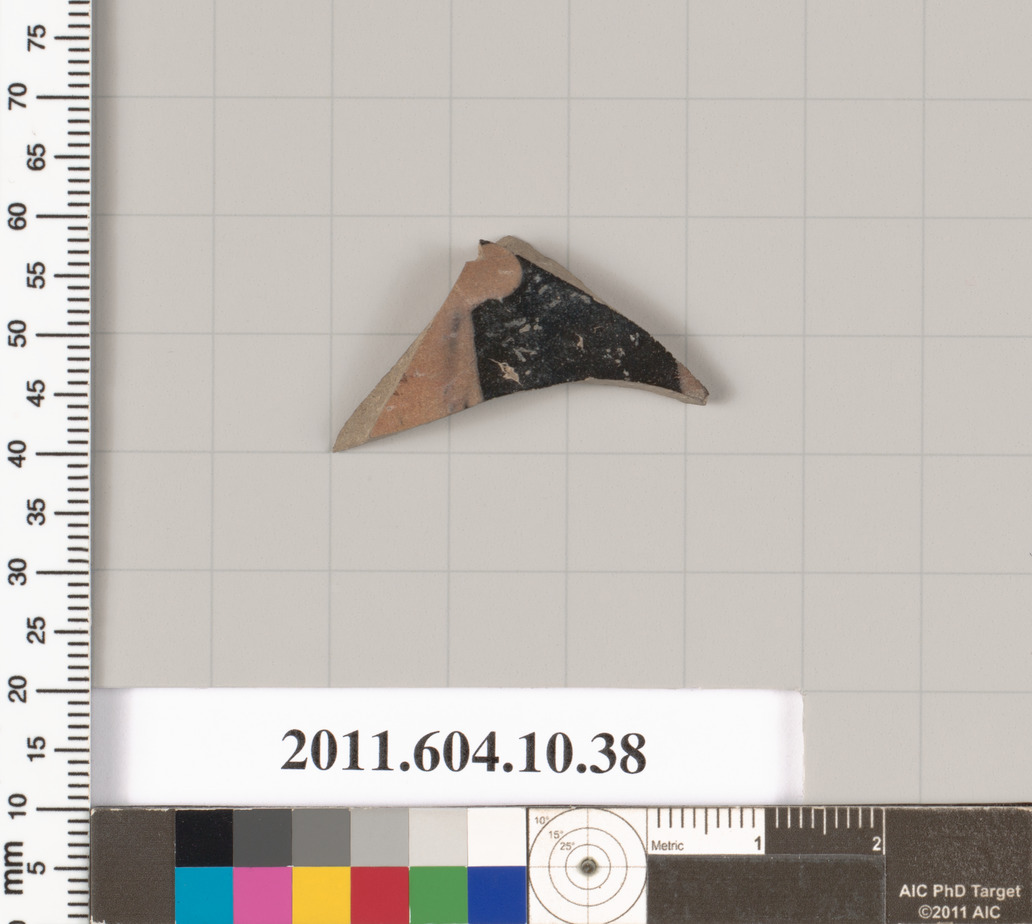
The pursuit of an authentic "Old Money" aesthetic in fashion often navigates a curated, albeit narrow, corridor of twentieth-century Anglo-American references—tweed, oxford cloth, and discreet insignia. However, a truly profound heritage, one that transcends temporal whims and speaks to an eternal authority, requires excavation at a far deeper stratum of human civilization. A fragmentary Terracotta kylix (drinking cup) from Etruscan culture (c. 7th-4th century BCE) serves not as a mere visual source, but as a foundational genetic artifact for the 2026 Lauren Fashion Heritage Lab interpretation of "Old Money." This analysis posits that the Etruscan fragment, when read through the Lab's established framework of "global Baroque" dialogue, reveals the primordial codes of asymmetry, ritual posture, and matte antiquity—codes that will define the next evolution of understated power dressing.
From Baroque Mirror to Etruscan Fragment: Shifting the Temporal Axis
The Lab's internal genetic code brilliantly deciphers the early modern "global Baroque" through the mirroring of a European textile and a Japanese screen, highlighting creative appropriation and symbolic translation. The Terracotta fragment demands a more radical temporal leap, moving from the interconnected world of the 17th century to the formative, mythic origins of Western Mediterranean civilization. The Etruscans, a pre-Roman society renowned for their wealth, sophisticated artistry, and mystical religiosity, embodied an "old money" that was literally archaic—their authority derived from antiquity itself and a profound connection to ritual. The kylix, a vessel for wine and symposium, was not merely utilitarian but central to social and sacred rites. Its fractured state is critical; it speaks not of pristine preservation, but of an authenticity earned through time’s passage. This aesthetic of the fragment—incomplete, weathered, matte—becomes the first pillar for 2026: a move away from glossy, "new" luxury towards a luxury that appears excavated, inherited, and soulfully worn.
Decoding the Silhouette: Asymmetry, Posture, and the Matte Patina
The visual language of the Etruscan terracotta, often adorned with black-figure or red-figure scenes of banquets, processions, and deities, informs the 2026 silhouette in three transformative ways.
First, the principle of controlled asymmetry. Unlike the rigid, heraldic symmetry of the double-headed eagle textile, Etruscan figurative art possesses a dynamic, narrative energy. Figures are often arranged in friezes that suggest movement and interaction. For 2026, this translates into silhouettes that break from perfect bilateral balance. Imagine a single-breasted blazer where the fastening is subtly off-center, echoing the compositional flow of a pottery scene; or a draped dress where the knot or fall is intentionally irregular, suggesting the natural drape of a toga or himation as captured in ancient art. The "order" is not imposed, but organic, flowing from the body’s movement and the material’s memory.
Second, the semantics of ritual posture. The figures on the kylix are not merely depicted; they are engaged in acts of pouring, drinking, offering, and conversing. These are postures of cultivated leisure and sacred practice—the original "old money" pursuits. The 2026 silhouette will architect the body to suggest these states. Structured shoulders that evoke a dignified, receptive bearing (as if receiving a libation), sleeves cut to allow for a graceful bend at the elbow (the cup-holding arm), and torsos with subtle drapery that implies seated repose. The clothing becomes a vessel for a specific, elevated bodily grammar, moving beyond casual comfort into the realm of conscious, ritualized presence.
Third, and most fundamentally, the supremacy of the matte patina. The Terracotta fragment’s surface is devoid of sheen. Its color is the deep, absorbed black of fired clay and ancient pigment, or the earthy red of iron-rich soil. This directly challenges the metallic brilliance of the Baroque textile and informs a radical material philosophy for 2026. "Heritage-Black" is thus defined not as a mere color, but as a material state: a wool felted to a soft, light-absorbing density; a cashmere brushed to a suede-like texture; a linen deliberately washed to a prehistoric softness. Embellishment, if present, would be in the form of textural contrast—a blind, matte embroidery resembling pottery incisions, or a jacquard weave with a motif inspired by geometric border patterns on the kylix. The visual power comes from depth and tactility, not reflection.
The 2026 Synthesis: Archaic Authority in a Contemporary Frame
Informed by the Etruscan fragment, the 2026 "Old Money" silhouette for Lauren Fashion is an exercise in archaeological modernism. It synthesizes the internal code’s insight into cross-cultural dialogue by engaging in a temporal dialogue—between the archaic past and the contemporary present. The collection would feature:
Silhouettes: Asymmetrical wraps, one-shoulder tunics, and tailored pieces with a relaxed, almost *peplos*-like volume at the hip, transitioning into clean, precise lines. The posture is paramount—clothing that rewards upright, deliberate movement.
Materials: A palette of terracotta red, oxide black, ivory, and clay white. Fabrics are exclusively matte: porous wools, non-lustrous silks, crinkled linens, and brushed technical cottons that mimic ceramic texture.
Details: Seams and fastenings are emphasized as functional art, like the joins in pottery. Hardware is ceramic or blackened matte metal. Patterns are abstracted from Etruscan border motifs or the fractured lines of the artifact itself.
Ultimately, this Terracotta fragment teaches us that true, enduring "Old Money" is not about displaying recent wealth, but about channeling deep time. It is an aesthetic of inherited substance, of ritual practice, and of a beauty that is earned through the patina of ages. For 2026, the Lauren woman’s authority does not shout with gold thread; it whispers with the profound, quiet assurance of a relic that has witnessed civilizations rise and fall, and whose value is beyond the fluctuations of trend. Her silhouette is not merely worn; it is curated from history itself.