The Terracotta Fragment as Metaphor: Recasting Attic Formalism for 2026 Old Money Silhouettes
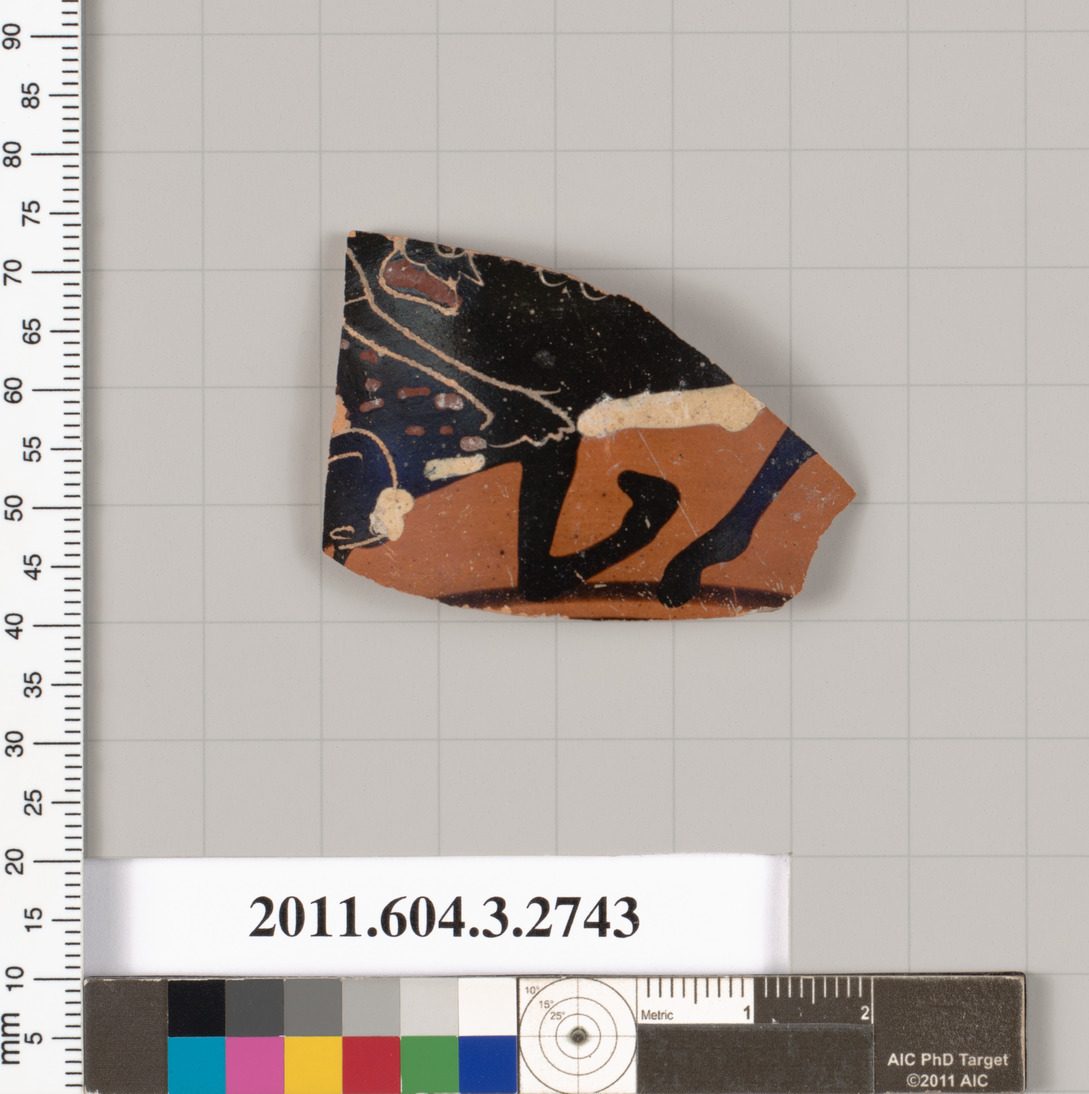
The Lauren Fashion Heritage Lab’s internal genetic code, as articulated through the aesthetic dialogue between Johannes Vermeer’s A Maid Asleep and George Caleb Bingham’s A Vignette of Life on the Frontier, posits a profound thesis: that the most enduring beauty resides not in dramatic climaxes but in the “transitional” spaces—the private pause, the public edge—where form and flux, order and escape, achieve a precarious equilibrium. This paper argues that the museum artifact under consideration—a terracotta fragment of an Attic oinochoe or olpe (Greek, circa 5th century BCE)—serves as a material and conceptual Rosetta stone for translating this aesthetic principle into the 2026 Old Money silhouette. The fragment, with its broken edges, its residual glint of black slip, and its once-functional curve, is not a relic of a lost whole but a testament to the power of the partial, the paused, and the poised. It is, in essence, a three-dimensional embodiment of the “edge state” that Vermeer and Bingham painted in two dimensions.
The Fragment as Formal Order: From Geometric Stasis to Dynamic Balance
The Attic oinochoe fragment, though physically shattered, reveals an underlying geometric rigor that mirrors Vermeer’s compositional grid. The surviving curve of the jug’s body, the precise lip of its rim, and the faint incised line that once demarcated a decorative band all speak to a culture that valued proportion, symmetry, and controlled volume. This is not the chaotic shard of an accidental break; it is a deliberately preserved piece of a designed object. In the context of 2026 Old Money silhouettes, this fragment instructs us to prioritize architectural structure over fleeting trends. The silhouette for this season must be built from clean, unbroken lines—a tailored jacket with a defined shoulder, a trouser with a precise crease, a coat that falls in a single, uninterrupted column from shoulder to hem. The fragment’s black slip, a hallmark of Attic pottery, suggests a monochromatic palette as the foundation: deep navy, charcoal, ivory, and the eponymous heritage black. This is not minimalism as absence, but minimalism as concentrated presence, where every seam, every button, every lapel is a deliberate act of formal control, akin to Vermeer’s grid of doorframes and tabletops.
Yet the fragment is not static. Its broken edge introduces a dynamic asymmetry that prevents the silhouette from becoming rigid or lifeless. This echoes Bingham’s “dynamic balance” in A Vignette of Life on the Frontier, where the bustling, asymmetrical arrangement of figures on the riverbank is held in check by the horizontal line of the water and the verticality of the trees. For 2026, this translates into a silhouette that allows for controlled disruption: a single shoulder seam that drops slightly off the natural line, a hem that is asymmetrically cut, a sleeve that is deliberately left unlined to reveal its internal construction. The fragment teaches us that the edge is not a flaw but a feature—a point of tension where the object’s history, its making, and its potential for future use all converge. In the Old Money wardrobe, this might manifest as a cashmere sweater with a deliberately frayed cuff, or a wool blazer with an exposed raw edge at the collar. These are not signs of decay but of lived authenticity, a nod to the “transitional” state that Vermeer’s sleeping maid and Bingham’s frontier settlers inhabit.
The Edge as Narrative: From Private Pause to Public Threshold
The terracotta fragment, as a broken vessel, is inherently a narrative object. It begs the question: what was poured from it? Who held it? When did it break? This narrative quality aligns directly with the “latent narrative” of Vermeer’s A Maid Asleep—the spilled wine, the half-open door, the ambiguous Cupid painting—and the “becoming” state of Bingham’s frontier, a society in the process of forming itself. For the 2026 Old Money silhouette, this means that garments must tell a story without being theatrical. A coat is not just a coat; it is a garment that has been passed down, repaired, and worn in different contexts. A pair of trousers is not just a cut; it is a silhouette that references a specific decade—say, the 1930s—but with a contemporary adjustment to the rise or the width of the leg. The fragment’s broken edge becomes a design cue for intentional incompleteness: a jacket that is left unlined at the back, a dress with a seam that is deliberately exposed, a shirt with a collar that is slightly asymmetrical. These details invite the observer to complete the narrative, much as the museum viewer must imagine the full oinochoe from its remaining shard.
Furthermore, the fragment’s materiality—the rough, porous texture of the terracotta contrasted with the smooth, reflective black slip—offers a lesson in tactile contrast. The 2026 silhouette must engage the hand as much as the eye. This suggests a layering of disparate textures within a single outfit: a smooth silk blouse against a nubby wool skirt, a polished leather belt against a matte cashmere sweater. The contrast between the slip and the clay body is analogous to the contrast between the polished surface of a tailored garment and the raw edge of its internal construction. The Old Money aesthetic is not about perfection but about informed imperfection—a knowing nod to the process of making and the passage of time.
The Fragment as Universal Symbol: From the Specific to the Eternal
Finally, the Attic fragment, like Vermeer’s maid and Bingham’s settlers, transcends its specific historical moment to become a universal symbol of human experience. The oinochoe was a vessel for pouring wine—a ritual object for hospitality, celebration, and daily sustenance. Its broken state speaks to the fragility of all human endeavors, the inevitable passage from wholeness to fragmentation. Yet its preservation in a museum speaks to our desire to hold onto meaning even in decay. For the 2026 Old Money silhouette, this translates into a philosophy of permanence within a culture of disposability. Garments are not meant to be worn for a single season and discarded; they are investments in a personal archive. A heritage-black wool coat, cut in a silhouette that references the 1950s but updated with a modern shoulder, is not a costume; it is a continuation of a lineage. The fragment teaches us that the most powerful fashion is that which acknowledges its own history—its breaks, its repairs, its evolutions—and wears them not as flaws but as badges of authenticity.
In conclusion, the terracotta fragment of an Attic oinochoe is not merely a historical artifact; it is a design manifesto for the 2026 Old Money silhouette. It instructs us to build from geometric order, embrace asymmetric edges, layer tactile contrasts, and imbue every garment with a narrative of permanence. Like Vermeer’s sleeping maid and Bingham’s frontier vignette, it captures a moment of poised transition—a fragment that is neither whole nor lost, but eternally in the process of being. This is the essence of Old Money: not the static possession of wealth, but the quiet, knowing elegance of a life lived at the edge of time, where every garment is a shard of a larger, unfinished story.