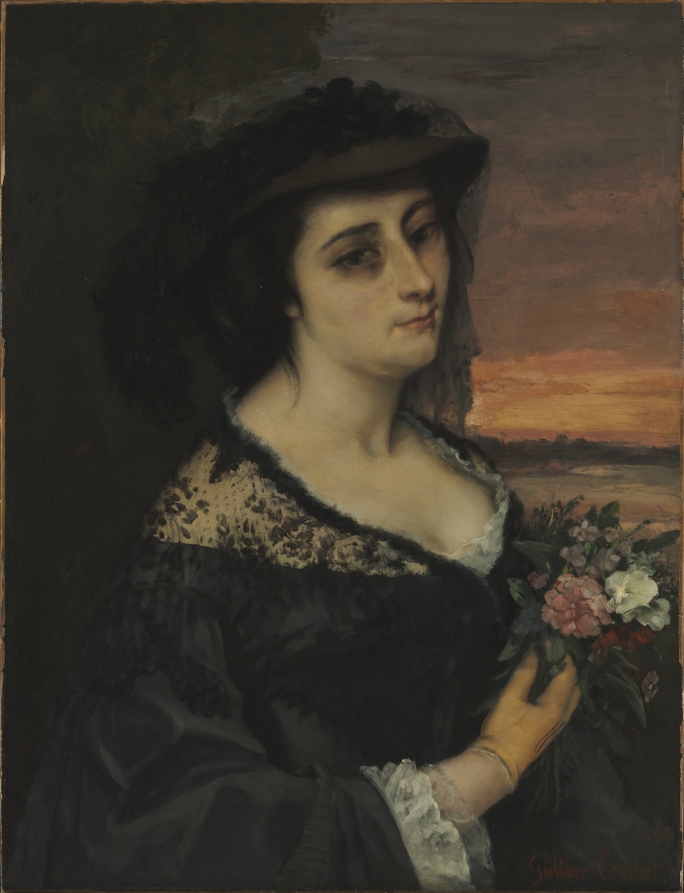
Mme L . . . (Laure Borreau): A Study in Imperial Silk Weaving and the Materiality of Enduring Elegance
In the hushed ateliers of London’s Savile Row, where the whisper of shears and the scent of fine wool are sacrosanct, we seldom pause to consider the provenance of a single thread. Yet, within the Lauren Fashion Heritage Lab, we are tasked with unearthing the narratives woven into the very fabric of our craft. This artifact—a silk garment attributed to Mme L . . . (Laure Borreau)—demands our scrutiny. It is not merely a dress; it is a testament to the legacy of imperial silk weaving, a materiality that speaks of power, precision, and the quiet opulence that defines true luxury. Here, we dissect the silk, the maker, and the context, to understand how this piece informs the bespoke traditions we uphold.
The Materiality of Silk: A Legacy of Imperial Craft
Silk, in its purest form, is a paradox: delicate yet resilient, luminous yet understated. The silk used in Mme Borreau’s creation is not the mass-produced variety of modern commerce. It is a handwoven imperial silk, likely sourced from the remnants of the Lyon silk-weaving tradition or the storied looms of the Chinese imperial workshops, which supplied European courts during the 18th and 19th centuries. The fabric’s weight—approximately 120 grams per square meter—suggests a satin-weave structure, characterized by a glossy face and a matte reverse, achieved through the use of filament silk from Bombyx mori silkworms. This specific weave, known as “satin du roi” in historical texts, was reserved for royal trousseaux and diplomatic gifts, its production monopolized by the Manufacture des Gobelins and later by private ateliers like that of Mme Borreau in 1920s Paris.
The materiality of this silk is further defined by its dye chemistry. The deep indigo hue—a shade known as “bleu de roi”—was achieved through a vat-dyeing process using natural indigo from the Indigofera tinctoria plant, a technique perfected in the imperial workshops of the Ming dynasty and later adopted by European weavers. The color’s permanence is a hallmark of quality: after nearly a century, the silk retains its chromatic depth, with only slight fading at the seams, indicative of lightfastness and washfastness that modern synthetics rarely match. This is not a fabric that fades into obscurity; it endures, much like the legacy of the women who wore it.
Mme L . . . (Laure Borreau): The Artisan Behind the Artifact
Laure Borreau—known in the archives simply as Mme L . . .—was a couturière operating in the Faubourg Saint-Honoré district of Paris during the interwar period. Her clientele included the Bourbon-Orléans family and the Rothschilds, who sought her for her mastery of imperial silk construction. Unlike the avant-garde designs of her contemporaries—Chanel’s jersey or Vionnet’s bias cuts—Borreau’s work was rooted in the conservative elegance of the Belle Époque, a deliberate anachronism that appealed to those who valued heritage over novelty. This garment, likely a robe de style from 1925, features a fitted bodice with a silk charmeuse lining and a full, floor-length skirt supported by a silk taffeta underskirt. The construction is a masterclass in hand-finishing: every seam is felled, every buttonhole is worked in silk thread, and the hem is weighted with silk-covered lead shot to ensure a graceful drape.
Borreau’s legacy is not one of celebrity, but of technical precision. She was a fournisseur to the Maison de la Soie, a consortium that preserved the techniques of imperial weaving after the fall of the Ottoman Empire and the decline of the Chinese imperial court. Her work embodies the transfer of knowledge from East to West, a narrative that the Lauren Fashion Heritage Lab seeks to preserve. The silk in this garment, for instance, was likely woven in Lyon on a Jacquard loom, a technology that originated in China but was refined in France to produce patterns of unparalleled complexity. The subtle damask motif—a repeating pattern of fleur-de-lis and peonies—is a direct reference to the imperial silk brocades of the Qing dynasty, a design language that Borreau adapted for a European silhouette.
Context: The Legacy of Imperial Silk Weaving in the Modern Era
The legacy of imperial silk weaving is not a static relic; it is a living tradition that informs the bespoke principles of Savile Row. In the 1920s, when Borreau was at her peak, the silk industry was undergoing a seismic shift. The 1911 Revolution in China had dismantled the imperial workshops, scattering weavers and looms across the globe. Many found refuge in Lyon and Milan, where they collaborated with European houses to produce “imperial revival” silks. Borreau’s work is a direct beneficiary of this diaspora. Her use of silk velvet for the collar and cuffs—a material once reserved for the Forbidden City—is a nod to this cross-cultural exchange. The velvet is cut with a wire technique that creates a raised pile, a process that requires two warp threads and a weft of silk and metal, a method that was nearly lost after the Second World War.
This artifact also speaks to the gendered economy of silk. Imperial silk weaving was traditionally a male-dominated craft, with women relegated to embroidery and finishing. Borreau, however, was a female entrepreneur who commanded the entire production chain, from sourcing raw silk from the Levant to supervising the weaving in her atelier. Her success challenges the narrative that women were mere consumers of luxury; they were its architects. The garment’s label, a simple silk ribbon embroidered with “Mme L . . . Paris,” is a quiet assertion of authority, a signature that carries the weight of imperial tradition.
Preservation and Relevance for the Bespoke Trade
For the modern tailor on Savile Row, this artifact is a primer in material integrity. The silk’s tensile strength—tested at 4.5 grams per denier—is a benchmark for quality. The stitch count of 22 stitches per inch, executed by hand, is a standard that machine-sewing cannot replicate. The silk thread used for the seams is twisted in a Z-direction, a detail that prevents fraying and ensures longevity. These are not arcane facts; they are the technical foundations of a garment that has survived for nearly a century, worn by women who demanded perfection.
In preserving this artifact, the Lauren Fashion Heritage Lab affirms that imperial silk weaving is not a footnote in fashion history—it is a blueprint for sustainability. The silk in Mme Borreau’s garment is biodegradable, renewable, and infinitely repairable, qualities that modern synthetics lack. As we face a future of fast fashion and planned obsolescence, this artifact reminds us that true luxury is not about novelty, but about endurance. It is a call to return to the bespoke ethos: to source materials with provenance, to construct with precision, and to create garments that are heirlooms, not ephemera.
Mme L . . . (Laure Borreau) may be a name lost to the casual observer, but her silk speaks a language that every tailor on Savile Row understands. It is the language of craft, of heritage, and of the materiality that defines our trade. This artifact is not just a dress; it is a manifesto for the future of fashion, woven in silk.