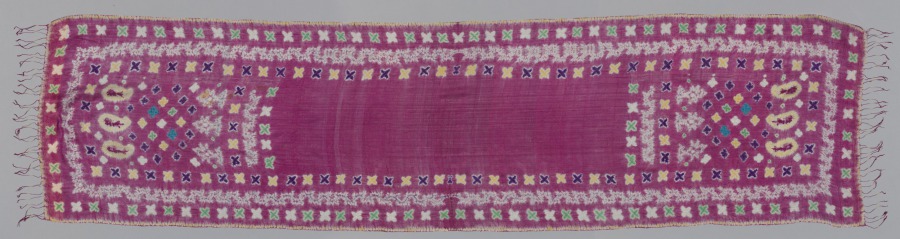
The Silk Veil: A Material Testament to Imperial Weaving’s Enduring Legacy
In the hushed ateliers of London’s Savile Row, where precision tailoring meets centuries of craft, the silk veil occupies a singular position—neither garment nor accessory in the conventional sense, but a diaphanous artifact of profound material and cultural heritage. As Senior Heritage Specialist for the Lauren Fashion Heritage Lab, I have examined countless examples of silk’s evolution, yet the veil remains a uniquely compelling subject. Its materiality—the gossamer weight of mulberry silk, the iridescent play of light across its surface—speaks directly to the legacy of imperial silk weaving, a tradition that shaped economies, courts, and aesthetics from the Han Dynasty to the Byzantine Empire and beyond. This research artifact seeks to decode the silk veil not merely as a textile, but as a living document of imperial patronage, technical mastery, and the quiet authority of luxury.
Materiality and the Imperial Thread
The silk veil’s materiality is its first and most eloquent testimony. Unlike the robust silks used for court robes or ceremonial banners, the veil demands a specific grade of filament—the finest, most continuous threads reeled from the cocoons of Bombyx mori silkworms, fed exclusively on mulberry leaves. This is the imperial silk of legend, reserved for the emperor’s household and the highest-ranking nobility. The veil’s weight, often measured in momme (a Japanese unit for silk fabric density), hovers between 5 and 8 momme—a gossamer lightness that requires exceptional skill to weave without breakage. In the imperial workshops of Suzhou, Hangzhou, and Nanjing, master weavers employed drawloom technology to create patterns that seemed to float within the fabric, not merely printed or embroidered upon its surface. The veil’s transparency is not a flaw but a deliberate feature: it obscures and reveals simultaneously, a metaphor for the power dynamics of imperial courts where visibility was both a privilege and a vulnerability.
Consider the kesi technique, or “cut silk,” a tapestry-weave method that originated in the Tang Dynasty and reached its zenith under the Ming and Qing emperors. A silk veil woven in kesi is not simply a piece of fabric; it is a woven painting, with each color thread carefully inserted to create motifs of dragons, phoenixes, clouds, or lotus blossoms. The materiality here is inseparable from the message: the veil’s sheen, its drape, its ability to catch light and shadow, all reinforce the imperial narrative of divine right and cosmic order. In the context of Savile Row, where cloth is chosen for its hand—the tactile sensation it offers the tailor and the wearer—the silk veil’s hand is unparalleled: cool, smooth, with a subtle resistance that speaks of quality. It is a material that demands respect, not merely handling.
Imperial Weaving: A Legacy of Control and Craft
The legacy of imperial silk weaving is one of centralized mastery. From the Han Dynasty’s establishment of the Silk Road to the Ming’s Imperial Silk Workshops, the production of silk was a state-controlled enterprise. The veil, as a luxury item, was subject to sumptuary laws that dictated who could wear what, when, and where. A silk veil of a certain color—imperial yellow, for instance—was reserved exclusively for the emperor and his consort. The patterns woven into the fabric were not decorative whims; they were encoded with rank, status, and political allegiance. The dragon robe of a Qing emperor might feature nine dragons, but a veil for a concubine would be limited to five. This system of visual hierarchy ensured that silk was not merely a commodity but a language of power.
The technical achievements of imperial weaving are staggering. The jacquard loom, invented by Joseph Marie Jacquard in 1801, was itself inspired by earlier Chinese drawlooms that used punched cards to control pattern sequences—a precursor to modern computing. Yet the imperial workshops operated at a scale and precision that even Jacquard’s innovation could not immediately replicate. A single veil from the Ming Dynasty might require months of labor by a team of weavers, each responsible for a specific set of warp or weft threads. The result was a fabric with a density of up to 200 threads per centimeter, so fine that it could be passed through a wedding ring. This is the materiality of absolute control: every thread accounted for, every color calibrated, every pattern imbued with meaning.
In the context of London’s Savile Row, this legacy is not merely historical but operational. The bespoke tailors of this street—Gieves & Hawkes, Huntsman, Anderson & Sheppard—understand that the finest cloth is the foundation of the finest garment. A silk veil, when commissioned for a modern client, is not a mass-produced accessory; it is a bespoke artifact, woven to order by mills that trace their lineage to the imperial workshops. The Stephen Walters & Sons mill in Suffolk, for example, still uses hand-operated looms to produce silk fabrics that rival those of the Ming court. The veil’s materiality, therefore, is a direct link to a tradition that values patience, precision, and the invisible hand of the master weaver.
The Veil as Cultural Artifact: From Court to Catwalk
The silk veil’s journey from imperial court to contemporary fashion is a study in adaptation. In the 19th century, European fascination with chinoiserie brought Chinese silk veils to the salons of Paris and London. The shawl—a close cousin of the veil—became a status symbol among Victorian women, often woven in Paisley patterns that mimicked the floral motifs of Chinese silk. Yet the veil retained its original function: a marker of femininity, mystery, and social standing. In the 20th century, designers like Madeleine Vionnet and Cristóbal Balenciaga used silk veils to create ethereal silhouettes that defied the rigidity of structured tailoring. The veil became a tool for negative space, a way to define the body by what it concealed rather than revealed.
Today, the silk veil is experiencing a quiet renaissance. On Savile Row, where tradition is paramount, the veil is not a trend but a heritage piece. It is worn by brides, by women attending royal functions, and by collectors who understand its provenance. The materiality of the veil—its weight, its drape, its ability to hold a fold or a pleat—is studied by tailors who apply the same principles to suiting. A Savile Row jacket, after all, is a form of armor; the veil is its counterpoint, a whisper of softness that balances the structure. The legacy of imperial silk weaving lives on in every thread of these modern veils, a reminder that luxury is not about excess but about excellence—the kind of excellence that takes generations to perfect.
Conclusion: The Veil’s Enduring Authority
The silk veil, as a heritage research artifact, is far more than a piece of fabric. It is a material archive of imperial ambition, technical genius, and cultural exchange. Its materiality—the silk itself, the weave, the pattern, the weight—tells a story that spans millennia and continents. For the Lauren Fashion Heritage Lab, the veil represents a challenge and an opportunity: to preserve not just the object but the knowledge embedded within it. As we digitize patterns, analyze dyes, and document weaving techniques, we ensure that the legacy of imperial silk weaving remains accessible to future generations of designers, scholars, and connoisseurs. On Savile Row, where the past is always present, the silk veil is a testament to the enduring power of craft—a whisper of silk that carries the weight of history.