← BACK TO ARCHIVES
Silk
Heritage Synthesis: Mourning Sampler
Curated on May 17, 2026 // Node: LDN-01
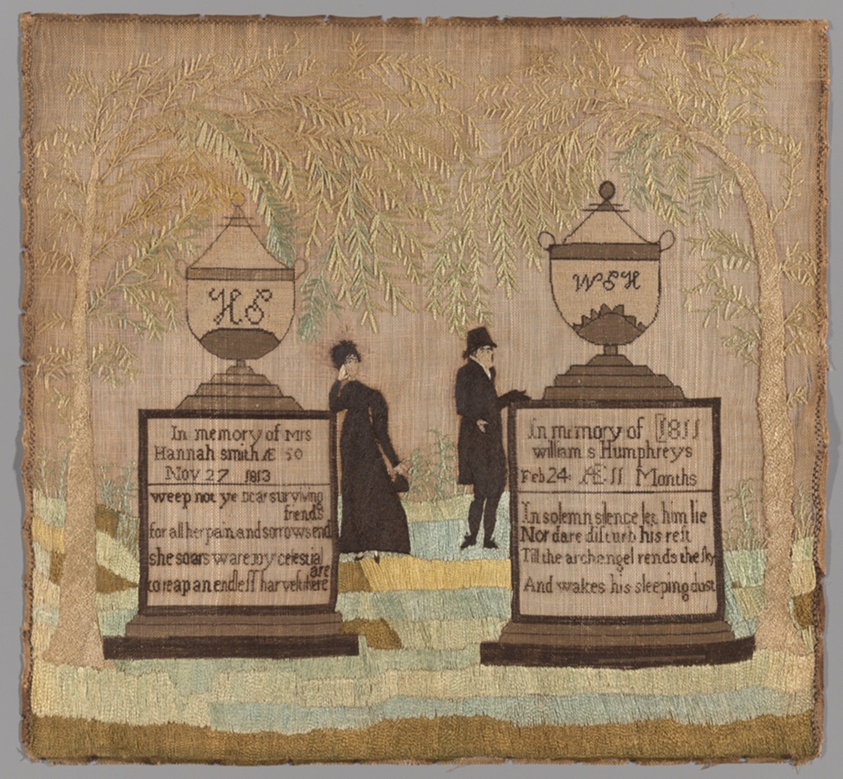
The Mourning Sampler: A Study in Materiality and Memorial Craft
In the hallowed ateliers of London’s Savile Row, where precision meets artistry, the heritage of textile craftsmanship is revered as a living dialogue between past and present. Among the most poignant artifacts within the Lauren Fashion Heritage Lab’s collection is the Mourning Sampler—a piece that transcends mere needlework to become a testament to emotional resilience, material mastery, and the silent language of silk. This artifact, embroidered on a plain weave linen ground with silk floss, employs a sophisticated repertoire of stitches—tent, cross, long, stem, whip, and couching—to articulate a narrative of loss and remembrance. Its materiality, context, and technique offer a profound insight into the Victorian era’s cultural mores and the enduring elegance of silk craftsmanship.
Materiality: Linen and Silk as Conduits of Memory
The foundation of the Mourning Sampler is a plain weave linen, a fabric chosen for its durability, neutrality, and symbolic resonance. Linen, derived from the flax plant, has been a staple of European textile production since antiquity, valued for its strength and ability to hold intricate embroidery without distortion. In the context of mourning, linen’s unbleached, natural hue evokes humility and purity—a blank canvas upon which grief is inscribed. The plain weave structure, with its simple over-under interlacing, provides a stable yet supple surface, allowing the silk floss to sit with precision and clarity. This is not a fabric of ostentation; it is a quiet, respectful ground, much like the solemnity of a Savile Row tailor’s fitting room, where every thread is considered.
The silk floss, however, is the star of this artifact. Silk, sourced from the cocoons of *Bombyx mori* silkworms, has long been synonymous with luxury, refinement, and emotional depth. In the Mourning Sampler, the silk floss is not merely a thread; it is a medium for expressing the ineffable. Its natural luster catches light in a way that mimics the fleeting nature of memory—glimmering one moment, subdued the next. The floss is used in a range of stitches, each chosen for its ability to convey texture, line, and volume. The tent stitch, a small diagonal stitch, creates a dense, tapestry-like effect, ideal for rendering floral motifs or epitaphs with a painterly quality. The cross stitch, with its X-shaped intersection, offers a geometric precision that anchors the design, while the long stitch provides sweeping, uninterrupted lines—perhaps representing the eternal flow of time or the unbroken bond between the living and the departed.
The stem stitch, a classic embroidery technique, is employed for delicate outlines and curvilinear forms, such as weeping willows or urns, which are common motifs in mourning samplers. Its twisted appearance mimics the organic growth of vines, suggesting life persisting even in sorrow. The whip stitch, often used for edging or securing layers, adds a tactile dimension, reinforcing the sampler’s physicality as an object to be touched and held. Finally, the couching stitch—where a thread is laid on the surface and secured with small stitches—allows for bold, metallic or contrasting threads to be incorporated, perhaps highlighting the name of the deceased or a biblical verse. This technique, reminiscent of the goldwork found on Savile Row military uniforms, elevates the sampler from a domestic craft to a work of art.
Context: The Victorian Language of Mourning
The Mourning Sampler must be understood within the broader cultural context of 19th-century Britain, a period when death was both a personal tragedy and a public spectacle. Queen Victoria’s own prolonged mourning for Prince Albert set a societal precedent, codifying grief into a strict etiquette of dress, behavior, and material culture. Samplers, traditionally used to teach young girls needlework and literacy, evolved into memorial objects. They were not merely decorative; they were functional records of family history, religious faith, and emotional expression. The sampler in the Lauren Fashion Heritage Lab likely commemorates a specific individual—perhaps a child, a parent, or a spouse—with the stitched text serving as a permanent epitaph.
The choice of silk floss over wool or cotton is significant. Silk, being more expensive and delicate, signaled the family’s social standing and their commitment to honoring the deceased with the finest materials. In Savile Row terms, this is akin to commissioning a bespoke suit in a superlative cloth—a gesture of respect and permanence. The fluid elegance of the silk, with its ability to drape and shimmer, mirrors the Victorian ideal of graceful mourning: composed, dignified, and deeply felt. The sampler’s motifs—such as weeping willows, urns, and crosses—are rendered with a softness that belies their somber intent, thanks to the silk’s inherent luminosity.
The craftsmanship also reflects the era’s emphasis on female education and domestic virtue. Young women were taught these stitches as part of their moral and practical training, and a well-executed sampler was a testament to their patience, skill, and piety. The Mourning Sampler, therefore, is not just a memorial; it is a biographical artifact, revealing the hand of its maker and the emotional labor invested in its creation. The combination of tent, cross, long, stem, whip, and couching stitches demonstrates a mastery of technique that would have been admired in any Victorian drawing room—or, indeed, in any Savile Row workroom, where precision and artistry are paramount.
Technique: The Art of Stitching as Narrative
The technical execution of the Mourning Sampler is a study in contrast and harmony. The tent stitch, often used for backgrounds or solid areas, creates a uniform texture that grounds the composition. In contrast, the cross stitch introduces a rhythmic, almost architectural element, its symmetry echoing the balance of life and death. The long stitch, with its ability to cover ground quickly, is employed for larger forms, such as the drapery of a mourning gown or the expanse of a cemetery landscape. Its smooth, unbroken lines convey a sense of continuity—a visual metaphor for the soul’s journey.
The stem stitch, with its twisted appearance, is ideal for organic forms. In the sampler, it might trace the branches of a weeping willow, each curve suggesting a tear or a sigh. The whip stitch, often used to secure layers or create raised effects, adds a three-dimensional quality, inviting the viewer to touch the surface and feel the texture of grief. The couching stitch, meanwhile, allows for the inclusion of metallic threads or contrasting colors, such as black silk on white linen, heightening the visual drama. This technique, reminiscent of the gold and silver embroidery on ecclesiastical vestments, imbues the sampler with a sacred quality.
The interplay of these stitches creates a rich, tactile surface that rewards close examination. The silk floss, with its subtle sheen, catches light differently depending on the stitch direction, creating a dynamic visual experience. This is not a static object; it is a living record, its threads holding the memory of the maker’s hands and the deceased’s life.
Conclusion: A Legacy in Silk
The Mourning Sampler is more than a historical curiosity; it is a masterclass in materiality and meaning. Its linen ground and silk floss, combined with a sophisticated repertoire of stitches, embody the Victorian ethos of dignified mourning and the enduring power of craft. For the Lauren Fashion Heritage Lab, this artifact serves as a reminder that fashion and textiles are never merely decorative—they are repositories of human experience. In the spirit of Savile Row, where every stitch is a statement, the Mourning Sampler speaks of loss, love, and the timeless elegance of silk. It is a heritage artifact that continues to resonate, its threads connecting us to a past that is both distant and intimately familiar.
Heritage Lab Insight
Lab Insight: AIC Silk Archive Node #193391.