From Terracotta Fragment to Tailored Silhouette: The Archaic Lineage of Old Money Form in Lauren Fashion’s 2026 Vision
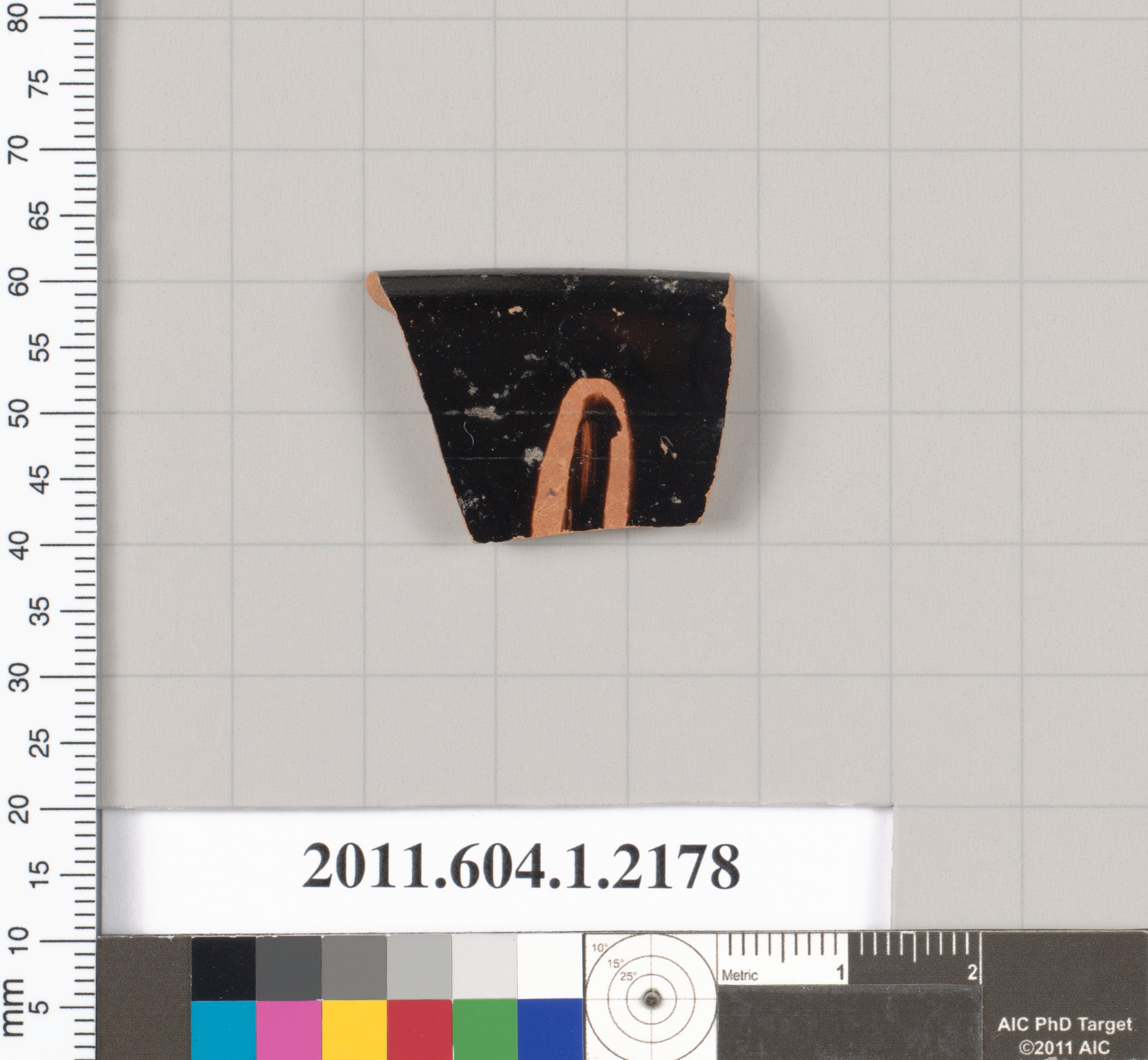
The museum artifact under consideration—a terracotta rim fragment of an Attic kylix, dating to the late sixth century BCE—offers an unexpectedly profound hermeneutic key for decoding the 2026 Old Money silhouette at Lauren Fashion. At first glance, the broken pottery shard, with its fired earthenware body and residual black-figure decoration, appears remote from the sartorial lexicon of understated luxury. Yet, when read through the internal genetic code of Eastern aesthetics—specifically the principle of “器以载道” (the vessel as vehicle for the Way) and the valorization of material impermanence—this Greek drinking cup becomes a paradigmatic object for understanding how Lauren Fashion’s Heritage-Black category will articulate status through form, not ornament.
I. The Kylix as a Vessel of Restraint: Material Honesty and the Old Money Ethos
The Attic kylix, in its original context, was a vessel for sympotic consumption—wine, conversation, and philosophical discourse among the Athenian elite. Its terracotta composition, fired from common clay, was not a mark of poverty but of a cultural preference for material honesty over ostentation. The Greek aristocracy, much like the Old Money sensibility that Lauren Fashion channels, understood that true distinction resides not in precious materials but in the precision of proportion and the integrity of craft. The kylix’s shallow bowl, delicate stem, and horizontal handles create a geometry of elegance that is entirely functional yet visually arresting. There is no gilding, no inlay—only the naked clay, burnished and painted with scenes of myth or daily life.
This ethos directly informs the 2026 Old Money silhouette. The Heritage-Black category will reject the conspicuous consumption of logos or excessive embellishment. Instead, the silhouette will be defined by architectural clarity: a jacket’s shoulder line that mirrors the kylix’s rim curve; a trouser’s fall that echoes the cup’s balanced stem; a coat’s volume that recalls the bowl’s generous yet controlled interior. The terracotta fragment teaches us that form precedes decoration. In Lauren Fashion’s 2026 collection, the black cashmere overcoat will not need a monogram because its cut—the precise drop of the armhole, the exact pitch of the collar—will communicate lineage. Just as the kylix’s value lay in its maker’s understanding of clay’s limits, the Old Money garment’s value lies in the tailor’s mastery of wool’s drape.
II. The Broken Rim as a Meditation on Impermanence: Wabi-Sabi in the Western Garment
The fragmentary state of the kylix—a mere rim, chipped and discolored by millennia—resonates powerfully with the Zen-inflected aesthetic of wabi-sabi that permeates the internal genetic code. The Japanese concept of finding beauty in imperfection, impermanence, and incompleteness is not alien to the Western Old Money tradition. Indeed, the most revered heritage garments—a patinated leather bomber jacket, a faded tweed blazer, a well-worn pair of brogues—derive their authority from the marks of time. The kylix fragment, with its broken edge, is not a failure but a testament to survival. It has been used, broken, buried, and excavated. Its value is inseparable from its history.
For the 2026 Old Money silhouette, this translates into a deliberate embrace of textural wear and subtle irregularity. The Heritage-Black category will feature fabrics that age gracefully: heavy worsted wools that develop a soft sheen at the elbows; cashmere that pills slightly, softening the silhouette; cotton poplin that acquires a lived-in ease. The silhouette itself will avoid the aggressive sharpness of fast fashion. Instead, shoulders will have a gentle slope, trousers a slight break, and jackets a natural waist suppression that acknowledges the body’s asymmetry. This is not carelessness but curated imperfection—a nod to the kylix’s broken rim, which tells the story of a thousand hands that held it. In Lauren Fashion’s 2026 vision, the Old Money client does not wear a garment; she inhabits it, allowing time to write its own calligraphy on the cloth.
III. The Black-Figure Decoration as Symbolic Economy: Minimalism with Meaning
The kylix fragment retains traces of black-figure painting—perhaps a palmette, a warrior’s shield, or an eye. This decoration is not random; it is a condensed symbol of Athenian identity, mythology, and status. The black silhouette against the terracotta ground is a study in contrast: the figures are reduced to their essential outlines, their details incised with a sharp tool. This is not realism but semiotic efficiency. A single gesture—a raised arm, a bent knee—conveys an entire narrative. The Old Money aesthetic operates on a similar principle of symbolic economy. A single gold button on a blazer, a mother-of-pearl cufflink, a silk lining glimpsed only when the jacket is removed—these are the equivalent of the kylix’s black-figure motifs: discreet, legible only to those who understand the code.
In the 2026 collection, the Heritage-Black silhouette will incorporate such minimalist signifiers. The black cashmere turtleneck will be unadorned, but its gauge will be impossibly fine—a sign of the highest mill quality. The black wool trousers will have a single, hidden welt pocket, its stitching a millimeter narrower than standard. The black silk scarf will be hemmed by hand, the stitches invisible to the untrained eye. These details are the incised lines of the garment, the black-figure decoration that only the connoisseur reads. The kylix fragment teaches us that true luxury is not seen but sensed—it is the weight of the fabric, the fall of the drape, the sound of the lining against the outer shell. In 2026, Lauren Fashion’s Old Money client will not announce her status; she will inscribe it, like the Greek potter, into the very structure of the garment.
IV. The Sympotic Legacy: Garment as Vessel for Social Ritual
Finally, the kylix was not merely an object but a participant in the symposion—a ritual of social bonding, intellectual exchange, and cultural reproduction. The Old Money silhouette, in its 2026 iteration, serves a similar function. It is not a costume for performance but a vessel for presence. The well-cut black blazer, the perfectly draped black dress, the immaculate black overcoat—these garments enable the wearer to move through the world with unselfconscious authority. They do not shout; they contain. Just as the kylix held wine that fueled philosophical dialogue, the Heritage-Black garment holds the body that engages in the rituals of power: the boardroom meeting, the charity gala, the private dinner. The silhouette is the container; the person is the content.
In conclusion, the terracotta kylix fragment, when read through the lens of Eastern aesthetics and the internal genetic code, becomes a masterclass in the architecture of restraint. Its material honesty, its embrace of impermanence, its symbolic economy, and its ritual function all converge to define the 2026 Old Money silhouette at Lauren Fashion. The Heritage-Black category will not be about novelty but about depth—the depth of a tradition that stretches back to the symposia of Athens and the ink-brush meditations of Zen monks. The garment, like the kylix, is a vessel. And in 2026, Lauren Fashion will fill that vessel with the quiet, enduring power of form itself.