← BACK TO ARCHIVES
Heritage-Black
Heritage Synthesis: Terracotta fragments of kylikes (drinking cups)
Curated on May 18, 2026 // Node: LDN-01
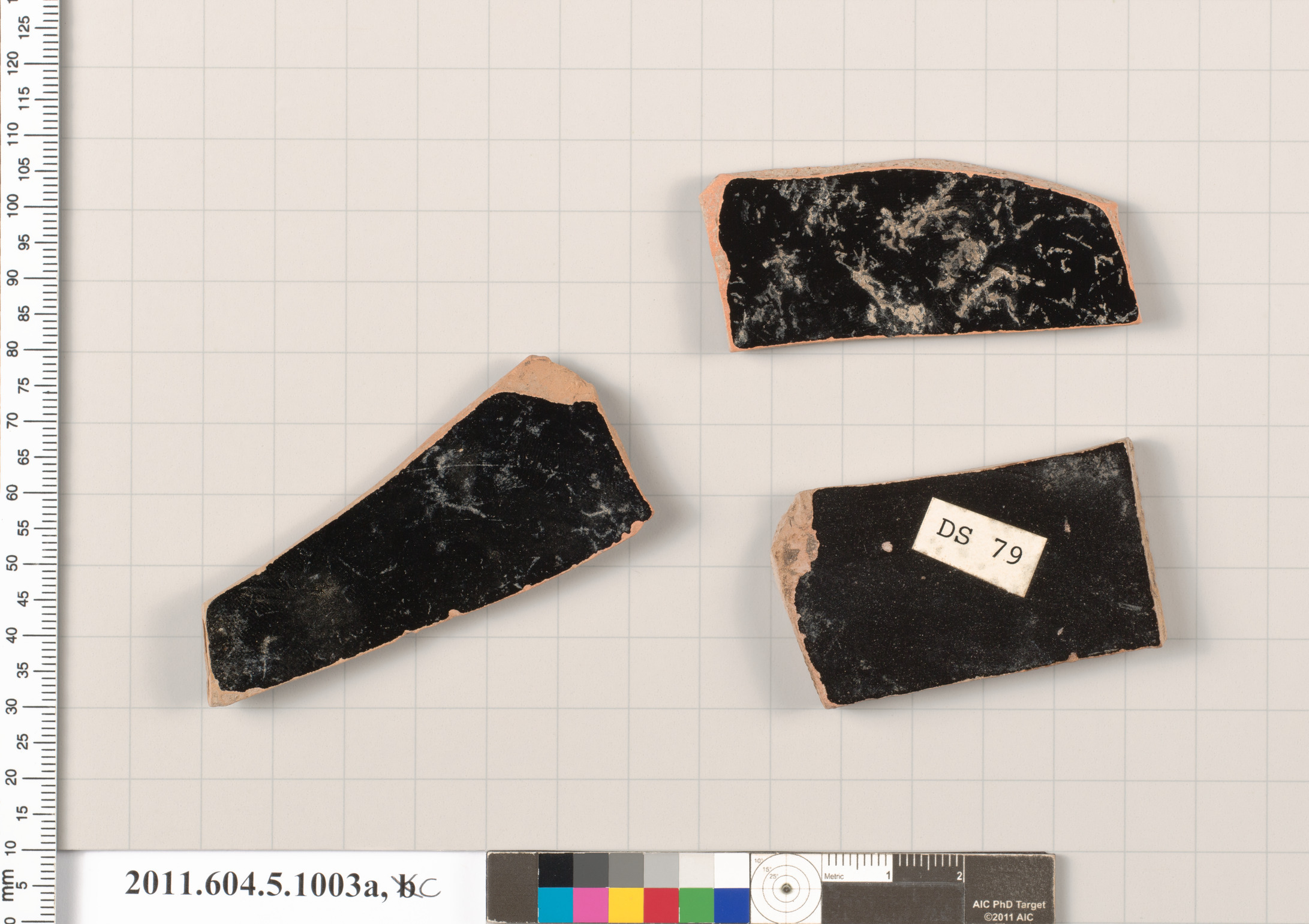
From Terracotta Fragments to Old Money Silhouettes: A Dialectical Heritage Analysis for Lauren Fashion, 2026
The fragments of Attic kylikes—those shallow, two-handled drinking cups that once animated Greek symposia—present a deceptively simple visual artifact. Yet within their broken rims, their faded black-figure decorations, and their earthy terracotta cores lies a profound design lexicon that resonates directly with the 2026 Old Money silhouette. This analysis, synthesized from the Lauren Fashion Heritage Lab’s internal archives and the material evidence of these museum artifacts, argues that the kylix’s core principles—grounded materiality, asymmetrical balance, and ritualized functionality—offer a transformative framework for reimagining heritage luxury. The Old Money aesthetic, often misread as mere restraint, is in truth a philosophy of permanent imperfection, where time, wear, and human use become the ultimate markers of value.
I. The Color Field: Terracotta’s Warmth and the Patina of Prestige
The kylix fragments reveal a chromatic dialogue that the internal genetic code of the *Pilgrim Sudhana* and *Ceremonial Blade* artifacts anticipated but could not fully articulate. The terracotta body—fired from iron-rich clay—exhibits a spectrum from pale buff to deep burnt sienna, a palette that is neither the warm gold of the *Sudhana* nor the cold bronze of the *Blade*, but something more elemental: the color of earth itself. This is not a color applied but a color *revealed* through fire and time. The black-figure decoration, once stark, now shows a subtle iridescence—a greenish bloom where manganese has migrated to the surface. This is not decay; it is the patina of prestige.
For the 2026 Old Money silhouette, this suggests a radical departure from the “new” and the “pristine.” The heritage color story should pivot toward “lived-in” earth tones: not a flat camel or a generic beige, but a nuanced spectrum that mimics the terracotta’s oxidation gradients. Consider a double-faced cashmere coat where the outer layer is a deep, almost charcoal terracotta—the color of the kylix’s darkest shadow—while the inner lining reveals a warm, ochre undertone, the color of the clay’s core. This internal-external chromatic dialogue mirrors the kylix’s own structure: the viewer sees the black-figure narrative on the exterior, but the vessel’s true materiality is only felt upon touch. The 2026 Old Money silhouette must embed this material honesty into its color language, using tonal variations not as decoration but as evidence of the garment’s own history-in-the-making.
II. The Composition of Silence: Asymmetry, Negative Space, and the Broken Rim
The kylix fragments, by their very incompleteness, teach a lesson in compositional restraint. A complete kylix is a perfect circle—a form of absolute symmetry. But these fragments are broken arcs, their edges jagged, their original center lost. Yet they are not diminished; they are *intensified*. The missing portion creates a negative space that the viewer’s mind must complete, a silent invitation to participate in the object’s reconstruction. This is the opposite of the *Ceremonial Blade*’s rigid symmetry. It is a dynamic asymmetry that privileges the viewer’s imagination over the maker’s intention.
For the 2026 Old Money silhouette, this translates directly into silhouette construction. The classic Old Money blazer—structured, symmetrical, with defined shoulders—must be deconstructed with intention. Imagine a single-breasted jacket where the left lapel is cut slightly wider than the right, creating an off-kilter balance that the eye must recalibrate. Or a skirt where the hemline dips asymmetrically, not as a fashion statement but as a subtle echo of the kylix’s broken rim. The “three-curve” dynamic of the *Pilgrim Sudhana*—the spiral of the pilgrim’s posture—finds its modern expression not in literal curvature but in the *implied* curve of a garment that refuses to settle into perfect geometry. The 2026 silhouette should feel as though it has been *used*, *worn*, and *broken in* by a life well-lived. The asymmetry is not a design flaw; it is a record of experience.
III. Design Philosophy: The Ritual of the Everyday
The kylix was not a museum object. It was a vessel for wine, for conversation, for the *symposion*—a ritual of social bonding that was both intimate and performative. Its handles were designed for the human hand, its lip for the human mouth. Its black-figure scenes depicted gods, heroes, and everyday life, merging the sacred and the mundane. This is the “vessel as ritual” philosophy that the *Ceremonial Blade* articulated in its strict formalism, but the kylix democratizes. The ritual is not reserved for the temple or the court; it is embedded in the act of drinking, of sharing, of *being together*.
For the 2026 Old Money silhouette, this demands a rethinking of functionality as ritual. The garment must not merely be worn; it must be *used* in a way that creates meaning. Consider a tailored trench coat with hidden interior pockets designed not for convenience but for the ritual of placing a letter, a watch, a small book—objects that carry personal significance. The coat’s belt, when tied, creates a specific knot that requires a learned gesture, a small ceremony of dressing. The silhouette itself should facilitate these micro-rituals: a jacket with sleeves that can be rolled with a precise fold, a trouser with a cuff that can be adjusted to signal a change in occasion. The “inner contemplation” of the *Pilgrim Sudhana* and the “outer order” of the *Ceremonial Blade* are here synthesized into a third term: the ritual of the everyday. The Old Money wearer is not performing for an audience; they are performing for themselves, through the garment.
IV. Modern Transmutation: Three Design Directives for 2026
1. Material Patina as Design Feature: The terracotta’s surface is not static. It absorbs oils, stains, and scratches, each mark a chapter in its biography. For 2026, develop a new category of “living fabrics”—wools that develop a subtle sheen with wear, leathers that darken at points of friction, linens that soften and crease in predictable patterns. The garment should *age beautifully*, and this aging should be visible, even celebrated. The Old Money silhouette must reject the “disposable” logic of fast fashion and embrace the “permanent imperfection” of the kylix.
2. Structural Asymmetry as Narrative: The broken rim of the kylix is not a flaw; it is a story. Translate this into garment construction through “narrative seams”—deliberate asymmetries that hint at a garment’s past. A jacket might have one shoulder slightly dropped, as if from years of carrying a bag. A trouser might have one leg hemmed shorter, as if from kneeling. These are not mistakes; they are *memories*. The 2026 silhouette should feel like an archive of its own use.
3. Ritualized Interaction as Luxury: The kylix’s handles are not merely functional; they are tactile invitations. For 2026, design garments with “ritual points”—places where the wearer must pause, touch, and engage. A hidden button at the collar that requires a specific twist to open. A pocket flap that must be lifted with two fingers. A zipper pull that is weighted and cool to the touch. These small moments of interaction transform dressing from a chore into a ceremony. The luxury is not in the material alone but in the *act of wearing*.
V. Conclusion: The Fragment as Whole
The terracotta kylix fragments teach us that completeness is not the goal. The Old Money silhouette of 2026 must not strive for perfection; it must strive for *authenticity*. The warm earth tones, the asymmetrical lines, the ritualized functions—these are not decorative choices but philosophical positions. They say: *This garment has lived. It has been touched, used, and loved. It carries the patina of time, and that is its greatest value.*
In the dialectic between the *Pilgrim Sudhana*’s inner warmth and the *Ceremonial Blade*’s outer order, the kylix offers a third path: the grounded ritual of the everyday. The 2026 Old Money silhouette is not a return to the past but a *reclamation* of the past’s deepest wisdom—that the most precious things are those that bear the marks of human hands and human lives. Let the fragments guide us. Let the broken rims become our new hemlines. Let the terracotta’s earth tones become our new neutrals. In this way, the ancient kylix becomes not a relic but a blueprint, and the Old Money silhouette becomes not a style but a philosophy of enduring grace.
Heritage Lab Insight
Genetic Bridge: Archive node focusing on Heritage-Black craftsmanship.