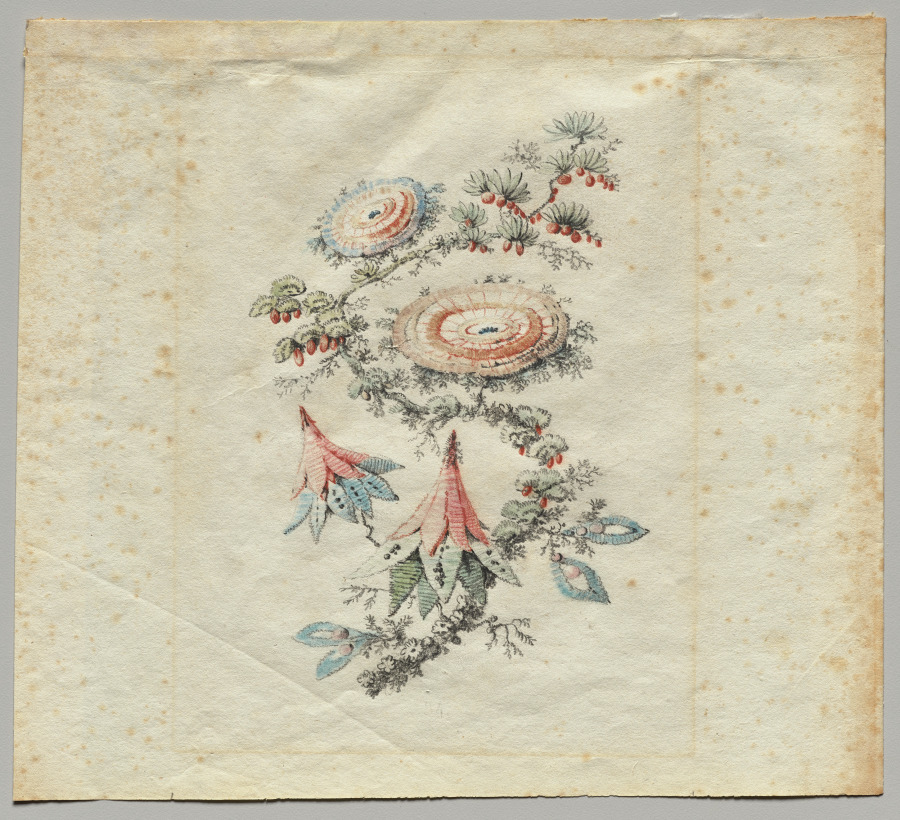
The Permanence of the Petal: Flower Embroidery Design for the Silk Manufactory of Lyon
Introduction: The Unbroken Thread of Imperial Craft
In the hushed, wood-paneled ateliers of London’s Savile Row, the conversation about quality is never loud. It is a matter of weight, of weave, of the precise tension in a single thread. This same quiet reverence for material truth governed the Silk Manufactory of Lyon for over three centuries. To commission a flower embroidery design for Lyon silk is not merely to request a decorative motif; it is to engage with a lineage of imperial power, botanical science, and the alchemical transformation of a caterpillar’s cocoon into a fabric that holds light. This artifact—a proposed floral embroidery pattern for a Lyon silk panel—must be understood through the lens of materiality, where the medium of silk is not a passive canvas but an active participant in the design’s meaning.
The Materiality of Silk: A Substrate of Light and Shadow
Silk, particularly the grande soierie of Lyon, possesses a unique optical property: it does not simply reflect light; it refracts it. The triangular prism structure of the fibroin protein creates a play of highlights and shadows that no cotton or wool can replicate. For a flower embroidery design, this material truth dictates every decision. A rose petal rendered in point de tige on a silk ground will shift from crimson to black as the wearer moves, mimicking the natural velvety depth of a living bloom. The designer must work with the silk’s inherent lustre, not against it. The imperial legacy of Lyon’s looms, from the court of Louis XIV to the Napoleonic empire, was built upon this understanding: that silk is not a backdrop but a collaborator. The embroidery needle does not merely apply thread; it disturbs the surface of the silk, creating a topography of raised stitches that catch the candlelight in a manner that flat printing never could.
Botanical Precision and the Imperial Gaze
The flower embroidery designs that emerged from the Lyon manufactories were never whimsical. They were botanically accurate, a reflection of the Enlightenment-era obsession with cataloguing nature. The Jardin du Roi in Paris supplied specimens to Lyon’s designers, who translated the exact curvature of a lily petal or the stamen structure of a tulip into silk thread. This precision was a form of imperial control—a way of capturing the natural world and rendering it into a commodity of state. For our proposed design, we select the Iris germanica, the fleur-de-lis, a flower deeply embedded in French royal iconography. The embroidery would employ a shaded satin stitch to replicate the iris’s gradient from deep violet to pale lavender, using a single strand of grenadine silk for the finest veins. The materiality of the silk ground—a peau de soie with a subtle horizontal rib—would provide a contrasting texture to the smooth, glossy embroidery, creating a dialogue between the woven and the stitched.
Technique as Heritage: The Lyon Embroidery Vocabulary
Savile Row tailors speak of a “bespoke cut” as a form of architecture. Similarly, Lyon embroidery is a language of structural logic. The Luneville hook, a tool perfected in the region, allows for a chain stitch that is both delicate and durable, ideal for outlining petals. For the iris design, we would deploy a combination of broderie de Lunéville for the stem and point de Boulogne for the petal edges, creating a raised, corded effect that mimics the flower’s natural ribbing. The imperial legacy demands that no thread be wasted and no stitch be visible on the reverse—a hallmark of envers parfait (perfect reverse) work, which was a requirement for court commissions. This technical rigor is the silent signature of the Lyon atelier, a standard that separates a mere decoration from an heirloom.
The Palette: Dyeing the Imperial Garden
The colour palette for this embroidery is dictated by the natural dyestuffs that were the foundation of Lyon’s supremacy. The violet of the iris would come from murex or madder root, processed to yield a colourfast hue that would not bleed into the white silk ground. The yellow stamens would be achieved with weld (Reseda luteola), a plant that gave Lyon’s silks their characteristic brilliant, non-fading yellow. The green leaves would require an overdye of indigo and weld, a process that demanded precise chemical knowledge. This is not a palette of convenience; it is a palette of permanence. The imperial courts demanded that a gown or a wall hanging retain its vibrancy for decades, and the Lyon dyers understood that the materiality of the dye was as important as the materiality of the silk.
Conclusion: The Artifact as Continuity
A flower embroidery design for the Silk Manufactory of Lyon is not a nostalgic reproduction. It is a continuation of a discipline that values material integrity above trend. In an era of digital printing and synthetic fibres, the act of commissioning a hand-embroidered silk panel is a deliberate choice to honour the slow, tactile intelligence of the human hand. The iris, stitched in grenadine silk on peau de soie, becomes a record of light, of botanical truth, and of the imperial ambition that drove Lyon’s looms. For the connoisseur on Savile Row, this is not merely a fabric; it is a document of craft, a piece of heritage that demands to be worn, touched, and preserved. The flower will fade, but the silk—and the story it carries—will endure.