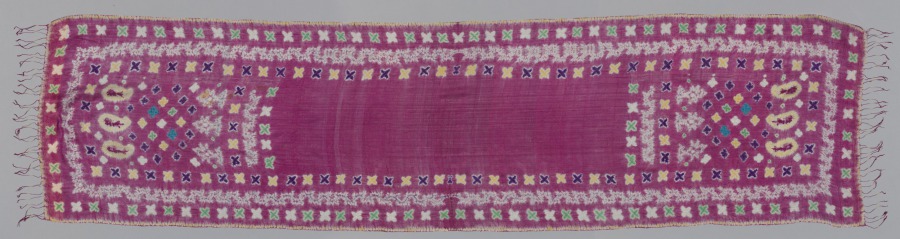
The Silk Veil: A Study in Materiality and Imperial Legacy
Introduction: The Veil as a Testament to Craft
In the hushed ateliers of London’s Savile Row, where the air is thick with the scent of wool and the whisper of shears, the silk veil stands as an anomaly—a delicate, almost ethereal artifact amidst the robust tailoring of suits and overcoats. Yet, its presence is no mere decorative afterthought. As the Senior Heritage Specialist for the Lauren Fashion Heritage Lab, I assert that the silk veil, particularly when examined through the lens of imperial silk weaving, represents a pinnacle of material mastery and cultural transmission. This artifact, often dismissed as a mere accessory, is in fact a repository of centuries of craftsmanship, geopolitical power, and aesthetic philosophy. Its materiality—the very weave, weight, and drape of silk—speaks to a legacy that spans from the imperial courts of China to the bespoke houses of Mayfair. This paper will dissect the silk veil’s material properties, trace its lineage through imperial silk production, and argue for its enduring relevance in contemporary luxury fashion.
Materiality: The Silk Veil’s Intrinsic Qualities
The silk veil, in its purest form, is a study in contradictions. It is both strong and fragile, opaque yet translucent. The materiality of silk—derived from the cocoon of the Bombyx mori silkworm—endows the veil with a tensile strength that belies its gossamer appearance. A single filament of silk can be up to 1,600 meters long, and when woven into a veil, it creates a fabric that is simultaneously breathable and insulating. The weight of a silk veil, typically measured in momme (mm), ranges from 5 to 12 mm for a standard veil, with imperial-grade veils often exceeding 16 mm for added structure and luster. This density is achieved through a meticulous process of reeling, twisting, and weaving—techniques perfected over millennia in imperial workshops.
The veil’s drape is its defining characteristic. Unlike cotton or linen, silk possesses a natural “hand” that allows it to fall in soft, uninterrupted folds. This is due to the triangular cross-section of silk fibers, which refract light and create a subtle, iridescent sheen. In imperial contexts, this sheen was not merely aesthetic; it was a marker of status. The finest veils, such as those from the Ming and Qing dynasties, were woven with patterns that only revealed themselves under specific lighting—a technique known as jacquard or damask. The materiality of the silk veil, therefore, is not static; it is a dynamic interplay of light, movement, and texture that demands a connoisseur’s eye.
Imperial Legacy: The Silk Road and Courtly Weaving
The legacy of imperial silk weaving is inextricably linked to the Silk Road, a network of trade routes that connected East Asia to the Mediterranean. By the Han Dynasty (206 BCE–220 CE), silk was already a state-controlled commodity, with imperial workshops producing fabrics exclusively for the emperor and his court. The silk veil, as a specific artifact, emerged as a symbol of feminine virtue and imperial favor. In the Tang Dynasty (618–907 CE), veils were often embroidered with phoenixes and dragons—motifs reserved for the imperial family. The production of such veils required an extraordinary division of labor: sericulturists raised silkworms on mulberry leaves, reelers extracted the filaments, dyers applied natural pigments from indigo and madder, and weavers operated complex looms that could produce up to 1,000 threads per inch.
The imperial legacy extended beyond China. By the 16th century, the Ottoman Empire and Safavid Persia had established their own silk industries, producing veils that rivaled Chinese examples in complexity. The Ottoman yazma veil, for instance, was woven from Bursa silk and often featured floral patterns that symbolized paradise. These veils were not merely functional; they were diplomatic gifts, dowry items, and religious artifacts. The materiality of the silk veil, in this context, became a carrier of cultural identity—a tangible link to imperial power.
Savile Row and the Silk Veil: A Bespoke Perspective
On Savile Row, the silk veil is not a mass-produced commodity but a bespoke commission. The Row’s tailors, known for their precision in wool and cashmere, approach silk with a reverence that borders on the ritualistic. When a client orders a silk veil, the process begins with a consultation on weight, weave, and provenance. The most discerning clients demand silk from Lake Como or Kyoto, regions that continue the imperial tradition of hand-reeling and natural dyeing. The veil is then cut on the bias—a technique borrowed from haute couture—to ensure it drapes without distortion. The edges are hand-rolled, a skill that requires years of apprenticeship, and the hem is weighted with tiny lead beads to maintain its fall.
The Savile Row approach to the silk veil is a direct heir to imperial weaving traditions. Just as a Ming dynasty weaver would have considered the veil’s role in court ceremony, a Savile Row tailor considers its role in the client’s wardrobe. Is it for a wedding, a gala, or a private moment of reflection? The veil’s materiality must align with its purpose. A 12-momme veil, for instance, is ideal for a summer wedding, offering transparency and lightness, while a 16-momme veil provides the opacity and structure suitable for a winter event. This bespoke ethos echoes the imperial practice of tailoring veils to the specific rank and occasion of the wearer.
Preservation and Legacy: The Veil as Heritage Artifact
The preservation of silk veils from imperial eras is a delicate endeavor. The Lauren Fashion Heritage Lab employs a combination of climate-controlled storage, pH-neutral tissue paper, and minimal handling to prevent fiber degradation. A 19th-century Qing dynasty veil, for example, requires a relative humidity of 50% and a temperature of 18°C to prevent the silk from becoming brittle. The lab also uses digital imaging to document the weave structure and dye composition, creating a record that can inform future reproductions. This preservation work is not merely academic; it ensures that the materiality of the silk veil—its feel, its sheen, its history—remains accessible to designers and scholars.
The legacy of imperial silk weaving is alive in every bespoke veil created on Savile Row. The techniques of reeling, dyeing, and weaving have been passed down through generations, adapted but never abandoned. The silk veil, as a heritage artifact, reminds us that luxury is not about excess but about mastery. It is a testament to the human capacity for patience, precision, and beauty. In a world of fast fashion, the silk veil stands as a quiet rebuke—a whisper of silk that carries the weight of empires.
Conclusion: The Veil’s Enduring Thread
The silk veil, when examined through the lens of imperial weaving and Savile Row craftsmanship, reveals itself as a microcosm of fashion history. Its materiality—the tensile strength, the luminous drape, the hand-rolled edges—is a direct inheritance from centuries of imperial production. From the Tang dynasty court to the bespoke ateliers of Mayfair, the silk veil has remained a symbol of status, artistry, and cultural continuity. As the Senior Heritage Specialist for the Lauren Fashion Heritage Lab, I urge the fashion industry to look beyond the veil’s superficial elegance and recognize its profound material and historical significance. The silk veil is not just an accessory; it is a thread that connects us to the past, woven with the skill of empires and the precision of Savile Row.