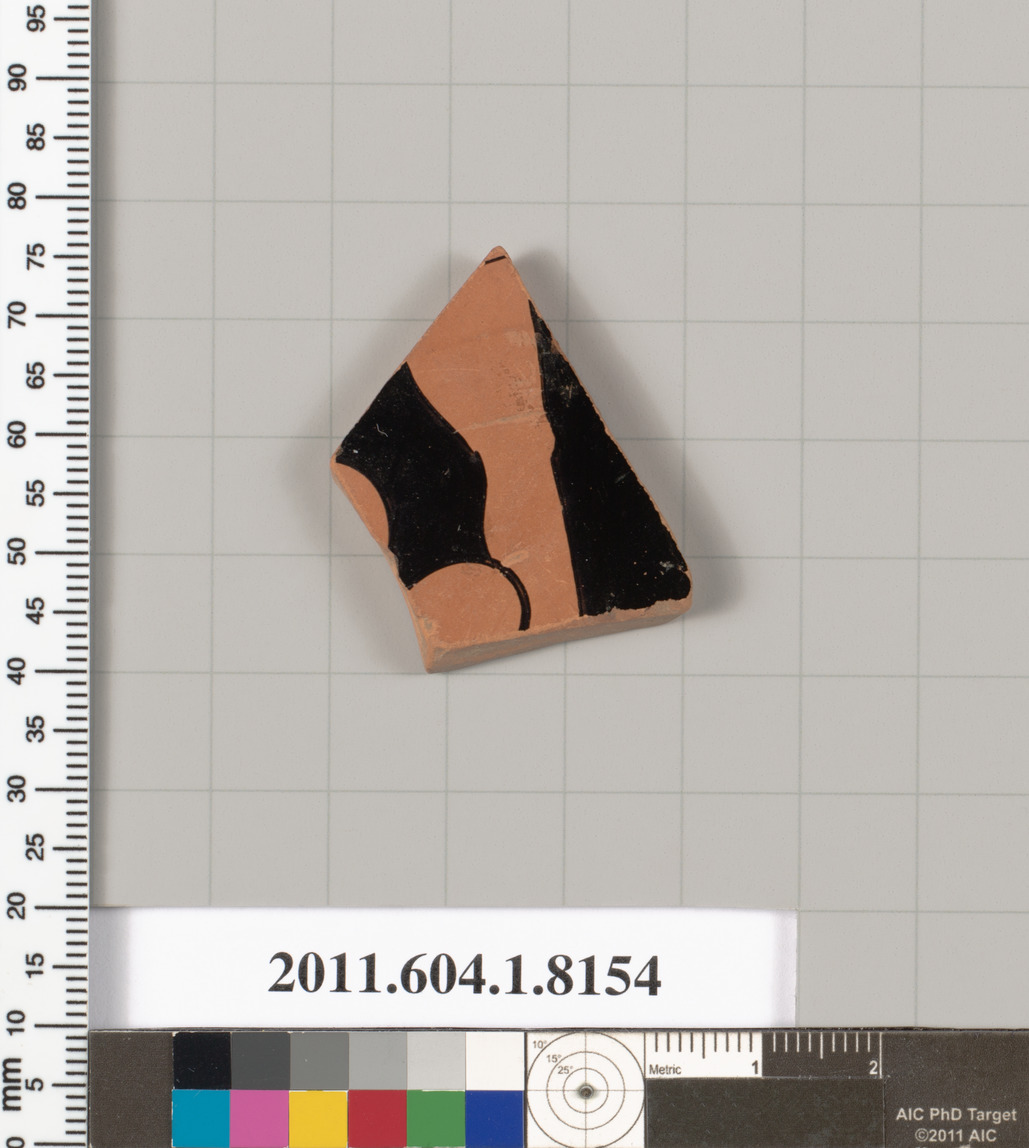
The Kylix Fragment as a Hermeneutic Lens: Reimagining Attic Symposia for 2026 Old Money Silhouettes
The Terracotta fragment of a kylix—a Greek Attic drinking cup—survives not as a complete vessel but as a shard of cultural memory, its broken edges holding the echo of symposium rituals and the geometry of the human form in repose. For the 2026 Old Money collection at Lauren Fashion Heritage Lab, this artifact transcends its archaeological context to become a generative principle. It offers a counterpoint to the Eastern aesthetic of “moving mountains” and “still contemplation” articulated in the internal genetic code, while simultaneously resonating with its deeper philosophical ambition: the creation of garments that are not mere coverings but vessels for life’s rhythm. This paper argues that the kylix fragment informs a silhouette of controlled asymmetry, grounded horizontality, and tactile austerity—a visual language that speaks to the old money ethos of inherited ease, not acquired display.
I. The Symposium Body: Reclining as a Posture of Power
The kylix was not a cup for standing. It was designed for the kline—the reclining couch where Athenian aristocrats debated philosophy, politics, and poetry. The fragment’s curvature, its handle’s ergonomic sweep, and the painted figure’s propped elbow all encode a specific bodily relationship: the horizontal as a posture of intellectual and social authority. In 2026, this translates directly into the Old Money silhouette’s rejection of vertical, aggressive tailoring. The power suit of the 1980s—sharp shoulders, cinched waist, erect posture—is replaced by garments that drape, fold, and settle around a body at rest. Think of a double-faced cashmere coat that falls from the shoulder with the weight of a himation, its hem grazing the floor as the wearer leans back in a leather club chair. The kylix teaches us that authority is not in the spine’s rigidity but in the ease of the reclining torso.
This is not the “moving landscape” of the Chinese porcelain vase, which invites the eye to travel across a curved surface in dynamic flow. The kylix fragment is static, grounded. Its figures are often frozen in symposium poses—a hand holding a lyre, a head tilted in conversation. The 2026 silhouette borrows this stillness as a form of presence. Jackets are cut with dropped shoulders and extended armholes, allowing the arms to rest naturally at the sides or cross in a relaxed gesture. Trousers are wide-legged, breaking over the shoe in a pool of fabric that anchors the body to the earth. This is not the “floating” elegance of Eastern robes but a deliberate gravity, a weight that signals permanence and lineage.
II. The Fragment as Design Principle: Incompleteness and the Patina of Time
The kylix’s broken state is not a flaw but a feature. Its missing sections invite the viewer to complete the image, to imagine the full scene. This principle of incompleteness as a luxury signifier is central to the 2026 Old Money aesthetic. Unlike the pristine perfection of a new garment, the old money wardrobe values wear, repair, and the accumulation of personal history. The kylix fragment suggests a silhouette that is deliberately unfinished: raw hems, exposed seams, buttons that do not match, patches that tell stories. This is not the “wabi-sabi” of Japanese ceramics, which celebrates the irregularity of nature. It is a classical ruin aesthetic—the beauty of a column that has stood for centuries, its fluting worn smooth by wind and touch.
In practical terms, this manifests in the 2026 collection as deconstructed tailoring. A wool blazer might have its lining partially removed, revealing the internal structure of canvas and horsehair. A silk dress could feature a deliberately frayed edge, as if the fabric had been torn from a larger bolt. The kylix fragment teaches us that luxury is not in newness but in survival. The old money wearer does not buy a garment; they inherit it, alter it, and pass it on. The silhouette must therefore accommodate this temporality: shoulders that can be let out, hems that can be dropped, waists that can be taken in. The 2026 silhouette is a system of adjustments, not a fixed form.
III. Terracotta’s Chromatic and Textural Legacy: The Earth as a Color Field
The terracotta of the kylix fragment is not a single hue. It ranges from burnt orange to deep umber, with black-figure painting adding contrast and depth. This earth-based palette—ochre, sienna, clay, charcoal—becomes the foundation for the 2026 Old Money silhouette. Unlike the vibrant pinks and greens of the Chinese porcelain or the delicate pastels of the crabapple painting, the kylix’s colors are muted, mineral, and ancient. They speak of soil, of the potter’s wheel, of kiln fires. For old money, color is not a statement but a substance. A cashmere sweater in “Attic Red” is not red; it is the memory of iron oxide in fired clay. A wool trouser in “Black-Figure” is not black; it is the shadow of a painted warrior on a vase.
Texturally, the kylix fragment is matte, porous, and tactile. It invites touch. The 2026 silhouette mirrors this through fabrics that are unfinished, napped, or brushed. Flannel, tweed, moleskin, and boiled wool replace the glossy satins and smooth silks of other luxury markets. The surface of a garment should feel like the surface of a kylix: warm, slightly rough, and alive with the marks of its making. This is a direct challenge to the “digital smoothness” of fast fashion. The old money garment has grain, nap, and weight. It does not photograph well; it must be experienced in person, through touch and movement.
IV. The Symposiast’s Silhouette: Draped, Bound, and Released
The figures on the kylix fragment wear himations—rectangular woolen cloths draped over the left shoulder and wrapped around the body. This is the original draped silhouette, and it informs the 2026 collection’s approach to construction. Garments are not cut and sewn into rigid shapes; they are folded, pinned, and tied. A coat might have a single button at the neck, leaving the rest to fall open. A skirt could be a length of fabric wrapped and secured with a leather belt. The silhouette is asymmetric, with one shoulder often exposed or covered differently than the other. This asymmetry is not random; it echoes the kylix’s handle, which breaks the cup’s circular symmetry. The body becomes a vessel for fabric, not a mannequin for display.
This draped silhouette also serves a practical function for the old money lifestyle. It allows for layering, adjustment, and adaptation to different contexts—from a morning at the estate to an evening at the club. The kylix symposiast could adjust his himation as he moved from reclining to standing, from drinking to debating. The 2026 wearer similarly requires garments that transform with the body’s needs. A draped cashmere shawl becomes a blanket on a cold train; a wrapped linen dress becomes a cover-up by the pool. The silhouette is not a statement of identity but a tool for living.
V. Conclusion: The Kylix as a Mirror for the Old Money Ethos
The Terracotta kylix fragment, in its brokenness and earthiness, offers a profound lesson for the 2026 Old Money silhouette. It rejects the verticality of ambition in favor of the horizontality of contemplation. It values incompleteness over perfection, texture over polish, and function over display. Where the Chinese porcelain vase and the crabapple painting invite the eye to wander and the mind to meditate, the kylix invites the body to recline, to rest, to converse. It is a vessel not for wine alone but for a way of being—a way that the 2026 collection translates into wool, cashmere, and linen.
In the end, the kylix fragment and the Old Money silhouette share a common goal: to create a container for life’s rituals. Whether it is the symposium of ancient Athens or the quiet dinner of a modern family, the garment must support the posture, the gesture, and the passage of time. The 2026 silhouette is thus not a fashion statement but a heritage artifact in the making—a piece of terracotta that will one day be unearthed, its broken edges telling the story of how we sat, how we wore, and how we lived.