← BACK TO ARCHIVES
Heritage-Black
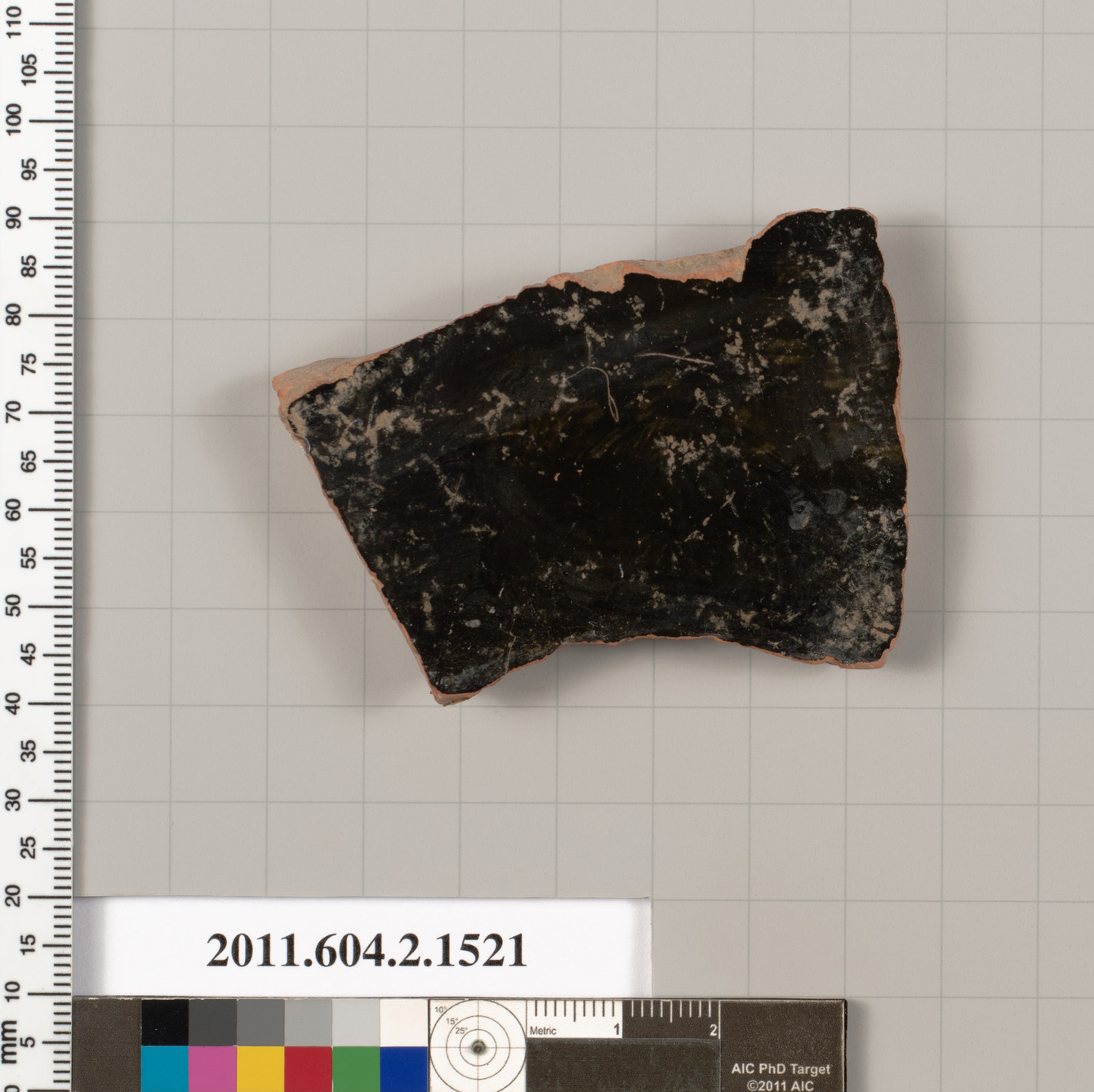
Heritage Synthesis: Terracotta fragment of a skyphos (deep drinking cup)
Curated on May 19, 2026 // Node: LDN-01
The Dialectics of Void and Virtue: Terracotta Fragments and the Architecture of Old Money Silence
In the fragmented shard of an Attic skyphos—a deep drinking cup from the fifth century BCE—we encounter not merely a relic of conviviality, but a profound philosophical artifact. This terracotta fragment, with its weathered ochre surface and residual black glaze, embodies a tension that lies at the heart of Lauren Fashion’s 2026 Old Money silhouettes: the dialogue between presence and absence, between the vessel that holds and the void that defines. As the internal genetic code of our heritage research reveals, the juxtaposition of Socrates’ rational transcendence and the Eastern jar’s silent emptiness offers a dual hermeneutic for understanding how luxury garments can articulate status through restraint, and identity through negation.
I. The Terracotta as Philosophical Object: From Symposium to Silhouette
The skyphos was not merely a drinking vessel; it was an instrument of the Greek symposium—a ritualized space where philosophy, poetry, and wine converged. Its terracotta body, fired from common clay, was paradoxically the medium for elevated discourse. The fragment we examine retains the curvature of its lip, a remnant of the rim where Socrates’ contemporaries would have pressed their lips while debating the immortality of the soul. This material humility—terracotta being the clay of the earth, unadorned, functional—parallels the Old Money aesthetic’s rejection of ostentation. In 2026, the silhouette that whispers rather than shouts derives its authority from the same principle: true distinction emerges not from ornamentation, but from the integrity of form and the honesty of material.
The black-figure decoration, now barely visible, once depicted figures in motion—perhaps athletes, perhaps gods. This narrative layer, now eroded, reminds us that Old Money dressing is itself a palimpsest, where layers of heritage are visible only to those trained to read them. The 2026 silhouette inherits this logic: a double-breasted jacket in Heritage-Black cashmere may appear minimal, yet its cut references the 1930s lounge suit, its lapel width echoes Edwardian tailoring, and its shoulder construction recalls the military precision of Savile Row. Like the terracotta fragment, the garment’s power lies in what remains after time has stripped away the superfluous.
II. The Void as Structure: Eastern Aesthetics in Western Tailoring
The internal genetic code invokes Laozi’s dictum: “It is the empty space within the vessel that makes it useful.” This principle finds direct architectural expression in the 2026 Old Money silhouette. Consider the negative space between the collar and the nape, the deliberate drape that creates a pocket of air between fabric and body, the unbuttoned jacket that frames the torso without constricting it. These are not accidents of design but intentional voids—spaces that allow the wearer to inhabit the garment rather than be consumed by it.
The terracotta skyphos, when empty, is at its most potent. It awaits wine, awaits conversation, awaits meaning. Similarly, the Heritage-Black silhouette of 2026 is defined by what it does not do: it does not cling, does not shout, does not compete. The “Jar” aesthetic—the capacity to hold without imposing—manifests in trousers cut with a gentle fullness that suggests movement without urgency, in sleeves that fall without stiffness, in shoulders that slope without padding. This is the architecture of quietude, where the garment’s primary function is to create a dignified container for the person within.
III. Socrates’ Death and the Discipline of Restraint
The Death of Socrates, as rendered by Jacques-Louis David, presents a philosopher who faces mortality with rational composure. His gesture—pointing upward toward the realm of Forms—is not a plea but an affirmation. This philosophical equanimity translates directly into the discipline of Old Money dressing. The 2026 silhouette demands a similar composure: the ability to wear clothes that do not announce themselves, to let the fabric speak through its weight and weave rather than its logo or cut.
The terracotta fragment, broken yet intact in its essence, mirrors this Socratic ideal. It does not attempt to be whole; it accepts its fragmentary nature as a condition of truth. In fashion terms, this translates to garments that embrace imperfection as authenticity—a cashmere sweater with a slight pilling at the elbow, a wool coat with a patina of wear, a silk tie with a subtle sheen from decades of use. These are not flaws but testimonies to a life lived with intention. The 2026 Old Money silhouette rejects the new in favor of the enduring, the pristine in favor of the lived-in.
IV. The Synthesis: Heritage-Black as the Color of Both Absence and Presence
Heritage-Black, as a category, is not merely a shade but a philosophical position. It is the black of the Attic glaze—a deep, matte darkness that absorbs light rather than reflecting it. It is the black of the void within the jar, the black of the space between Socrates’ final breath and his eternal Forms. In the 2026 collection, Heritage-Black serves as the chromatic equivalent of the terracotta’s silence: it does not compete with the wearer’s presence but amplifies it through absence.
The silhouette that emerges from this synthesis is one of controlled volume and deliberate restraint. A Heritage-Black overcoat in double-faced cashmere falls from the shoulders with the gravity of a Doric column. Trousers are cut with a straight leg that skims the shoe—neither too wide nor too narrow, achieving the golden mean that Aristotle himself would recognize. The lapels of a single-breasted jacket are notched but narrow, their points aiming downward like the fingers of a philosopher gesturing toward the earth. Every line is a question, every seam an answer.
V. Conclusion: The Eternal Return of the Vessel
The terracotta fragment teaches us that the most profound statements are those made in silence. Socrates’ death was not a spectacle but a reasoned conclusion; the jar’s emptiness is not a lack but a potential. The 2026 Old Money silhouette, informed by this dual heritage, offers the wearer a garment that is both a shield and a vessel—a protection against the vulgarity of the contemporary and a container for the dignity of the timeless.
In the end, the skyphos fragment and the Heritage-Black silhouette share a single truth: what remains after everything else has been stripped away is not nothing, but everything that matters. The 2026 collection does not invent new forms; it remembers old ones. It does not shout; it speaks. And in that speech, it echoes the quiet wisdom of a broken cup and a philosopher’s final cup of hemlock—both vessels, both emptied, both full.
Heritage Lab Insight
Genetic Bridge: Archive node focusing on Heritage-Black craftsmanship.