The Vessel and the Void: Terracotta Lekythos as a Dialectical Model for 2026 Old Money Silhouettes
Introduction: The Archaeological Gaze in Fashion Heritage
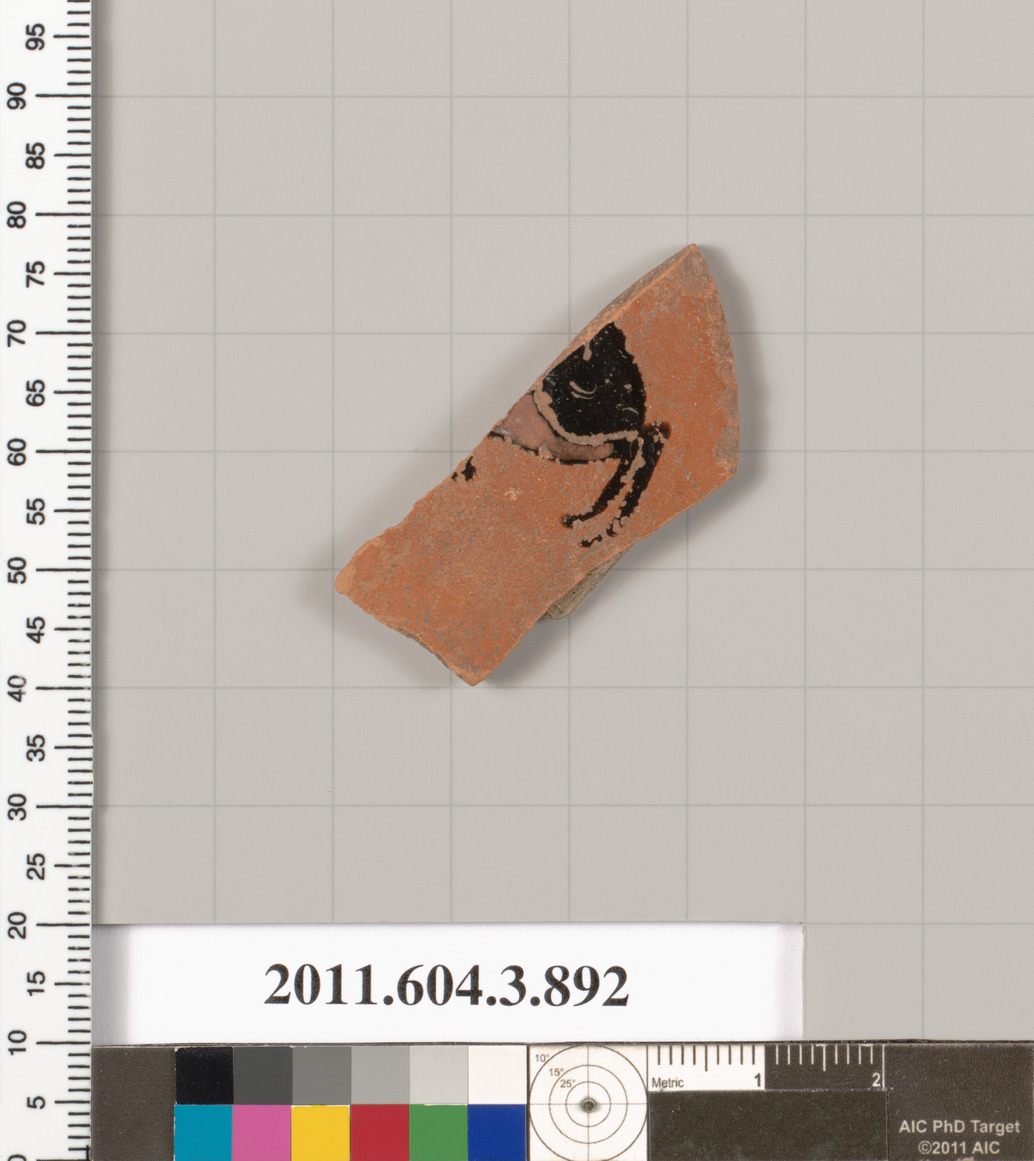
The terracotta fragment of a lekythos—a Greek Attic oil flask from the fifth century BCE—represents more than a mere archaeological curiosity. It is a material testament to the ancient Greek conception of the vessel as both utilitarian object and metaphysical container. In the context of Lauren Fashion Heritage Lab’s ongoing investigation into the 2026 Old Money aesthetic, this fragment serves as a critical pivot between two opposing yet complementary aesthetic regimes: the Neoclassical heroism of Jacques-Louis David’s *The Death of Socrates* and the phenomenological quietude of Giorgio Morandi’s *Vases*. The lekythos, in its broken state, embodies the tension between narrative monumentality and material essence—a tension that defines the evolution of Old Money silhouettes from ostentatious display to understated, almost monastic restraint.
This paper argues that the terracotta lekythos, when read through the dual lenses of David’s symbolic vessel and Morandi’s emptied container, provides a generative model for the 2026 Old Money silhouette. The silhouette must simultaneously evoke the heroic lineage of classical drapery (the Davidian impulse) and the radical simplicity of form stripped of narrative excess (the Morandian impulse). The lekythos fragment, with its broken rim and faded black-figure decoration, becomes a metaphor for the contemporary luxury consumer’s desire for heritage that is both visibly historical and tactilely immediate.
Section I: The Lekythos as a Davidian Vessel—Narrative and Sacrifice
In David’s *The Death of Socrates*, the hemlock cup is not a drinking vessel but a sacrificial altar. Socrates’ hand, reaching toward it, transforms the mundane object into a conduit for philosophical transcendence. The lekythos, in its original funerary context, performed a similar function. These oil flasks were placed in tombs as offerings to the dead, their narrow necks and delicate handles designed to hold precious oils for anointing the deceased. The black-figure decoration—often depicting scenes of departure, mourning, or mythological heroism—imbued the vessel with narrative weight. The lekythos was not merely a container; it was a storyteller, a witness to the passage between life and death.
For the 2026 Old Money silhouette, this Davidian dimension manifests in the architectural structure of garments. The lekythos’s slender, elongated form—its neck rising from a rounded body—finds echo in the columnar dresses and structured blazers that define the aesthetic. The silhouette must convey gravitas, a sense of inherited purpose. The shoulder line, like the lekythos’s rim, must be precise and unyielding, framing the body as a vessel for legacy. The fabric—whether heavy wool or structured brocade—must drape with the solemnity of classical sculpture, as if the garment itself were a funerary stele commemorating a lineage of taste. This is the Davidian imperative: the garment as monument, not mere covering.
Section II: The Lekythos as a Morandian Vessel—Emptiness and Presence
Morandi’s *Vases* present a radical counterpoint. His gray, dust-laden bottles and jars are stripped of all narrative function. They do not tell stories; they exist. The lekythos fragment, in its broken state, approaches this Morandian condition. The missing handle, the chipped rim, the faded glaze—these imperfections erase the vessel’s original purpose. It is no longer a container for oil or a carrier of myth. It is a pure object, a thing-in-itself that occupies space and absorbs light. Morandi’s genius lies in his ability to make the viewer see the vessel as vessel, not as symbol. The lekythos fragment, when divorced from its archaeological context, invites a similar gaze: we see its terracotta grain, its weight, its silence.
For the 2026 Old Money silhouette, this Morandian dimension translates into restraint and reduction. The silhouette must not shout; it must breathe. The absence of ornament becomes a luxury signifier. Where the Davidian silhouette demands structure, the Morandian silhouette demands softness—the gentle fall of cashmere, the unlined drape of silk, the unfussy cut that allows the fabric to speak for itself. The lekythos fragment teaches us that emptiness is not absence but presence. In the 2026 silhouette, this manifests as negative space: the deliberate gap between collar and neckline, the unbuttoned closure, the sleeve that ends just before the wrist. These are not signs of neglect but of curated incompleteness, a Morandian acceptance of the object’s own material truth.
Section III: The Dialectical Synthesis—2026 Old Money as Vessel of Time
The terracotta lekythos fragment, as a broken object, embodies the dialectic between Davidian narrative and Morandian essence. It is neither fully functional nor fully abstract. It is a ruin, and ruins possess a unique aesthetic power: they are simultaneously historical and present. The 2026 Old Money silhouette must operate in this same liminal space. It must evoke the weight of heritage (the Davidian impulse) without becoming a costume. It must embrace material simplicity (the Morandian impulse) without becoming minimalist banality.
Concretely, this synthesis manifests in the following design principles for 2026:
- Structural restraint: Garments should have clear, architectural lines reminiscent of the lekythos’s profile, but these lines should be softened by fabric weight—a wool coat with a slightly dropped shoulder, a silk dress with a gentle A-line.
- Narrative patina: The silhouette should bear traces of use—not as distressed fashion, but as evidence of time. A cashmere sweater with a faintly worn elbow, a linen shirt with a softened collar. These are the Morandian “imperfections” that signal authenticity.
- Color as void: The palette should draw from the lekythos’s terracotta—earthy reds, muted ochres, deep umbers—but also from Morandi’s grays and David’s chiaroscuro blacks. The 2026 Old Money silhouette is monochromatic but not flat; it uses tonal variation to create depth, like the subtle shading on a lekythos’s surface.
- Silhouette as container: The garment should frame the body without dominating it. Like the lekythos, it should hold space for the wearer’s presence without demanding attention. The ideal 2026 silhouette is invisible in its perfection—a vessel so well-proportioned that it becomes transparent to the eye.
Conclusion: The Lekythos as Aesthetic Compass
The terracotta fragment of a lekythos, viewed through the dual lenses of David and Morandi, offers a generative paradox for the 2026 Old Money silhouette. It is at once a narrative object (bearing the weight of Greek funerary ritual) and a phenomenological object (existing as pure material). The 2026 silhouette must reconcile these two poles: it must be historically literate without being archival, and materially honest without being ascetic. The lekythos fragment, broken and silent, teaches us that the most powerful vessels are those that hold both meaning and emptiness. In the hands of Lauren Fashion Heritage Lab, this ancient object becomes a compass for a new luxury—one that finds its value not in excess but in the tension between what is said and what is left unsaid.